
Light Requirements
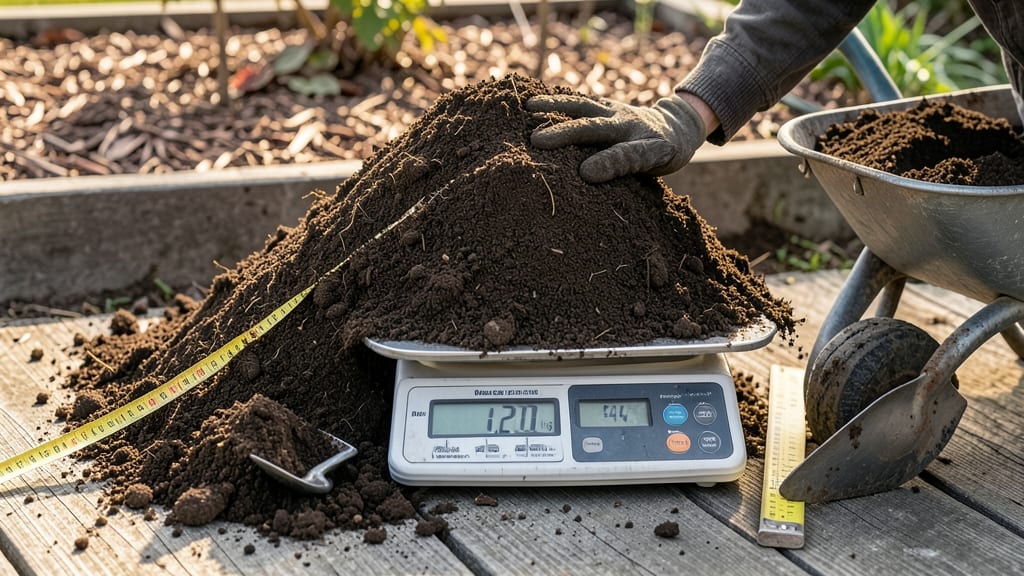
To determine how much 1 cubic yard of topsoil weighs, expect 2,000 to 2,800 pounds—though this range shifts dramatically based on moisture levels, organic content, and soil composition. Sandy soils often weigh closer to 2,000 pounds, while clay-heavy or waterlogged topsoil can exceed 3,000 pounds. Always verify with suppliers before planning transport or storage.
Understanding topsoil weight isn't just about the numbers—it's about the science behind what makes soil dense or light. 🌱 Moisture plays the biggest role: a saturated cubic yard can weigh up to 50% more than dry soil, while organic matter like decomposed leaves or compost adds bulk without significant weight.
For landscaping projects, I recommend testing soil moisture first—dry conditions mean lighter loads, but wet soil might require heavier equipment or more frequent deliveries. This variation is why contractors always overestimate when ordering bulk soil.
If you're planning a garden bed or lawn renovation, another key factor is compaction.
Heavily packed soil weighs more per cubic yard, while loose, aerated topsoil feels lighter but may settle over time. 💫 For precise calculations, I suggest asking your supplier for the "dry bulk density" measurement—they'll often provide this if you specify your project type.
This small detail can save you hundreds in unexpected transport costs or equipment rental fees.
💡 In This Article
- Factors Affecting Topsoil Weight Variations
- Practical Weight Calculations for Gardening Projects
Factors affecting topsoil weight variations
The weight of topsoil isn't fixed—it shifts based on three core factors: moisture content, particle composition, and compaction. Moisture is the biggest variable: dry sandy soil weighs around 1,800-2,200 pounds per cubic yard, but when saturated, it can balloon to 3,000+ pounds.
This happens because water fills the spaces between soil particles, increasing overall density. Think of it like packing marbles into a container—wet marbles stick together and take up less space, while dry ones stay loose.
Particle size plays a crucial role too. Clay particles are flat and angular, packing tightly together, which creates heavier soil (up to 3,500 pounds per cubic yard when wet). Sandy soil, with its round grains, stays lighter because air gaps remain even when moist.
Organic matter adds complexity—compost or decomposed leaves add bulk but don't significantly increase weight, making "lightweight" topsoil blends possible. For example, a mix with 30% organic content might weigh 10-15% less than pure mineral soil.
Compaction further complicates calculations. Soil left undisturbed by machinery can weigh 20-30% more per cubic yard than loose, freshly tilled soil. This matters for gardeners: a freshly delivered cubic yard might feel manageable, but after rain or foot traffic, it could become unworkably heavy.
Seasonal changes amplify this—spring thaw often doubles soil weight temporarily due to absorbed water. 🔥 To avoid surprises, I always test soil moisture with a simple squeeze: if it holds its shape, it's heavy; if it crumbles, it's lighter.
Temperature also influences weight indirectly. Cold soil holds more moisture (since water expands when freezing), while hot, dry climates can reduce moisture content by 40% or more. This is why suppliers in desert regions often sell "dry" topsoil that weighs significantly less than the same product in humid areas.
For precise estimates, I recommend checking with local suppliers—they'll know regional variations better than any general rule.
One often-overlooked factor is salt content. Coastal topsoil may contain mineral deposits that add 5-10% extra weight per cubic yard. These salts don't affect plant growth directly but can make soil feel heavier when wet.
For projects near shorelines, I suggest requesting "low-salt" topsoil blends if weight is a critical concern. This small adjustment can save hundreds of pounds in transport costs for large projects.
Here's a quick reference for common soil types:
- Sandy soil: 1,800-2,200 lbs (dry), 2,500-3,000 lbs (wet)
- Loamy soil: 2,200-2,600 lbs (dry), 2,800-3,200 lbs (wet)
- Clay-heavy soil: 2,600-3,000 lbs (dry), 3,200-3,800 lbs (wet)
- Organic-rich blends: 1,500-2,000 lbs (dry), 2,000-2,500 lbs (wet)