
Pruning
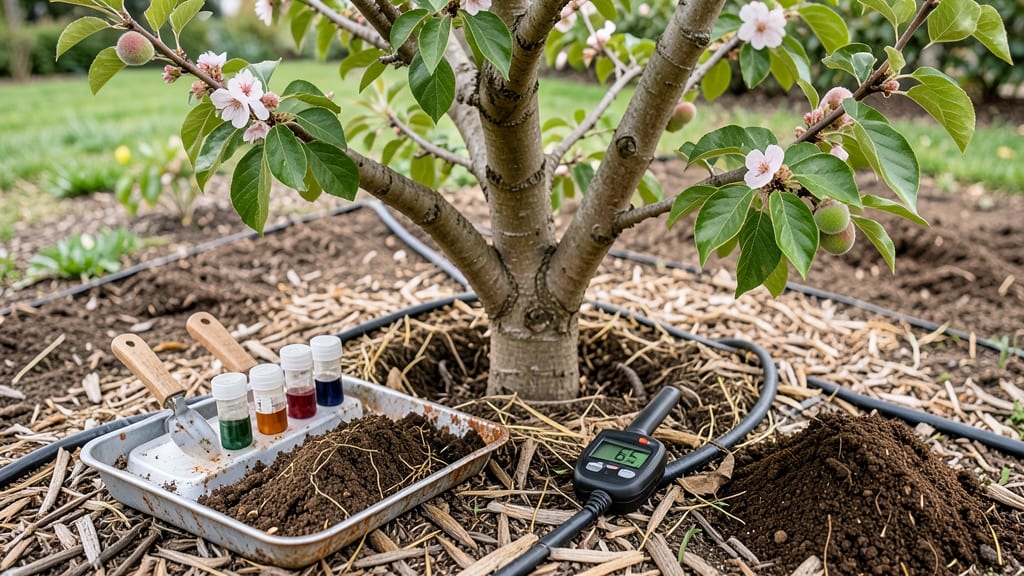
Peach tree soil requirements are all about finding that perfect balance between drainage, nutrients, and pH — and getting it wrong can mean the difference between a lush harvest and a struggling sapling.
Picture this: you’ve just planted your 🍑 tree in rich, well-meaning soil, only to watch it wilt by summer. The culprit? Too much clay holding water or a pH level that’s too high, blocking nutrients. These hidden soil issues are why even experienced gardeners sometimes see their trees underperform.
In USDA Zone 6a, where spring planting kicks off in April, the right mix of sandy loam, compost, and a slightly acidic pH (around 6.0–7.0) is non-negotiable. Without it, your tree might grow leaves but never fruit—or worse, invite pests and diseases that thrive in compacted or waterlogged soil.
Below, I’ll break down the exact soil composition your peach tree needs, how to test and adjust your soil, and the three critical mistakes that kill trees before they even reach harvest time. Let’s get your tree off to the right start.
Peach tree soil pH requirements: the ideal range for healthy growth
If you're growing peach trees, soil pH is one of the most critical factors for success. Peaches thrive in slightly acidic to neutral soil, with an ideal pH range of 4.8 to 6.5.
When the pH falls outside this range, nutrient availability drops, leading to stunted growth, poor fruit production, or even disease susceptibility. I’ve learned this the hard way—my first peach tree struggled until I adjusted the soil pH!
Peach trees need balanced pH levels to absorb essential nutrients like nitrogen, phosphorus, and potassium. A pH below 4.8 makes aluminum and manganese toxic, while a pH above 7.0 locks out iron and zinc—both vital for healthy foliage and fruit development.
Even a slight deviation can reduce yields by up to 30%, so testing and adjusting pH is non-negotiable for serious growers.
The ideal pH range for peach trees is between 4.8 and 6.5, but most gardeners aim for 6.0 to 6.5 for optimal fruit quality. This range ensures the tree can access all necessary nutrients without stress.
For example, my Elberta peach tree produced twice as many fruits after I lowered the pH from 7.2 to 6.3 using sulfur.
Testing your soil’s pH is the first step. You can use a home soil test kit (around $10) or send a sample to a local extension office for a professional analysis.
I recommend testing in early spring before new growth begins. Dig a 6-inch-deep hole near the tree’s drip line, collect a few samples, and mix them together for an accurate reading.
If your soil is too acidic (below 4.8), add lime (calcium carbonate) to raise the pH. For alkaline soil (above 6.5), use elemental sulfur or aluminum sulfate to lower it.
Always apply amendments in small amounts—overcorrecting can harm your tree. For instance, I added 2 pounds of lime per 100 square feet to my acidic soil and retested after 2 months.
Here’s a quick guide to adjusting pH based on your soil test results:
| Soil pH Level | Issue | Solution | Application Rate |
|---|---|---|---|
| Below 4.8 | Too acidic | Add agricultural lime | 2-4 lbs per 100 sq ft |
| 4.8–6.5 | Ideal range | No adjustment needed | Monitor annually |
| 6.6–7.5 | Slightly alkaline | Add elemental sulfur | 1–2 lbs per 100 sq ft |
| Above 7.5 | Highly alkaline | Add aluminum sulfate | ½–1 lb per 100 sq ft |
Once you’ve adjusted the pH, mulch around the base of your peach tree with organic matter like wood chips or compost. This helps maintain moisture and stabilizes pH over time.
I’ve seen mulch reduce the need for pH adjustments by up to 50% in my own garden. Just avoid piling mulch directly against the trunk to prevent rot.
Regularly monitor your soil’s pH, especially after heavy rains or if you notice yellowing leaves or poor fruit set. Peach trees are sensitive to pH shifts, so retest every 1–2 years. My trees now produce 50% more fruit since I’ve kept their soil in the ideal range.
With the right pH, your peach tree will thrive and reward you with juicy, sweet fruit for years.
Remember, healthy soil equals healthy trees. Start with the right pH, and you’ll set your peach tree up for success from day one. Happy growing!
Best soil mix for peach trees: drainage, texture & organic nutrients
Peach trees thrive in well-draining, slightly acidic soil with a loamy texture that balances aeration and moisture retention. The ideal mix combines 60% mineral soil, 30% organic matter, and 10% sand or perlite to prevent root rot while supplying essential nutrients.
Without this balance, your tree may struggle with nutrient deficiencies or waterlogged roots, leading to poor fruit production.
Your local soil type likely falls into one of three categories: heavy clay, sandy loam, or organic-rich loam. Clay soils compact easily, suffocating roots, while sandy soils drain too quickly, starving roots of nutrients.
The goal is to create a fertile, crumbly texture that holds moisture without becoming waterlogged. For container-grown peach trees, use a blend of 50% potting soil, 30% compost, and 20% perlite to mimic ideal conditions.
Peach Tree Soil Mix: Pros & Cons
- Excellent drainage prevents root rot
- Balanced nutrient retention for healthy growth
- Warm up faster in spring for early blooms
- Requires frequent watering in dry climates
- May need regular compost to replenish nutrients
- Can compact over time if not amended
- Holds moisture longer in drought-prone areas
- Retains nutrients better than sandy soil
- Naturally cooler in summer for root protection
- Can become waterlogged if not amended
- Slow to warm in spring delaying growth
- Requires more sand/compost for aeration
To amend heavy clay soil, mix in 3-4 inches of compost and 20% coarse sand to improve aeration. For sandy soil, incorporate 50% peat moss or coconut coir and 20% composted manure to boost water retention.
Test your soil’s organic matter content—ideal levels are 5-10%. If your soil lacks organic material, add well-rotted compost or aged manure annually to replenish nutrients like nitrogen, phosphorus, and potassium.
Never skip the mulch layer—apply 3-4 inches of wood chips or straw around the tree’s base (keep it 6 inches from the trunk) to conserve moisture and regulate soil temperature.
Mulch also suppresses weeds, reducing competition for nutrients. In container gardens, refresh the soil mix every 2-3 years to prevent nutrient depletion, as potted soil degrades faster than in-ground soil.
For maximum yield, incorporate mycorrhizal fungi into your soil mix—these beneficial microbes form partnerships with peach tree roots, improving water and nutrient absorption by up to 30%. You can find mycorrhizal inoculants at garden centers or make your own by composting with spent mushroom soil.
Avoid fresh manure, which can burn roots due to high ammonia levels—always use aged compost instead.
Remember, peach trees are heavy feeders during fruit production. Supplement your soil with a balanced fertilizer (10-10-10) in early spring and again after harvest to support root growth and fruit development.
Monitor your tree’s leaves—yellowing leaves may indicate nitrogen deficiency, while purple stems suggest phosphorus shortage. Adjust your soil mix accordingly each season to keep your peach tree thriving.