
Light Requirements
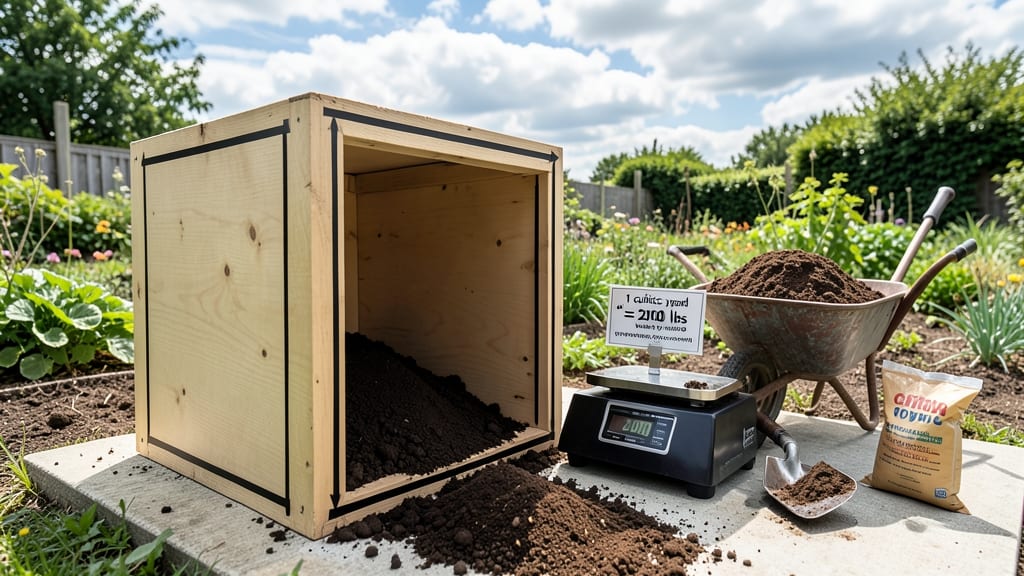
To determine how much a cubic yard of topsoil weighs, expect 2,000 to 2,700 pounds on average, but this can swing dramatically based on moisture levels—dry soil leans toward the lower end, while waterlogged soil may tip the scales over 3,000 pounds. Soil composition like organic content or compaction further alters the weight per cubic yard.
A cubic yard of topsoil's weight isn't set in stone—it shifts like sand through your fingers. 🌱 The moisture level is the biggest game-changer: dry soil might barely crack 2,000 pounds, while saturated soil can feel like hauling a small car.
Even the type of soil matters—clay-heavy soils pack more pounds per cubic yard than sandy mixes. If you're planning a garden project, checking your soil's moisture before ordering can save you from overestimating or struggling with unexpected weight during delivery.
For practical purposes, landscapers often use a 2,200-pound average as a baseline when calculating deliveries, but I always recommend calling your supplier to confirm their specific moisture conditions.
Pro tip: if you're moving topsoil manually, consider renting a wheelbarrow with reinforced sides—those extra pounds add up fast, and your back will thank you for the support. 💪
💡 In This Article
- Factors Affecting Topsoil Weight per Cubic Yard
- Estimating Topsoil Weight for Landscaping Projects
Factors affecting topsoil weight per cubic yard
Moisture content is the single biggest variable in topsoil weight. A cubic yard of completely dry topsoil might weigh just 1,800-2,000 pounds, but add water and the weight climbs dramatically.
Saturated soil can reach 3,000 pounds or more because water adds about 62.4 pounds per cubic foot—that's roughly 1,750 pounds per cubic yard of water alone when fully saturated. Imagine carrying a small refrigerator's worth of extra weight in every cubic yard! 💦
Organic matter plays a secondary but critical role. Topsoil with 5-10% organic content (like decomposed leaves or compost) will weigh 10-15% less than mineral-heavy soil because organic material has lower density. Conversely, clay-heavy soils pack more tightly, increasing weight to 2,500-3,000 pounds per cubic yard.
Sandy soils, with their loose structure, typically weigh 1,500-2,200 pounds—almost like comparing lead to feathers in the same space.
Compaction makes a surprising difference too. Loose, freshly tilled topsoil might measure 2,200 pounds per cubic yard, but when compressed—like under heavy machinery or foot traffic—it can reach 2,700 pounds or higher.
This is why construction sites often specify "loose" topsoil deliveries: the same volume becomes significantly heavier once settled. Even a 10% compaction increase can add 200-300 pounds to your cubic yard!
Regional soil composition adds another layer. In the Pacific Northwest, volcanic soils often weigh 2,500+ pounds per cubic yard due to their mineral-rich, dense structure. Meanwhile, in Florida's sandy regions, topsoil might barely hit 1,800 pounds—the difference is like comparing concrete to beach sand.
These regional variations explain why local suppliers' weight estimates can differ so widely. 🌍
Temperature also sneaks in as a factor. Cold soil holds moisture differently than warm soil, affecting both weight and workability. In winter, frozen topsoil can appear heavier due to ice crystals forming between particles, while summer heat might dry it out faster.
This seasonal shift means your spring delivery could weigh 500 pounds more per cubic yard than your autumn order—even from the same supplier.
For the most accurate estimates, consider testing your soil's moisture content with a simple percolation test: dig a hole, fill it with water, then measure how quickly it drains.
Fast drainage suggests lighter, drier soil (2,000 pounds), while slow drainage hints at heavier, moisture-rich topsoil (2,700+ pounds). This hands-on approach beats guessing—and your back will thank you when moving loads. 🧑🌾