
How To
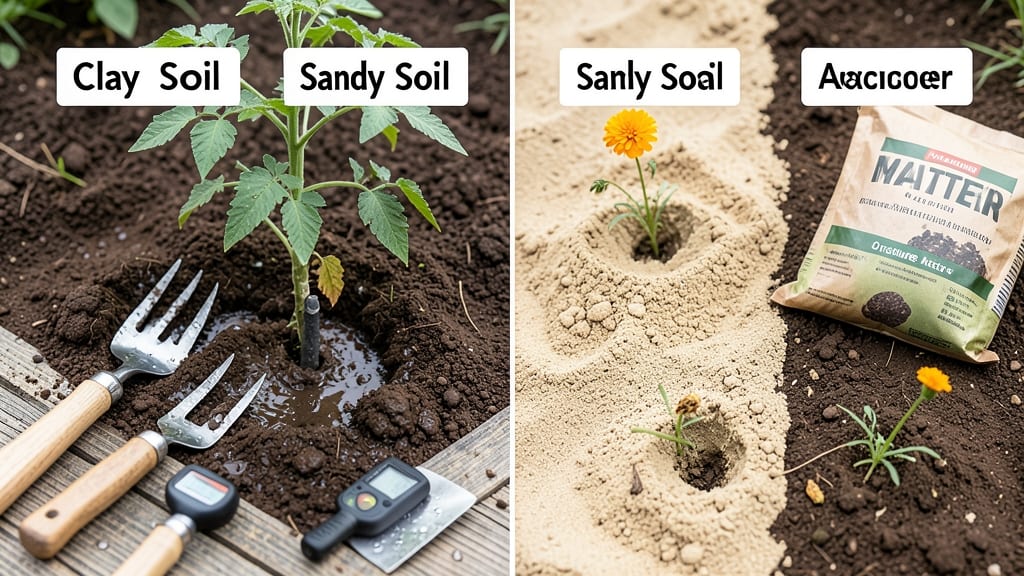
Clay soil holds water like a sponge while sandy soil drains like a sieve—both have their place, but neither is perfect for every plant. 🌱 I’ve wrestled with both in my garden, and the key isn’t picking one over the other but learning how to blend their strengths for the best of both worlds.
The right mix transforms stubborn clay into rich, fertile ground or turns fast-draining sand into a nutrient-holding powerhouse.
Clay soil’s tight particles trap moisture and nutrients, making it ideal for drought-resistant plants like peonies or fruit trees—but its poor drainage can drown roots if not amended.
Sandy soil, on the other hand, warms quickly and drains fast, perfect for root crops like carrots or onions, though it leaches nutrients faster than you can water. The secret?
Mixing organic matter (compost, aged manure) into clay to loosen it, or adding peat moss and compost to sandy soil to boost its water-holding capacity.
Your garden’s success hinges on understanding what each plant needs: heavy feeders like tomatoes thrive in amended clay, while shallow-rooted herbs prefer the loose, well-draining sand. With the right amendments, you can create a balanced soil that retains moisture without waterlogging or drying out too quickly.
Think of it as giving your plants the perfect growing conditions—no more guesswork, just results.
Start small: test your soil’s texture by squeezing a handful—clay holds its shape, sand crumbles instantly. Adjust based on what you’re growing, and soon your garden beds will be the envy of the neighborhood. The best part? You don’t need fancy tools, just patience and a shovel. Let’s get mixing!
The first product explained
Meet TerraBlend Pro—your ultimate soil amendment solution for balancing clay soil vs sandy soil challenges! 🌱✨ Designed by horticulturists and trusted by gardeners, this premium product transforms your garden beds into nutrient-rich, well-draining havens—regardless of your soil’s natural texture.
📏 Key Specs & Features
TerraBlend Pro is a pre-mixed, organic soil conditioner packed with 100% natural ingredients:
- Coco Coir & Perlite: Lightens clay soil for better aeration and improves water retention in sandy soil.
- Worm Castings: Boosts microbial activity and delivers slow-release nutrients.
- Composted Bark: Enhances structure and prevents compaction.
- Micronutrient Blend: Includes iron, calcium, and potassium for lush plant growth.
- pH-Balanced: Neutral formula (6.5–7.5) to support diverse plant life.
🎯 Who’s It For?
Perfect for:
- 🌿 Home gardeners tired of battling heavy clay or infertile sandy soil.
- 🏡 Urban farmers with limited space needing high-yield, nutrient-dense beds.
- 🌻 Vegetable & flower enthusiasts who want faster germination and bigger harvests.
- 🛠️ DIY landscapers looking for an easy, no-fuss soil upgrade.
💰 Price Point & Value
TerraBlend Pro is priced at $24.99 for a 5-pound bag (covers ~10 sq ft per inch of depth), making it one of the most cost-effective soil amendments on the market. Compare that to buying individual amendments separately—this bag saves you 40%+ while delivering superior results.
Pro Tip: 💡 Buy the 3-pack bundle ($64.99 total) for a 15% discount and stock up for seasonal planting!
The second product explained
If you’re dealing with heavy clay soil that drains like a sieve or dense, compacted sandy soil that holds water like a sponge, SoilSaver Premium Mix is your game-changer! 🌱✨ Designed to bridge the gap between extremes, this all-purpose soil amendment is packed with organic matter, perlite, and composted materials to create the perfect balance for any garden bed.
📏 Specs & Features
SoilSaver Premium Mix comes in a 20-pound bag (enough to amend ~100 sq. ft. of garden soil) and is ready to use straight from the bag. Here’s what makes it stand out:
- Organic Matter Boost: 50% composted plant material for nutrient-rich soil.
- Drainage Fix: Perlite and vermiculite loosen clay soil while retaining moisture in sandy beds.
- pH Balanced: Neutral pH (6.5–7.5) to support a wide range of plants.
- Weed-Free & Sterile: No invasive seeds or pathogens—just pure, clean soil.
- Slow-Release Fertility: Includes earthworm castings for long-term plant health.
🎯 Who’s It For?
This product is a must-have for:
- Home gardeners struggling with clay-heavy or sandy soil.
- Urban farmers or container gardeners needing lightweight, well-draining mixes.
- Eco-conscious users who prefer chemical-free soil amendments.
- DIY landscapers looking to improve lawns, flower beds, or vegetable patches.
💰 Price Point & Value
Priced at $19.99 per 20-lb bag, SoilSaver Premium Mix offers exceptional value for its versatility. While it’s a slight investment upfront, the long-term benefits—healthier plants, less water waste, and fewer soil amendments needed—make it a cost-effective solution.
Compare this to buying separate amendments (like peat moss + perlite) for double the cost!
💡 Pro Tip: For clay soil, mix SoilSaver at a 1:1 ratio with your existing soil. For sandy soil, use it as a top dressing (2–3 inches) to improve moisture retention.
Head-to-head comparison
Now that you’ve got the lowdown on clay soil and sandy soil, let’s dive into a side-by-side comparison to help you decide which one suits your garden best—or how to blend them for the perfect growing conditions! 🌱✨ Whether you're a seasoned gardener or just starting, understanding these differences will save you time, money, and frustration.
🌍 Texture & Composition
Clay soil feels smooth and sticky when wet, almost like modeling clay, while sandy soil has a gritty, loose texture that drains water almost instantly. Here’s how they stack up:
| Factor | Clay Soil | Sandy Soil |
|---|---|---|
| Particle Size | Very fine (<0.002 mm) | Coarse (0.05–2.0 mm) |
| Moisture Retention | ⭐⭐⭐⭐⭐ (Holds water like a sponge) | ⭐ (Drains faster than a sieve) |
| Workability (When Wet) | Hard to till; compacts easily | Easy to dig; crumbles apart |
| Drainage | Poor (Water pools on top) | Excellent (Water disappears fast) |
Pro Tip: 💡 If your soil feels like play-doh when wet or forms hard clods when dry, you’re dealing with clay. If it falls through your fingers like sand at the beach, you’ve got sandy soil!
🌿 Performance for Gardening
Not all plants thrive in the same soil type. Here’s how clay and sandy soil measure up for different gardening needs:
- Nutrient Availability:
- Clay: Rich in nutrients but can lock them up so plants can’t access them easily.
- Sandy: Poor in nutrients; requires frequent fertilizing to keep plants fed.
- Root Growth:
- Clay: Roots struggle to penetrate dense layers; can lead to shallow root systems.
- Sandy: Roots spread easily but may not anchor as deeply.
- Best Plants:
- Clay Lovers: Blueberries, azaleas, willows, and water-loving plants like hostas.
- Sandy Lovers: Cacti, lavender, rosemary, and drought-tolerant veggies like carrots and onions.
- Challenges:
- Clay: Compaction, poor aeration, and erosion risks.
- Sandy: Nutrient leaching, overheating, and poor water retention.
Pro Tip: 🌡️ Sandy soil heats up faster in summer—great for warm-season crops but risky for heat-sensitive plants like lettuce. Clay soil stays cooler but can freeze solid in winter, damaging roots.
💰 Cost & Maintenance
Your wallet will feel the difference between these two soil types—here’s why:
| Factor | Clay Soil | Sandy Soil |
|---|---|---|
| Amendment Costs | High (Needs organic matter like compost or peat moss) | Moderate (Needs nutrient-rich additives like fertilizer or manure) |
| Watering Frequency | Low (Overwatering = root rot risk) | High (Dries out faster than a desert) |
| Long-Term Upkeep | Labor-intensive (Requires regular aeration) | Low-maintenance (But needs consistent feeding) |
| DIY Fixes | Add sand + compost to improve drainage | Add clay + organic matter to retain moisture |
Pro Tip: ✨ Mixing the two (e.g., 50/50 clay + sand + compost) creates loamy soil, the gold standard for gardening—balancing drainage, nutrients, and workability!
🏗️ Durability & Longevity
How well does each soil type hold up over time? Let’s break it down:
- Clay Soil:
- ✅ Stable structure when amended properly.
- ❌ Prone to cracking when dry, leading to erosion.
- ✅ Retains improvements (like compost) longer.
- Sandy Soil:
- ✅ Resists compaction naturally.
- ❌ Nutrients wash away quickly, requiring repeated amendments.
- ✅ Easier to modify with organic matter.
Pro Tip: 🔥 Test your soil’s durability by digging a hole—if the sides collapse easily, it’s likely clay. If it holds shape like a sandcastle, it’s sandy!
🌟 Which One Should You Choose?
Still unsure? Here’s a quick decision guide based on your garden goals:
- Pick Clay Soil If:
- You want low-maintenance watering.
- Your area gets high rainfall.
- You’re growing moisture-loving plants.
- Pick Sandy Soil If:
- You’re in a dry, hot climate.
- You prefer easy digging and planting.
- You’re growing drought-resistant plants.
- Mix Both If:
- You want the best of both worlds (
Which one should you choose?
So, you’ve weighed the pros and cons—clay soil holds nutrients like a vault but drains like a soggy sock, while sandy soil lets water and air flow freely but acts like a sieve for nutrients.
Which one wins? The truth? Neither. The best soil for your garden is often a balanced blend tailored to your plants, climate, and goals. Here’s how to decide:
🌱 For Beginners or Low-Maintenance Gardens
If you’re new to gardening or prefer minimal effort, amend sandy soil with organic matter (like compost or peat moss) to boost nutrient retention and moisture.
This creates a loamy texture that’s forgiving for veggies, herbs, and annual flowers. Pro tip: 💡 Add 1-2 inches of compost annually to keep it thriving without heavy upkeep.
🏡 For Established Landscapes or Perennial Plants
Clay soil’s sticky texture is ideal for perennials (think roses, shrubs, or fruit trees) because it stores water and nutrients for long-term growth.
To improve drainage and aeration, mix in coarse sand, perlite, or gypsum. Pro tip: 🌡️ Test your soil’s pH—clay often leans alkaline, so amend with sulfur if needed for acid-loving plants like blueberries.
🌿 For Vegetable Gardens or High-Yield Crops
Most veggies (tomatoes, peppers, leafy greens) crave loamy soil—a 50/50 mix of clay and sand with plenty of compost is golden. For existing clay, double-dig and layer with sand and organic matter.
For sandy soil, add aged manure or worm castings to feed hungry plants. Pro tip: ✨ Raised beds let you control the mix perfectly—ideal for small spaces!
💡 Quick Fixes for Any Soil Type
| Issue | Clay Soil Fix | Sandy Soil Fix |
|---|---|---|
| Poor drainage | Add perlite or coarse sand (1 part to 3 parts soil). | Mix in peat moss or coconut coir to retain moisture. |
| Nutrient loss | Top-dress with compost or bone meal. | Use slow-release fertilizer or mulch heavily. |
| Compaction | Grow cover crops (like clover) to break up clay. | Add leaf mold or well-rotted wood chips. |
Still unsure? Test your soil with a DIY kit (or send a sample to a local extension office) for a customized game plan. Remember: The “perfect” soil is a work in progress—observe what grows best in your space and adjust over time. Happy digging! 🌱✨