
How To
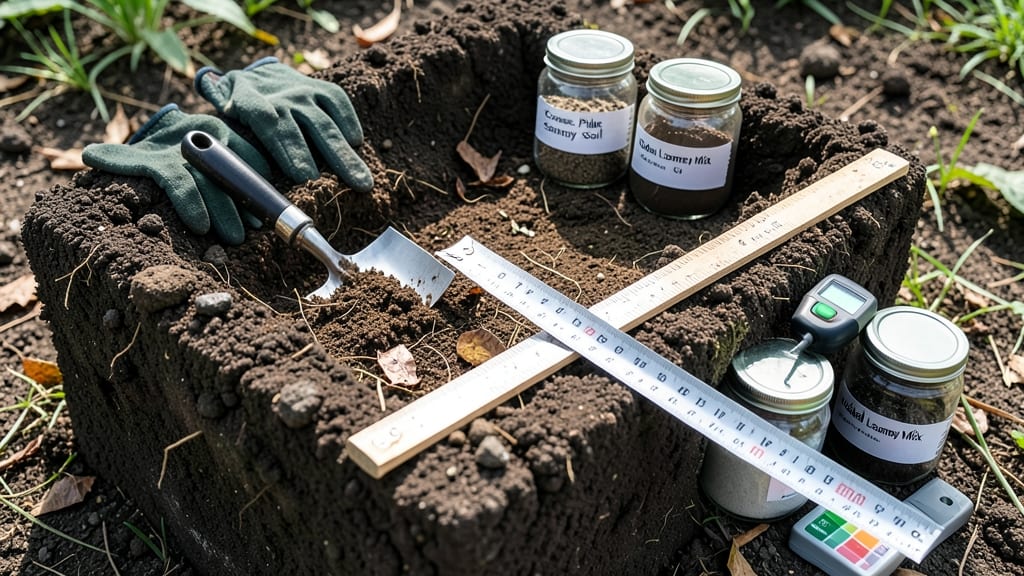
Understanding soil cubic feet turns guesswork into perfect planting precision. 🌱 That three-digit number isn't just math—it's the difference between a thriving garden and one that struggles with stunted growth or wasted soil.
I learned this the hard way when my first raised bed ended up with too much sand and not enough organic matter because I eyeballed the mix instead of measuring.
This measurement matters most when you're calculating how much soil, compost, or amendments to buy for projects like raised beds, container gardens, or even large-scale compost piles.
A simple formula—length × width × height (all in feet)—gives you the exact volume you need, saving money and ensuring your plants get the right growing medium from day one. No more overbuying bags of soil or ending up with half-empty containers.
You'll end up with garden beds that hold moisture just right, containers that don't dry out too quickly, and compost piles that break down efficiently.
The numbers might seem intimidating at first, but once you practice with a few projects, it becomes second nature—like knowing exactly how much mulch to spread for a neat, professional look. This is how you build a garden that actually performs.
Works for everything from small patio pots to full-size raised beds, and even helps when you're mixing your own soil blends. Let's get those measurements right so your plants can grow their best.
📚 In This Guide
- What you need
- Instructions
- Tips and common mistakes
- Wrapping up and next steps
What you need
- ● Measuring Tape: 25-foot tape (for accuracy in larger areas).
- ● String or Twine: 50+ feet (to mark boundaries).
- ● Stakes or Wooden Dowels: 10–12 pieces (6–12 inches long).
- ● Calculator: Scientific or basic (for cubic foot formulas).
- ● Notebook/Paper: For recording dimensions and calculations.
- ● Shovel or Spade: Medium-sized (for digging test holes or adjusting soil).
- ● Wheelbarrow or Bucket: 2–3 cubic feet capacity (for moving soil).
- ● Soil (if amending): Topsoil: 1–2 cubic yards (depending on project size).
- ○ Compost: 1–2 bags (optional but recommended for nutrient boost).
- ● Level: 18–24 inch (to ensure even soil distribution).
- ● Ruler or Yardstick: For smaller measurements (e.g., raised beds).
- ● Garden Gloves: 1 pair (protection + grip).
- ○ Knee Pads (optional): For comfort during long projects.
- ● Clear the planting area of debris (rocks, weeds, old plants).
- ● Check local soil type (sandy, clay, loamy) for amendments.
- ● Know your project’s dimensions (length × width × depth in feet).
- ● Weather check: Avoid working in soggy or frozen soil! ☔❄️
Step-by-Step guide to calculating soil cubic feet for perfect planting
Master this method and you'll never guess at soil volume again—just measure, multiply, and plant with confidence.
📏 Step 1: Measure Your Planting Space in Feet
Grab a tape measure and record the length, width, and depth of your planting area in feet. For example, a raised bed that's 4 feet long × 2 feet wide × 1 foot deep becomes your starting numbers. If you're working with irregular shapes, break the space into rectangles or circles and calculate each section separately.
I always double-check my measurements by walking them off with my feet—this catches mistakes when the tape measure gets tangled. Write these numbers down immediately; you'll need them for the next step. Remember, accuracy here means perfect results later.
📐 Step 2: Calculate the Volume in Cubic Feet
Multiply length × width × depth to get cubic feet. For our 4×2×1 foot example, that's 4 × 2 × 1 = 8 cubic feet. If your space is circular (like a tree well), use the formula π × radius² × depth—where π is 3.14 and radius is half the diameter.
Here's the thing—round up to the nearest whole number if you're dealing with partial feet. Planting 7.2 cubic feet of soil? Treat it as 8 cubic feet to ensure you have enough. This prevents running out mid-project and having to scramble for more soil.
🌱 Step 3: Adjust for Soil Type and Compaction
Not all soil behaves the same. Loose, fluffy potting mix or compost settles differently than dense garden soil. For most planting scenarios, add 10-15% extra volume to account for settling. In our 8 cubic feet example, that means ordering 9-10 cubic feet of soil to ensure you have enough after settling.
I always ask the supplier about compaction—some soils are pre-mixed with amendments that hold their shape better. If you're unsure, err on the side of extra soil. You can always give it away later, but you can't dig up more once the hole is empty.
✂️ Step 4: Apply the Volume to Your Planting Plan
Now that you know your exact soil volume, divide it by the cubic feet needed per plant. Most perennials need 1-2 cubic feet of space, while large shrubs or trees require 10-20 cubic feet or more. For example, if you're planting 4 bushes that each need 3 cubic feet, you'll need 12 cubic feet of soil total.
This is where precision pays off. Overcrowding plants leads to competition for nutrients and water, while too much space wastes soil and garden real estate. Use a simple spreadsheet to track your calculations—it keeps everything organized and stress-free.
📝 Step 5: Verify and Order Your Soil
Double-check your calculations by visualizing the space. Walk the area again and confirm the measurements match your notes. If you're ordering soil, specify the type (topsoil, compost, or a mix) and the exact cubic feet needed. Many suppliers sell soil by the yard (27 cubic feet), so round up to the nearest yard if needed.
Pro tip: Order 5-10% extra just in case. Soil bags can vary slightly in weight, and you don’t want to run out halfway through. Label your soil bags with the type and date—this helps you keep track of freshness, especially if you’re storing them for later.
Tips & tricks for perfect planting volume calculations
Precision is everything when it comes to planting—these tips will help you avoid common mistakes and achieve flawless results every time.
Measurement Accuracy: In Step 1, when measuring your planting space, use a sturdy tape measure and mark the ground with stakes or chalk to visualize the dimensions. This prevents misalignment and ensures you're measuring the exact space you'll fill. For irregular shapes, sketch a rough diagram first—breaking complex areas into simpler rectangles or circles makes calculations much easier.
Precision in Calculations: When calculating volume in Step 2, double-check your multiplication by using a calculator or spreadsheet. For example, if your space is 5.5 feet × 3.2 feet × 1.5 feet, round up to 6 × 3 × 2 = 36 cubic feet to avoid shortages. I always verify my math by estimating the volume visually—if it looks too small, I recalculate.
Soil Type Matters: In Step 3, remember that different soils settle at different rates. For heavy garden soil, add only 10% extra, but for lightweight potting mix, increase to 15%. I once ordered exactly 9 cubic feet for a project and ran out midway because I underestimated the settling of my compost mix—always err on the side of caution!
Planting Space Planning: In Step 4, use a simple spreadsheet to track your calculations. List each plant type, its required cubic feet, and the total volume needed. This helps you visualize the space and avoid overcrowding. For example, if you're planting 6 perennials that each need 2 cubic feet, you'll need 12 cubic feet total—this keeps your garden organized and healthy.
Pro Tips for Soil Cubic Feet
- Precision is everything when it comes to planting—these tips will help you avoid common mistakes and achieve flawless...
- Measurement Accuracy: In Step 1, when measuring your planting space, use a sturdy tape measure and mark the ground wi...
- Precision in Calculations: When calculating volume in Step 2, double-check your multiplication by using a calculator ...
Frequently asked questions
Got questions about soil cubic feet? You’re not alone!
Here are some of the most common queries—and their straightforward answers—to help you tackle your planting project with confidence.
What exactly is a cubic foot of soil?
A cubic foot of soil is a volume measurement equal to a cube that’s 12 inches long, 12 inches wide, and 12 inches tall (or 1728 cubic inches). Think of it as the space a small cooler-sized container would occupy when filled with dirt. This measurement helps gardeners and landscapers calculate how much soil they need for raised beds, containers, or garden plots.
How do I calculate cubic feet for irregularly shaped garden beds?
For oddly shaped beds, break the area into simple shapes (rectangles, circles, or triangles), calculate their individual volumes, and add them together. For example:
- Rectangles: Length × Width × Depth (in feet).
- Circles: (Diameter ÷ 2)² × 3.14 × Depth.
- Triangles: (Base × Height ÷ 2) × Depth.
Can I use cubic feet for container gardening?
Cubic feet are perfect for containers. Measure the interior dimensions of your pot (length × width × depth), then multiply to find the volume. For example, a 12" × 12" × 10" pot holds 1.33 cubic feet of soil. Always account for drainage holes—they reduce usable volume slightly.
What if my soil calculation seems off?
Double-check your measurements! Common mistakes include:
- Using exterior dimensions (e.g., pot thickness) instead of interior space.
- Forgetting to convert inches to feet (12" = 1 ft).
- Ignoring soil compaction—loose soil settles, so add 10–20% extra.
Are there alternatives to measuring cubic feet?
Yes! For quick estimates:
- Bag volume: A 2-cubic-foot bag covers ~1 sq ft at 2" depth.
- Wheelbarrow load: Most hold ~2–3 cubic feet of soil.
- Online tools: Apps like Gardenate or Better Homes & Gardens offer calculators.
Wrapping up and next steps
Understanding soil cubic feet is your secret weapon for smarter gardening—whether you're filling raised beds, calculating mulch needs, or designing dream landscapes. 🌱 By mastering this simple math, you’ll save time, money, and guesswork while giving your plants the perfect foundation to thrive.
Ready to put your new skills to work?
Next steps:
- Grab a tape measure and a calculator—start measuring your next project!
- Experiment with soil blends or amendments to fine-tune your mix.
- Share your progress with fellow gardeners for tips and inspiration!