
How To
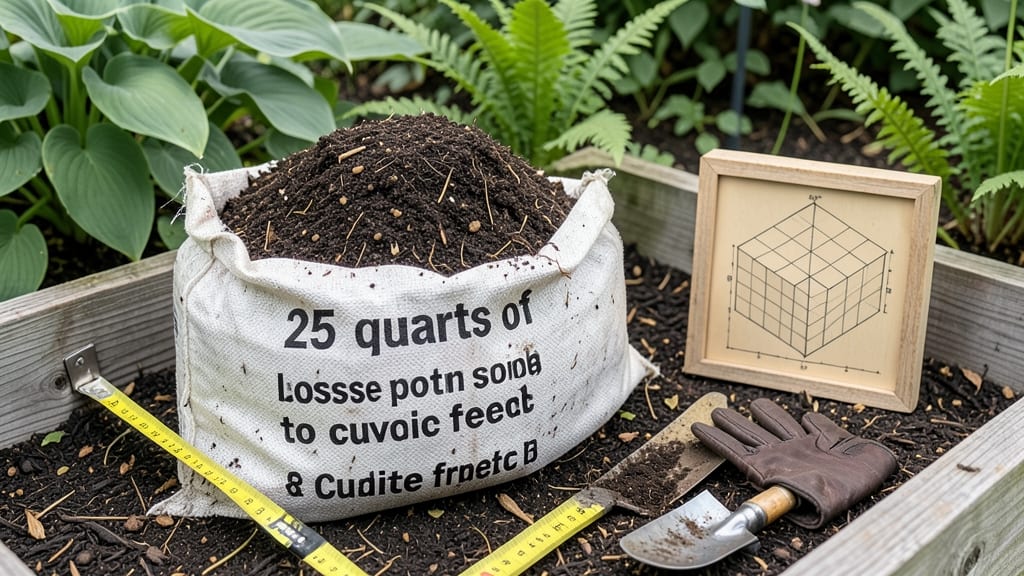
Converting 25 quarts of soil to cubic feet equals approximately 0.72 cubic feet, which helps gardeners accurately estimate soil volumes for containers, raised beds, or seedling trays.
This conversion is essential because soil volume directly impacts plant root development and container selection. For example, a standard 5-gallon pot holds about 6.7 quarts, while a 10x10-inch square foot garden bed requires roughly 1 cubic foot of soil.
Understanding these measurements ensures you buy the right amount of soil mix without overpaying or running short. 🌱
Gardeners often use this conversion when mixing soil blends or calculating how many bags to purchase. A 25-quart measurement translates to about 0.72 cubic feet, which is roughly the volume needed for a medium-sized seedling tray or a small raised bed section.
This precision prevents wasted soil and ensures your plants have the right growing environment.
For practical applications, consider that most 1-cubic-foot bags of potting mix contain about 29.92 quarts. So, if you need 25 quarts for a project, you'll only need about 0.84 bags—a useful shortcut when shopping for gardening supplies.
Always account for compaction when filling containers, as soil settles over time.
💡 In This Article
- How Quart and Cubic Foot Measurements Relate in Gardening
- Practical Uses for 25-Quart Soil Measurements in Planting
How quart and cubic foot measurements relate in gardening
The relationship between quarts and cubic feet stems from basic volume calculations where 1 cubic foot equals approximately 29.92 quarts. This comes from the fact that 1 cubic foot is a cube measuring 12 inches on each side, while 1 quart is about 0.0334 cubic feet.
For gardeners, this conversion is crucial because soil volume directly impacts root development and container selection. 🌱
When calculating soil needs, remember that most plants require specific root zones. A 5-gallon container (about 6.7 quarts) suits small herbs, while larger plants like tomatoes need at least 1 cubic foot of soil for proper growth.
The 25-quart measurement translates to 0.72 cubic feet, which is ideal for medium-sized containers or seedling trays where roots need room to expand but aren't overwhelming.
Soil compaction plays a key role here too. Loose soil settles over time, reducing its volume by 10-20% after watering. This means a freshly filled 25-quart container might only hold 20-22 quarts once settled. Understanding this helps prevent overfilling and ensures roots have proper aeration.
For example, a 10-inch-deep raised bed with a 12x12-inch base requires about 1.2 cubic feet of soil, which is roughly 36 quarts—nearly double your 25-quart measurement.
Different plant types also influence soil volume needs. Vegetables like lettuce thrive in shallow containers (6-8 inches deep), while deep-rooted plants like carrots need at least 12 inches of soil.
The 25-quart measurement works well for small vegetables or herbs but may be insufficient for larger crops. Always verify a plant's root depth requirements before selecting container sizes. 🌿
For precise calculations, use this formula: Volume (cubic feet) = Length (ft) × Width (ft) × Depth (ft). For example, a 12x12x6-inch container equals 0.5 cubic feet or about 15 quarts.
This helps visualize how 25 quarts fits into larger projects, like filling a 4x4-foot raised bed (which needs 16 cubic feet or 480 quarts).
Understanding these measurements ensures you purchase the right amount of soil mix without excess waste. For instance, a 40-quart bag (about 1.33 cubic feet) covers most small projects, while larger gardens require multiple bags. Always check bag labels for "cubic feet" or "quarts" to avoid miscalculations. 📏