Light Requirements
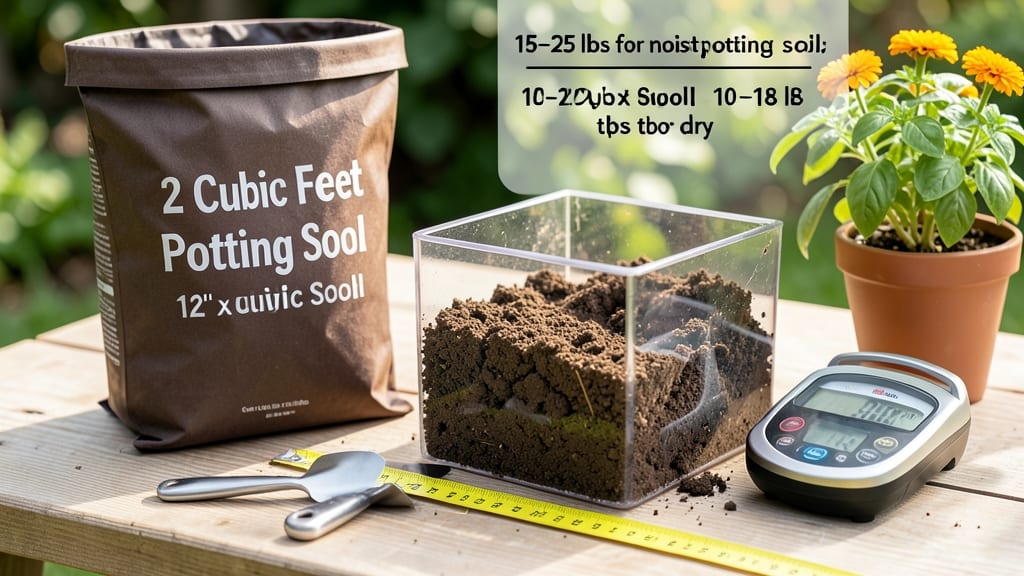
Two cubic feet of potting soil typically weighs 25 to 40 pounds, depending on moisture content, organic matter composition, and whether it’s loose or compressed. Organic mixes like peat-based blends are lighter, while mineral-heavy or moistened soils can weigh more.
Understanding potting soil weight helps you plan for container gardening and plant support. 🌱 The variation comes from how much water the soil holds—dry mixes can drop to 15 pounds, while freshly watered blends may reach 50 pounds.
I’ve found that bagged mixes labeled "lightweight" often use expanded minerals like perlite, while garden centers sometimes sell heavier, nutrient-rich compost blends that weigh more. For heavy plants like tomatoes, I always opt for larger containers to accommodate both soil and root mass without tipping over.
Another key factor is how soil settles over time. Freshly bagged potting soil often weighs less initially, but after watering and settling into a pot, its density increases by 10-20%. This is why I recommend adding extra soil when repotting—your plants will need the space as the mix compacts.
For structural stability, I’ve learned to calculate 10-15 pounds per square foot of container surface area as a safe baseline for most plants.
💡 In This Article
- Factors Affecting Potting Soil Weight per Cubic Foot
- Practical Weight Considerations for Containers and Plant Health
Factors affecting potting soil weight per cubic foot
The weight of potting soil varies dramatically based on its composition. Organic materials like peat moss, coconut coir, and compost have low bulk density—meaning they weigh less per cubic foot because they contain air pockets and decompose over time.
A bag of pure peat moss, for example, might weigh only 12-15 pounds per cubic foot when dry, but this increases to 20-25 pounds when moistened.
Inorganic components like perlite, vermiculite, or sand add heft—perlite alone can weigh 4-8 pounds per cubic foot, while coarse sand approaches 90 pounds per cubic foot due to its compact mineral structure. 💫
Moisture content is the single biggest factor in weight fluctuations. Dry potting soil can weigh 15-20 pounds per cubic foot, but once watered to field capacity (the point where plants can access moisture without drowning), that same volume jumps to 30-40 pounds. The reason?
Water fills the air gaps between soil particles, increasing overall density. For example, a 5-gallon bag of dry potting mix might weigh 20 pounds, but after adding water, it could swell to 30 pounds—a 50% increase in weight.
This is why gardeners often underestimate how heavy their containers will become after watering.
Compaction plays a surprising role too. Freshly bagged potting soil is often fluffy and lightweight, but once you transfer it to a pot and water it, the particles settle. Over time, especially in heavy clay pots, the soil can compact by 10-20%, reducing air space and increasing weight.
For instance, a 10-gallon container filled with loose soil might start at 25 pounds, but after a few waterings and settling, it could reach 35 pounds. This is why I always recommend adding 10-15% extra soil when repotting—your plants will need the space as the mix compresses. 🌱
Different soil blends cater to specific plant needs, which directly impacts weight. Seed-starting mixes, designed to be lightweight and fast-draining, often include 50-70% perlite or vermiculite, keeping weights in the 15-25 pounds per cubic foot range.
In contrast, container mixes for mature plants like tomatoes or citrus trees incorporate more compost and slower-draining materials, pushing weights toward 30-40 pounds per cubic foot. The trade-off? Heavier soils retain moisture longer but require sturdier containers to prevent tipping.
Temperature and humidity also influence weight in subtle ways. In hot, dry climates, potting soil loses moisture faster, reducing weight and potentially causing cracks in containers. Meanwhile, in humid environments, soil absorbs more atmospheric moisture, adding 2-5 pounds per cubic foot over time.
For example, a 2-cubic-foot bag might weigh 30 pounds in a dry garage but 35 pounds after sitting in a damp basement for a week. This variability is why I always check soil moisture before estimating weight for large projects. ✨
Understanding these factors helps you make smarter choices. If you're growing heavy plants like citrus trees or large succulents, opt for mineral-rich, heavier blends to provide stability. For delicate seedlings or air plants, lightweight, fast-draining mixes keep roots healthy without overwhelming containers.
The key is balancing weight with your plants' needs—whether that means reinforcing pots or choosing the right soil blend from the start. 💡