Landscaping
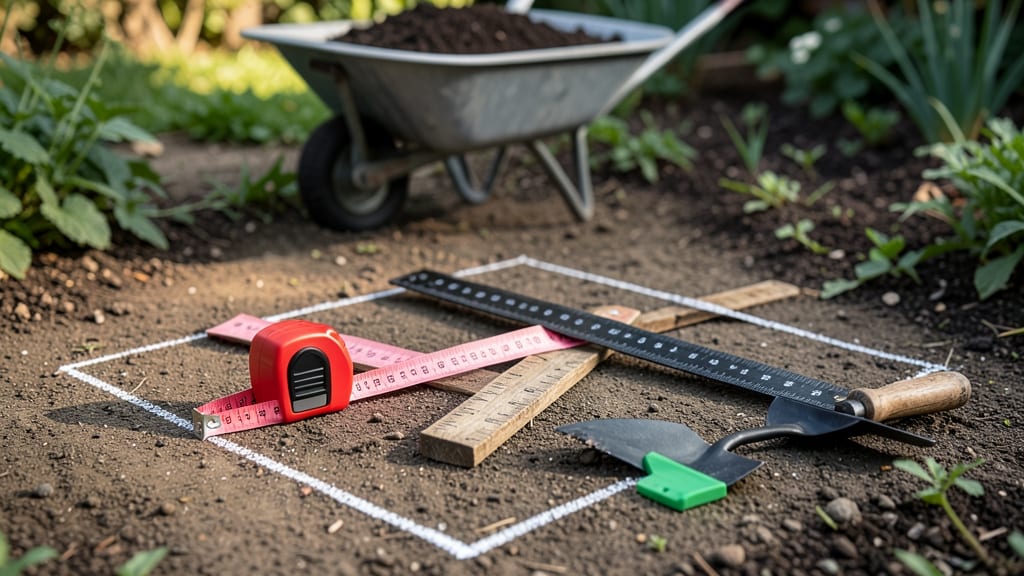
A yard of soil measurement refers to a cubic yard (3 feet × 3 feet × 3 feet), totaling 27 cubic feet. This volume is standard for garden projects, landscaping, and bulk soil purchases, typically weighing 2,000–2,500 pounds when moist.
Understanding a yard of soil measurement means grasping both volume and weight—since soil isn't like water, its density changes based on moisture and composition.
A cubic yard of topsoil might weigh 2,200 pounds when damp, while sandy soil could drop to 1,800 pounds due to its looser structure. 🌱 For gardeners, this means calculating how much you need for projects like raised beds (typically 1 cubic yard per 4×4-foot bed) or filling in low spots, where bulk purchases save money over bagged soil.
Most nurseries sell soil by the cubic yard because it’s the industry standard for large-scale projects. Loamy soil (the ideal mix of sand, silt, and clay) usually falls in the 2,000–2,500-pound range, but clay-heavy soil can push closer to 3,000 pounds when saturated.
Always check moisture levels—wet soil weighs more and compacts differently, affecting how much you’ll actually need for your landscape.
💡 In This Article
- How Cubic Yards Convert to Feet and Pounds
- When to Buy a Cubic Yard of Soil for Gardens
How cubic yards convert to feet and pounds
A cubic yard is a three-dimensional measurement that equals 27 cubic feet (3 feet × 3 feet × 3 feet). This volume helps landscapers and gardeners visualize how much space they're filling.
For example, a 4×4-foot raised bed with 1-foot-high walls needs exactly 1 cubic yard of soil to fill it completely. The math comes from multiplying length × width × height, where each dimension is in feet.
Soil weight varies dramatically based on its composition. Sandy soil weighs about 1,800 pounds per cubic yard due to its loose particles, while clay soil can reach 2,800 pounds because of its dense, compact structure. Loamy soil (the gold standard for gardens) typically falls between 2,000–2,500 pounds.
Moisture plays a huge role too—wet soil can weigh 30–50% more than dry soil because water fills the air pockets between particles. 💧
Understanding these conversions helps you avoid overbuying or running short. For instance, a 10×10-foot garden bed that's 6 inches deep requires 0.42 cubic yards—about 940 pounds of loamy soil. Most bulk suppliers sell soil by the cubic yard, so knowing these measurements lets you order precisely.
Always ask for "screened topsoil" if you're planting, as it’s free of rocks and debris.
Here’s a quick reference for common soil types:
- Sandy soil: 1,600–1,800 lbs/yd³ (light, drains fast, needs organic matter)
- Loamy soil: 2,000–2,500 lbs/yd³ (ideal for plants, retains moisture)
- Clay soil: 2,500–3,000 lbs/yd³ (heavy, compacts easily, needs aeration)
Moisture content changes everything. A cubic yard of dry soil might weigh 1,500 pounds, but the same volume when saturated could hit 2,200 pounds. This is why suppliers often sell by volume, not weight—it’s easier to measure a 3×3×3-foot pile than weigh it on-site. 🌱
For practical purposes, always round up when ordering. If your calculations show 0.75 cubic yards, buy 1 cubic yard to account for settling and uneven surfaces. This small buffer prevents last-minute trips to the nursery and ensures your project stays on track.