
How To
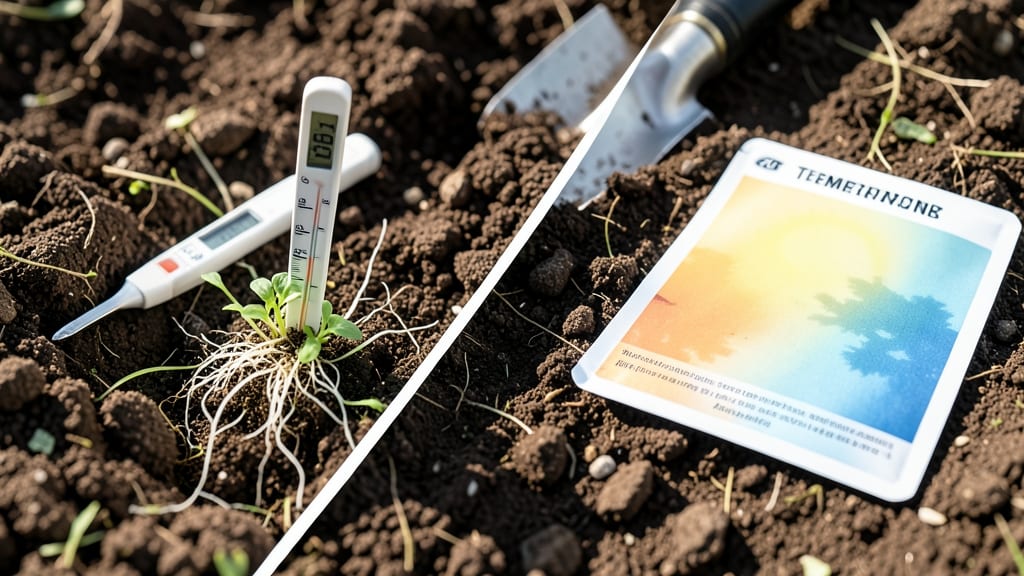
Soil temperature plays a critical role in seed germination and root development, as warmer conditions activate enzymes that break down seed coatings and facilitate nutrient uptake, while cooler temperatures slow these processes. Most plants thrive in soil between 60°F and 85°F, though specific needs vary by species.
Understanding how soil temperature affects plant growth starts with the science behind germination. 🌱 When soil reaches the right warmth, seeds activate enzymes that trigger growth, while too much heat can actually stress delicate roots or even kill seeds before they sprout.
I’ve found that using a simple soil thermometer helps avoid guesswork—especially when planting warm-season crops like tomatoes in early spring or cool-season greens in late summer.
Different plants have different comfort zones. For example, lettuce and spinach prefer cooler soil around 50°F–65°F, while peppers and cucumbers need warmth closer to 75°F–85°F. Mulching with straw or leaves can help regulate temperature fluctuations, creating a more stable environment for roots.
Even a few degrees outside the ideal range can delay germination by weeks, so checking soil conditions before planting pays off big time.
💡 In This Article
- How Soil Temperature Triggers Seed Germination
- Optimal Soil Temperature Ranges for Common Garden Plants
How soil temperature triggers seed germination
At the core of germination lies a biochemical dance between warmth and cellular activity. When soil reaches the right temperature—typically between 60°F and 85°F—enzymes like amylase and protease become active, breaking down starches and proteins stored in the seed.
These enzymes convert stored nutrients into energy, fueling the seed's metabolism and allowing it to "wake up."
For example, fast-germinating seeds like radishes or lettuce can sprout within 3-7 days at 70°F, while slower seeds like beans may take 10-14 days at the same temperature. 🌱 The warmth also softens the seed coat, making it easier for water to penetrate and kickstart hydration.
Water uptake is another critical factor tied to temperature. Cooler soil slows water absorption because the seed's cell membranes become less permeable. At 50°F, a seed might absorb only 30% of its hydration capacity in 24 hours, compared to 80% at 75°F.
This is why seeds planted in chilly spring soil often rot before sprouting—they can't access enough oxygen or nutrients. Meanwhile, excessive heat above 90°F can denature enzymes, causing seeds to dry out or develop abnormal growth patterns, like weak, leggy seedlings.
Cellular respiration—the process where seeds convert oxygen and nutrients into energy—accelerates with warmth. At 75°F, a seed's respiration rate can be 3-5 times faster than at 55°F, directly impacting how quickly roots and shoots emerge.
This is why gardeners in cold climates often use heat mats or row covers to jumpstart germination. The energy produced from respiration also triggers the production of gibberellins, a plant hormone that signals the seed to break dormancy and push through the soil.
Not all seeds respond the same way to temperature. Some, like tomatoes or peppers, require consistent warmth to germinate, while others, such as carrots or onions, can tolerate cooler conditions. This variation is due to differences in their germination thresholds—the minimum temperature required to activate enzymes.
For instance, tomato seeds need soil at least 70°F to sprout, whereas onion seeds can germinate as low as 40°F, though they'll grow more slowly. Understanding these thresholds helps gardeners time plantings for optimal success.
Even after germination, soil temperature continues to influence root development. Roots grow best when soil is slightly warmer than air temperature, typically 5-10°F warmer at a depth of 2-4 inches.
This is why mulching with organic matter—like straw or compost—helps retain heat near the roots, especially in early spring or late fall. Without this warmth, roots may grow unevenly or become stunted, leading to weaker plants that struggle to absorb nutrients. 🌿
One common misconception is that "warmer is always better." In reality, extreme heat can be just as damaging as cold. Soil above 95°F can cause seeds to overheat**, leading to premature drying or even death.
This is why shade cloth or afternoon watering is often used in hot climates to protect young seedlings. The key is balance—creating an environment where seeds and roots can thrive without stress.