
Light Requirements
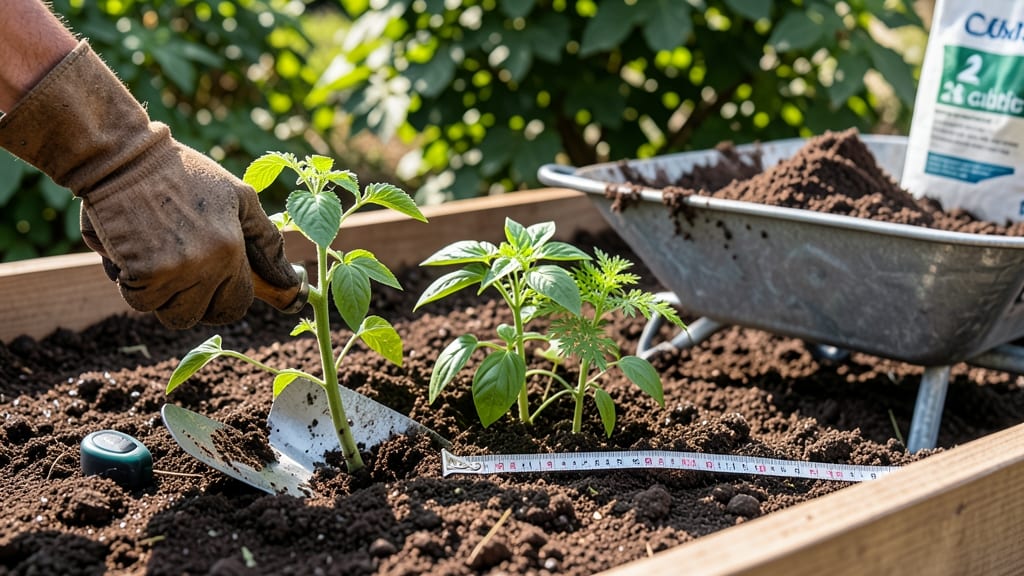
Calculating garden soil needs starts with your project's dimensions—because buying too little means replanting, and too much means wasted money. 🌱 I learned this the hard way when my first raised bed left me scrambling for extra soil halfway through filling it.
The trick is simple math: length × width × depth (in feet), then adjust for compaction and project type.
For example, a 4×8-foot raised bed filled to 12 inches deep needs about 32 cubic feet of soil—but that’s before accounting for settling. Vegetable beds need 6-12 inches of loose, fertile soil, while flower beds can thrive with 4-6 inches.
Multiply your cubic feet by 1.3 to account for soil settling after watering and root growth.
Once you know the cubic feet, convert to pounds using the soil type: topsoil weighs about 2,000 pounds per cubic yard (27 cubic feet). A 4×8×12-inch bed translates to roughly 2,400 pounds—or 1.2 tons—of soil. Pro tip: Buy 10-15% more than your calculation to avoid shortages mid-project.
Cost-saving strategies include borrowing topsoil from a neighbor’s yard (if clean and free of weeds) or using compost or leaf mold to stretch your soil further.
For containers, 1-gallon pots need about 1 pound of soil, while 5-gallon pots require 5-7 pounds. Measure twice, buy once—and your garden will thank you.
📚 In This Guide
- What you need
- Instructions
- Tips and common mistakes
- Wrapping up and next steps
What you need
- ● Measuring tape or ruler – For accurate length, width, and depth measurements (at least 10 feet long for larger areas).
- ● Notebook or calculator – To jot down dimensions and compute cubic feet (or use a free online volume calculator).
- ● Garden soil or topsoil – 1 cubic yard (~27 cubic feet) covers ~100 sq. ft. at 3 inches deep. Buy in bulk (e.g., 2–5 cubic yards) for bigger beds.
- ● Wheelbarrow or shovel – For transporting soil (a 3-cubic-foot wheelbarrow is ideal for small projects).
- ● Garden gloves – To protect your hands from rough soil and debris.
- ● Soil amendment – Compost (1 part compost to 3 parts soil) or peat moss to improve drainage and nutrients.
- ● Level or string line – Ensures your plant bed has an even surface.
- ● Soil test kit – Checks pH and nutrient levels before planting.
- ● Watering can or hose – For settling soil after spreading.
How to calculate garden soil needs for plant beds
Here's the straightforward method I use to determine soil volume—no guesswork involved.
📏 Step 1: Measure Your Plant Bed Dimensions
Start by measuring the length, width, and depth of your planting area using a tape measure. For most garden beds, a standard depth of 6-12 inches is ideal—this provides enough root space while remaining manageable to work with. Write down these measurements in feet (not inches) for calculation purposes.
For example, a 4-foot by 8-foot bed with 10 inches of soil depth would be your starting point. If your bed has irregular shapes, break it into rectangular sections and calculate each separately. Remember, you'll need to account for any existing soil already present in the bed.
📊 Step 2: Calculate Cubic Feet of Soil Required
Multiply your length × width × depth (in feet) to get the cubic footage. Using our example: 4 ft × 8 ft × (10 inches ÷ 12 inches/foot) = 4 × 8 × 0.833 = 26.67 cubic feet of soil needed. This is your base volume before accounting for soil type or compaction.
For multiple beds, calculate each separately and add the totals. I always round up to the nearest whole number to ensure I have enough—running out mid-project is frustrating. Keep this number handy as you'll need it for both loose soil and amended soil calculations.
🏋️ Step 3: Convert Cubic Feet to Pounds for Purchase
Most soil suppliers sell by weight (pounds), not volume. Loose topsoil typically weighs about 1,000 pounds per cubic yard (27 cubic feet). Divide your cubic feet by 27 to get cubic yards, then multiply by 1,000 to convert to pounds. In our example: 26.67 ÷ 27 = 0.99 cubic yards × 1,000 = 990 pounds of loose topsoil needed.
For amended soil mixes (which contain compost or other materials), the weight increases. A good quality amended soil might weigh 1,200-1,500 pounds per cubic yard. Always ask your supplier for the exact weight per cubic yard of their specific product to get an accurate estimate.
🌱 Step 4: Account for Soil Settling and Amendments
Soil settles over time, reducing its volume by about 20-30% after watering and settling. Multiply your cubic feet calculation by 1.25 to account for this. In our example: 26.67 × 1.25 = 33.34 cubic feet of loose soil needed before settling.
If you're adding significant amendments like compost or peat moss, increase your volume by another 10-20%. These materials break down over time, adding organic matter but also increasing the total volume needed. For our example with 15% amendments: 33.34 × 1.15 = 38.34 cubic feet total.
💡 Step 5: Verify with Supplier and Order
Call your local garden center or soil supplier with your final cubic feet calculation. They may offer delivery options that bring soil in 1 cubic yard (27 cubic feet) bags. For our example, you'd need 2 bags (54 cubic feet total) to cover the 38.34 cubic feet needed after accounting for settling and amendments.
Ask if they offer a "soil calculator" tool on their website—many do, and it can double-check your manual calculations. I always order 5-10% extra to account for any unexpected depth needs or spillage during spreading. This small buffer prevents last-minute trips back to the store.
Tips & tricks for perfect plant bed soil calculations
Real talk: Even small miscalculations can leave you scrambling for more soil mid-project. Here's what I've learned to avoid those headaches.
Precision in Step 1: When measuring depth in Step 1, use a level to ensure consistent soil depth across the entire bed. I've seen uneven beds where one end was 6 inches deep and the other 12—this creates calculation errors. For irregularly shaped beds, divide them into simple geometric shapes (rectangles, circles) and calculate each separately before adding totals. A 3-foot diameter circular bed with 8-inch depth, for example, requires πr²h calculations (π × 1.5² × 0.67 = 4.7 cubic feet).
Rounding Strategy: In Step 2, rounding up to the nearest whole number is smart, but don't overdo it. For volumes under 10 cubic feet, rounding to the nearest 0.5 cubic foot prevents unnecessary over-purchasing. I've seen gardeners order 30 cubic feet when 28.5 would suffice, just because they rounded up from 27.5—wasteful but common. For larger projects, consider rounding to the nearest 5 cubic feet for better efficiency.
Supplier Communication: In Step 5, don't assume all suppliers use the same weight per cubic yard. I once ordered 1,000 pounds of "topsoil" only to get a mix that weighed 1,300 pounds per cubic yard—my 30 cubic feet order became 23 cubic feet instead! Always ask for the exact weight per cubic yard of their specific product. Pro tip: Request a sample bag to test settling characteristics before committing to large quantities.
Visual Verification: For Step 4's settling factor, here's a practical test: Fill a 5-gallon bucket with loose soil, then compact it by hand to simulate settling. Measure the difference in volume—this gives you a real-world settling percentage for your specific soil type. I've found some soils settle 30% while others only settle 15%, depending on organic content and moisture levels.
Pro Tips for How Much Garden Soil Do I Need
- Real talk: Even small miscalculations can leave you scrambling for more soil mid-project. Here's what I've learned to...
- Precision in Step 1: When measuring depth in Step 1, use a level to ensure consistent soil depth across the entire be...
- Rounding Strategy: In Step 2, rounding up to the nearest whole number is smart, but don't overdo it. For volumes unde...
Frequently asked questions
Got questions about calculating garden soil needs? Here are some common ones—and their answers—to help you plan like a pro!
How do I convert cubic feet to pounds for garden soil?
Most garden soil weighs about 40–50 pounds per cubic foot when loose. For example, if you need 10 cubic feet, multiply by 45 lbs (10 × 45 = 450 lbs total). Always check the bag’s label for exact weight—some blends vary!
Can I use topsoil instead of garden soil for raised beds?
Yes, but with a twist! Topsoil is great for bulk, but mix it with compost (1:1 ratio) to boost nutrients. Pure topsoil can compact over time, while garden soil is already enriched for planting. For heavy feeders like tomatoes, add a 2–3 inch layer of compost on top.
How much soil do I need for a circular garden bed?
Use the formula for volume: πr² × depth. For a 5-foot diameter bed with 6-inch soil depth, calculate:
- Radius (r) = 2.5 feet
- Area = π × (2.5)² ≈ 19.6 sq ft
- Volume = 19.6 × 0.5 = 9.8 cubic feet (round up to 10 cubic feet).
Is it cheaper to buy bags or bulk soil?
Bulk soil is far more cost-effective for large projects! A 1 cubic yard (27 cubic feet) of bulk soil costs ~$30–$50, while bags (1–2 cubic feet) average $3–$5 each. For a 100 sq ft bed at 6" depth (25 cubic feet), bulk saves ~$50+. Rent a trailer if hauling!
Should I add soil when it’s raining?
Wait for dry or lightly damp soil—wet soil clumps, making it hard to spread evenly. If you must work in rain, cover bags with tarps and let them sit for 24 hours to dry out. Avoid heavy foot traffic on fresh soil, too, or it’ll compact before plants go in!
What if my soil keeps sinking after planting?
This usually means compaction or poor drainage. Fix it by:
- Mixing in perlite or vermiculite (10%) for aeration.
- Adding a 1–2 inch layer of mulch to protect the surface.
- Gently fluffing the soil with a rake after watering.
Wrapping up and next steps
Calculating the right amount of garden soil for your project doesn’t have to be complicated—just measure, multiply, and adjust! Whether you’re filling raised beds or refreshing in-ground plots, knowing cubic feet to pounds ensures you buy the perfect amount without waste.
With the right tools and a little prep, you’ll transform your garden into a thriving space in no time 🌱✨.
Ready to get started? Grab your measuring tape, break out the math, and dig in! Your future plants will thank you.