
Light Requirements
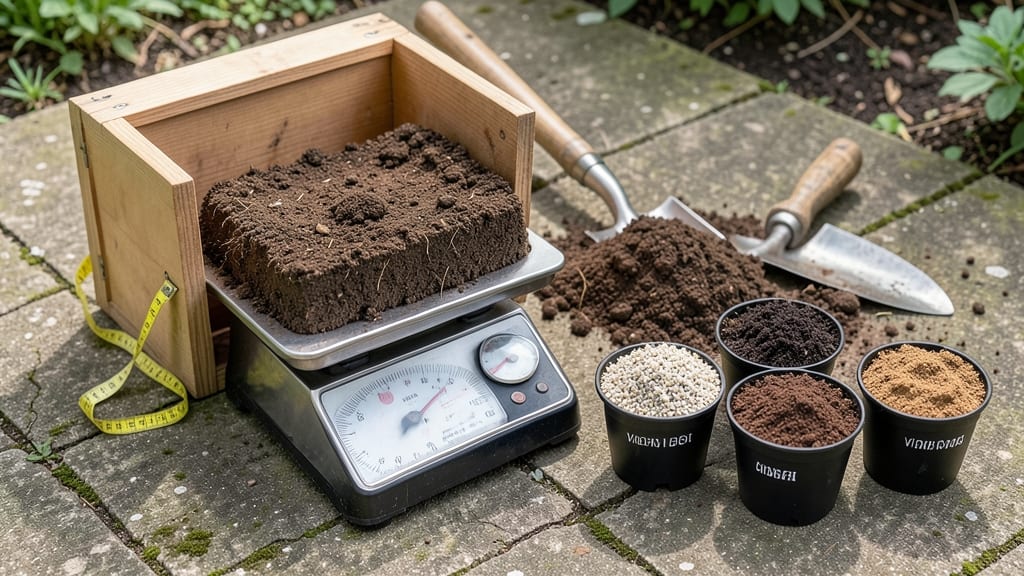
To determine how much 1 cubic foot of soil weighs, expect 40 to 140 pounds depending on its composition—sandy soil is lighter (~40–60 lbs), loamy soil averages (~80–100 lbs), and clay-heavy soil can exceed 120 lbs. Moisture content adds 10–30% extra weight when saturated.
Understanding soil weight matters because it directly impacts everything from garden project planning to soil delivery logistics. 🌱 The variation comes down to particle size and density: sand particles are large and loosely packed, while clay has tiny, tightly packed particles that trap more water.
Even a small change in organic matter—like compost—can shift the weight by up to 20 pounds per cubic foot. For example, a raised bed filled with loamy soil might weigh around 80 pounds dry, but after a heavy rain, that same volume could swell to over 100 pounds.
This weight difference becomes critical when calculating how much soil you'll need for projects like filling raised beds or truckload deliveries.
A common mistake is ignoring moisture—wet soil can be nearly 30% heavier than dry soil, which might surprise gardeners planning for transport or storage. 💧 Always account for seasonal moisture variations, especially in clay-heavy soils that retain water longer.
💡 In This Article
- Soil Density and Weight Variations by Composition
- Practical Weight Calculations for Gardening Projects
Soil density and weight variations by composition
Soil weight per cubic foot varies dramatically because of its composition—think of it like comparing packing peanuts to bricks. Sandy soil is the lightest because its large particles create air pockets, giving it a density of about 60-70 lbs per cubic foot when dry.
The particles themselves are heavy, but the spaces between them reduce overall weight. In contrast, clay soil has tiny particles that pack tightly together, creating a dense matrix that can weigh 100-140 lbs per cubic foot—nearly double the weight of sand.
The key factor is porosity—the amount of air and water a soil type can hold. Sandy soil has high porosity but low water retention, while clay has low porosity but high water-holding capacity.
Loamy soil (the ideal mix of sand, silt, and clay) strikes a balance, typically weighing 80-100 lbs per cubic foot when dry.
Organic matter adds another layer—compost or decomposed plant material can increase weight by 15-25 lbs per cubic foot because it's denser than mineral particles. 🌱 For example, a cubic foot of pure compost might weigh around 40 lbs, but when mixed with mineral soil, it pushes the total weight higher.
Moisture plays a critical role in these calculations. Dry soil weights are straightforward, but water adds significant bulk—up to 30% more weight when fully saturated. Clay soils absorb the most water, which is why they feel heavier after rain.
Sandy soils drain quickly, so their weight stays closer to the dry measurement. This is why gardeners often see dramatic weight differences between summer (dry) and spring (wet) seasons.
For instance, a raised bed filled with clay soil might weigh 120 lbs dry but swell to 160 lbs after heavy irrigation.
Particle size distribution also affects weight. Silt particles (smaller than sand but larger than clay) create a middle-ground density. A soil with 40% sand, 40% silt, and 20% clay would typically weigh around 90 lbs per cubic foot when dry.
The more clay present, the heavier the soil becomes due to its high surface area and water-binding properties. This is why gardeners often amend heavy clay soils with sand or organic matter to improve workability—it reduces both density and water retention.
Understanding these variations helps explain why your garden soil might feel dramatically different from store-bought potting mix. Potting mix is often designed to be lightweight (around 30-50 lbs per cubic foot) because it contains more organic matter and less mineral content.
In contrast, native garden soil tends to be heavier due to its higher clay and silt content. This weight difference becomes crucial when planning projects like building raised beds or calculating how much soil you'll need for large-scale landscaping.
Here's a quick comparison of common soil types:
- Pure sand: 40-60 lbs (dry), up to 70 lbs when wet
- Loamy soil: 80-100 lbs (dry), up to 130 lbs when saturated
- Clay soil: 100-140 lbs (dry), up to 180 lbs when wet
- Potting mix: 30-50 lbs (lighter due to organic content)
This variation explains why gardeners often need to adjust their expectations when working with different soil types.
For example, moving a cubic foot of clay soil is significantly more challenging than handling the same volume of sandy soil—both in terms of physical effort and structural considerations for containers or beds. 💪