
Light Requirements
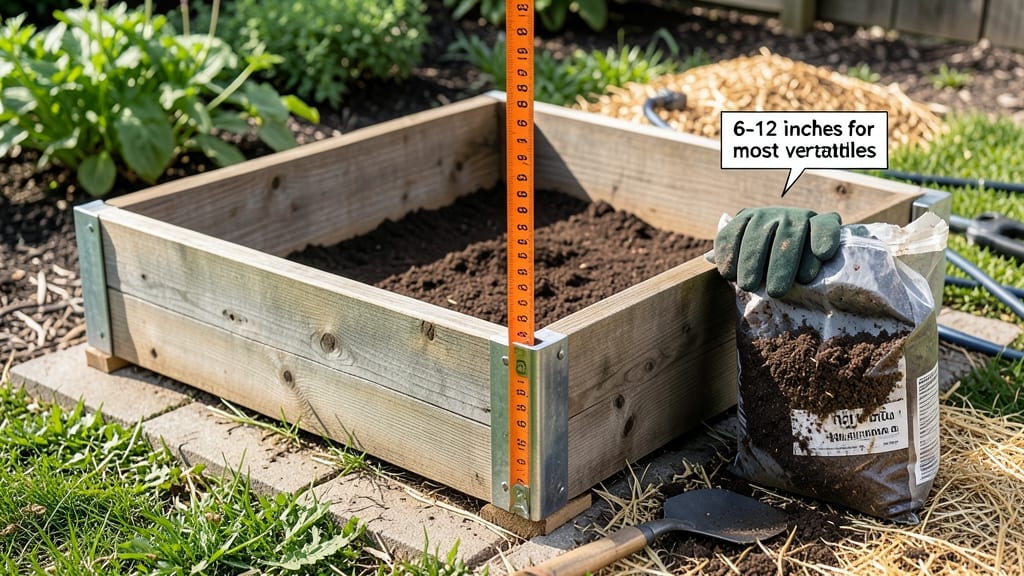
To determine how much soil is needed for a raised bed, aim for 6 to 12 inches of growing medium for most vegetables, while deeper beds (12–18 inches) work best for root crops like carrots or potatoes. Calculate your total by multiplying length × width × depth (e.g., a 4×8 ft bed at 12 inches requires ~12 cubic feet of soil).
How much soil is needed for a raised bed directly impacts your plants' success—shallower beds (6 inches) work for leafy greens and herbs, while deeper beds (12+ inches) give root vegetables the space they need to thrive. 🌱 The extra depth also improves drainage and temperature regulation, protecting roots during heatwaves or cold snaps. When calculating volume, remember that loose, airy soil (like compost blends) takes up more space than dense loam, so buy 10–20% extra to account for settling.
For example, a 4×8 ft bed at 12 inches deep requires about 12 cubic feet of soil, but if you're using a mix of compost and topsoil, you might need closer to 15 cubic feet to ensure proper aeration.
Pro tip: Layering 4–6 inches of compost at the bottom boosts fertility while saving money on premium soil for the top layers.
💡 In This Article
- Why Soil Depth Matters for Raised Bed Plant Health
- Raised Bed Soil Calculator: Step-by-Step Volume Guide
Why soil depth matters for raised bed plant health
Soil depth in raised beds isn’t just about filling space—it directly impacts root development, water retention, and nutrient availability. Shallow beds (6 inches) work well for leafy greens like lettuce or herbs, whose roots rarely exceed 12 inches in depth.
However, these beds can dry out faster because the topsoil layer heats up quicker in sunlight, stressing shallow-rooted plants during hot afternoons. 🌱 Deeper beds (12+ inches) create a cooler, more stable microclimate near the roots, which is critical for heat-sensitive crops like spinach or peas.
The science behind this lies in how soil temperature and moisture gradients form. In a 12-inch-deep bed, the top 4 inches may reach 85°F on a sunny day, while the bottom 4 inches stays near 70°F—a 15°F difference that protects delicate roots.
This temperature stratification also slows evaporation, reducing the need for frequent watering. For root crops like carrots or potatoes, deeper soil prevents "forking" (split roots) by allowing unrestricted growth downward instead of sideways.
Nutrient retention is another key factor. Organic matter in deeper soil decomposes more slowly, releasing nutrients gradually over months rather than weeks.
A 6-inch bed’s nutrient supply gets depleted faster, especially for heavy feeders like tomatoes or peppers, which require consistent phosphorus and potassium. 🌿 Meanwhile, deeper beds act like a "nutrient reservoir," where composted materials at the bottom feed the top layers over time.
This is why many gardeners layer 6 inches of compost at the base before adding finished soil.
Drainage also shifts with depth. Shallow beds can become waterlogged after heavy rains because excess moisture has nowhere to escape, leading to root rot in plants like kale or cabbage.
Deeper beds, however, allow water to percolate through 12+ inches of soil before reaching the bottom barrier (hardware cloth or landscape fabric), preventing soggy conditions. This is particularly important in clay-heavy soils, where water pools at the surface without deeper layers to absorb it.
Consider the plant’s natural growth habits when choosing depth. Shallow-rooted crops like radishes thrive in 6-inch beds, while deep-rooted varieties such as asparagus or artichokes need 18+ inches to establish properly. Even for mixed beds, aiming for 12 inches gives you flexibility to grow both types without compromising either.
The extra effort in soil volume pays off in stronger, healthier plants with higher yields.
One common misconception is that "more soil is always better." While depth helps, the quality of that soil matters just as much. A 6-inch bed filled with nutrient-rich compost can outperform a 12-inch bed of poor-quality topsoil.
Always prioritize a mix of 40% topsoil, 30% compost, and 30% perlite/sand for optimal structure and fertility. 💡