
Light Requirements
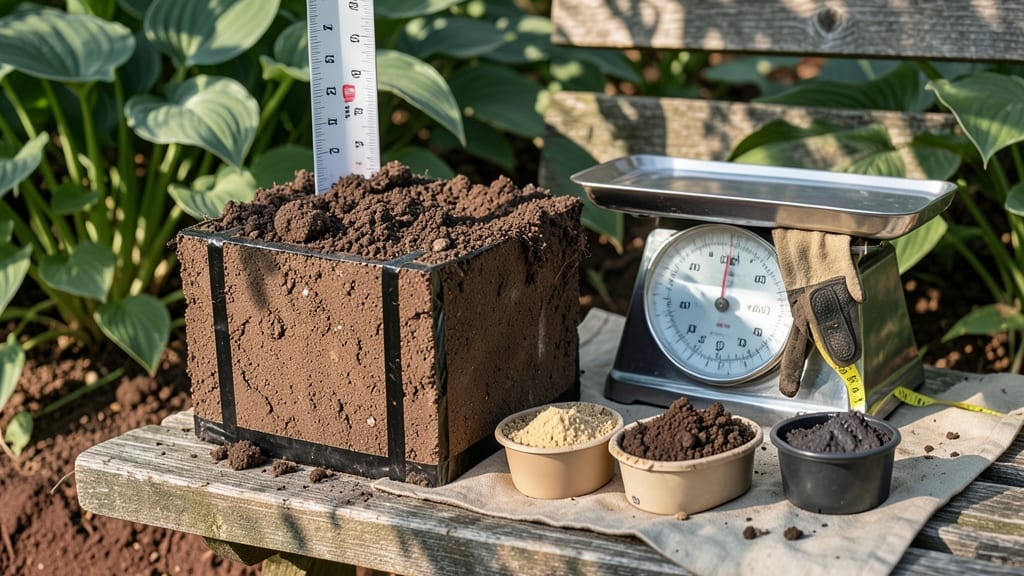
To determine how much 1 cubic foot of soil weighs, expect between 40 to 120 pounds depending on moisture content, organic matter, and compaction—sandy soil averages 75 pounds while clay-heavy soil can reach 120 pounds. Loam, ideal for planting, typically weighs 80 to 100 pounds per cubic foot.
Understanding soil weight matters because it directly affects your gardening setup. 🌱 For instance, clay soil's dense particles pack tightly, making it significantly heavier than loose, airy sand. This weight difference impacts everything from container selection to irrigation planning—heavier soils require sturdier supports and may need less frequent watering.
When choosing soil for containers, consider how much weight you're willing to manage; lighter mixes might include perlite or compost to reduce bulk while maintaining fertility.
Moisture plays a surprising role too—wet soil can weigh up to 30% more than dry soil due to water absorption. That's why gardeners often pre-moisten soil before filling containers to account for this weight shift during planting.
The good news? Loam's balanced composition makes it both plant-friendly and manageable in weight, striking that perfect middle ground for most gardeners.
💡 In This Article
- Factors Affecting Soil Weight Per Cubic Foot
- Practical Soil Weight Considerations for Garden Beds and Containers
Factors affecting soil weight per cubic foot
Soil weight varies dramatically because it's not just dirt—it's a complex mix of minerals, organic matter, water, and air. The primary driver is particle density: sand particles are large and loosely packed, creating air pockets that reduce weight, while clay particles are tiny and densely packed, increasing weight.
For example, a cubic foot of pure sand weighs about 75 pounds due to its coarse texture and minimal surface area, whereas clay can reach 120 pounds because its microscopic particles bind tightly with water and minerals.
Moisture content is another critical factor—water can add 20-30% more weight to soil. Clay soils absorb and retain water like a sponge, while sandy soils drain quickly. Organic matter, like decomposed leaves or compost, also contributes to weight but improves soil structure.
Loam, the ideal gardening soil, balances these components with about 25% organic material, giving it a weight range of 80-100 pounds per cubic foot. This balance explains why loam feels rich yet workable, unlike heavy clay or sterile sand.
Compaction plays a hidden role too. When soil is tightly packed—like in a heavily trodden garden path—its weight increases because air spaces collapse.
For instance, a 12-inch-deep garden bed of compacted clay might weigh 200 pounds per square foot, while the same bed with loose, aerated soil could weigh 150 pounds. This difference matters for raised beds, where structural integrity depends on proper weight distribution.
Temperature and mineral composition add nuance. In colder climates, frozen soil can temporarily weigh more due to ice formation, while in arid regions, mineral deposits like calcium carbonate (limestone) increase density.
For example, a 1 cubic foot sample from a limestone-rich area might weigh 110 pounds compared to 90 pounds in a purely organic soil. These variations explain why soil weights can shift even within the same region.
Here's what's actually happening at the microscopic level: Clay particles have a high surface area-to-volume ratio, allowing them to attract and hold water molecules through hydrogen bonding. This creates a heavier, stickier matrix. In contrast, sand particles repel water, leaving more air space.
The organic fraction adds complexity—humus, the decayed plant material, has a spongy structure that holds water and nutrients without adding excessive weight, making it the "goldilocks" component for gardeners.
Understanding these factors helps explain why your garden soil might feel lighter after a rainstorm (more moisture = more weight) or why a freshly tilled bed feels lighter (more air space).
For container gardening, this knowledge is especially valuable—choosing the right soil mix can mean the difference between a stable, long-lasting planter and one that sags under weight.