
Blooming
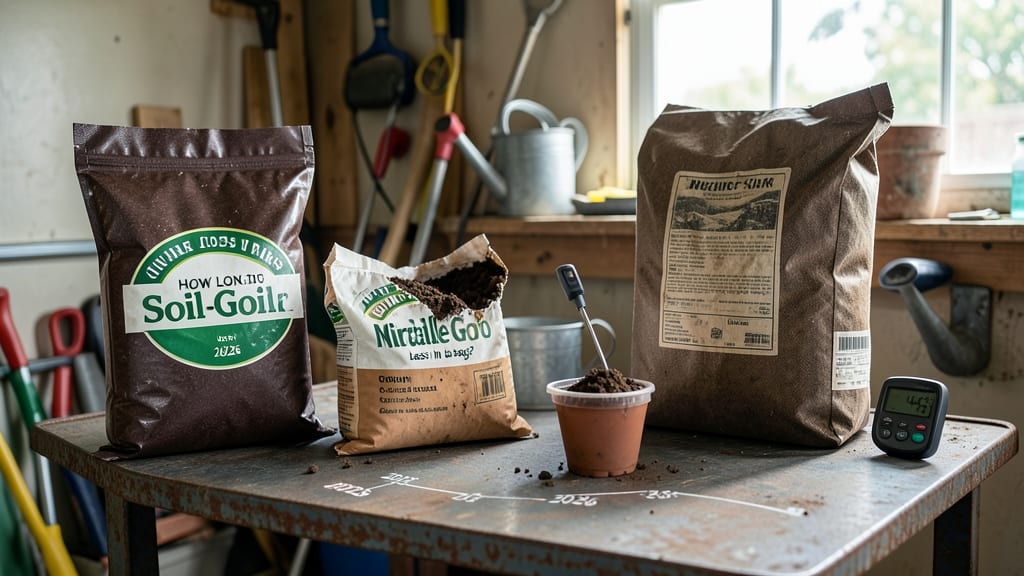
Bagged soil lasts 1–3 years unopened when stored in a cool, dry place, but its quality starts fading after 6–12 months as nutrients break down. Once opened, use it within 3–6 months for optimal plant growth.
Storing bagged soil properly is key to preserving its effectiveness. 🌱 The 1–3 year shelf life applies only to unopened bags kept in stable conditions—heat, humidity, or sunlight accelerate nutrient loss. Organic mixes degrade faster than inorganic ones due to microbial activity, while additives like slow-release fertilizers can extend usability.
For opened bags, sealing tightly and refrigerating slows moisture evaporation, but testing pH before planting becomes essential over time.
Even "fresh" soil can lose up to 30% of its nutrients within a year, making older bags less effective for nutrient-hungry plants. 💫 To revive tired soil, mix in compost or a balanced fertilizer before use, or consider testing its quality with a simple pH kit.
The goal isn't just longevity—it's maintaining the right balance for your plants' needs.
💡 In This Article
- Factors Affecting Bagged Soil Shelf Life
- How to Extend Bagged Soil’s Freshness
Factors affecting bagged soil shelf life
The shelf life of bagged soil hinges on how its components interact over time. Organic matter—like compost, peat moss, or coconut coir—starts decomposing immediately after production, with microbial activity breaking down complex compounds into simpler forms.
This process accelerates in warm conditions, where soil microbes thrive and can consume up to 20% of available nutrients within 6 months. Inorganic mixes (sand, perlite, or vermiculite) resist this breakdown but lose moisture more quickly, creating a dry, less fertile medium.
Moisture plays a critical role—even slightly damp soil can develop mold or anaerobic pockets within 3–4 weeks if not sealed properly. The oxidation of organic additives (like pine bark fines) also reduces their ability to retain water, making older soil clump together or repel moisture.
For example, a bag of premium potting mix with 30% compost may retain only 15% of its original nutrient density after 18 months if stored improperly.
Additives like slow-release fertilizers or mycorrhizal fungi can extend usability, but they don’t halt degradation. Fertilizers may leach out over time, while beneficial microbes die off without proper moisture and aeration.
The texture of older soil often becomes finer and more compact, reducing drainage and root penetration. This is why seed-starting mixes—designed for fine, sterile conditions—degrade faster than general-purpose blends.
Temperature fluctuations are another silent killer. Soil stored in a garage or shed can see 50°F swings between seasons, causing repeated cycles of expansion and contraction that break down soil structure.
Even refrigeration isn’t foolproof—condensation on cold surfaces can introduce excess moisture, promoting mold growth. The key is maintaining a stable environment where microbial activity remains minimal.
Light exposure triggers photodegradation in organic components, causing them to dry out and lose structure. A bag stored in direct sunlight may lose 10–15% of its moisture content within a month, while one kept in a dark, cool closet retains near-original conditions.
This is why professional growers often opt for black or opaque bags—light penetration accelerates nutrient loss and weed seed viability.
Consider this comparison: A 10-pound bag of organic potting mix stored at 65°F with 50% humidity will retain about 70% of its original nutrients after 12 months, while the same mix stored at 85°F with 70% humidity may drop to 40% nutrient retention.
The difference lies in microbial activity and evaporation rates—both are directly tied to environmental conditions.