
Container Gardens
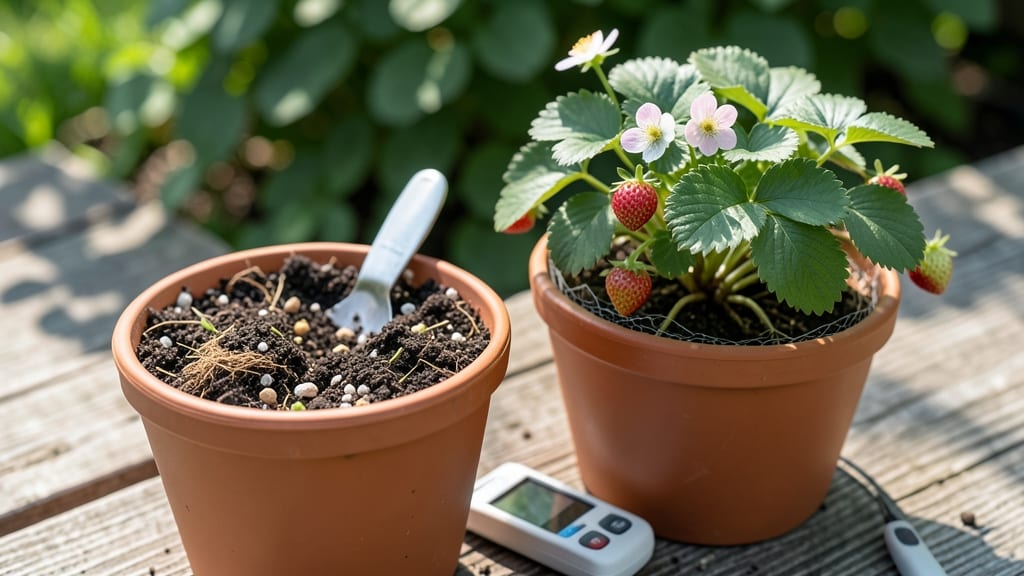
The best soil for strawberry plants in containers blends airy potting mix with 20% perlite or vermiculite, ensuring excellent drainage while retaining moisture. Add compost for nutrients and avoid heavy garden soil to prevent root rot.
Container-grown strawberries thrive when their roots have room to breathe and access to nutrients without waterlogging. 🌱 The perlite or vermiculite creates tiny air pockets that prevent soggy soil, which is especially critical in containers where drainage can become an issue.
I've found that adding worm castings to the compost mix gives an extra nutrient boost without overwhelming the plant. For best results, use a container with drainage holes and refresh the top inch of soil every few weeks to maintain optimal growing conditions.
This soil mix also helps maintain the right moisture balance—strawberries hate soggy roots but need consistent hydration. The combination of organic matter from compost and the lightweight structure of perlite mimics the loose, fertile conditions strawberries prefer in their native woodland environments.
Just be sure to avoid garden soil, which compacts easily and can suffocate roots in containers.
💡 In This Article
- Why Perlite and Compost Boost Strawberry Growth
- DIY Strawberry Container Soil Mix Recipe
Why perlite and compost boost strawberry growth
Strawberry roots need oxygen as much as they need water—perlite creates microscopic air channels that prevent the soil from becoming compacted. When mixed into potting soil at 20%, perlite increases porosity by up to 30%, allowing roots to breathe while still holding moisture.
Without this aeration, roots suffocate, leading to rot and poor fruit production. The lightweight nature of perlite also prevents soil from settling too tightly in containers, which is especially critical for strawberries that spread shallow roots.
Compost acts as a slow-release nutrient factory, providing essential micronutrients like potassium and phosphorus that strawberries crave. A 20% compost mix delivers organic matter that improves soil structure while feeding beneficial microbes.
These microbes break down organic material into forms strawberry roots can absorb, unlike synthetic fertilizers that can burn tender roots. The compost also helps maintain a slightly acidic pH (around 5.8-6.5), which strawberries prefer for optimal nutrient uptake and disease resistance.
Together, perlite and compost create the perfect balance: perlite handles drainage and aeration, while compost feeds the plant. This combination mimics strawberries' natural woodland habitat, where loose, well-drained soil prevents waterlogging while retaining enough moisture for deep roots.
Without perlite, container soil can compact within weeks, cutting off oxygen to roots. Without compost, strawberries struggle to produce vibrant fruit due to nutrient deficiencies.
Here's what happens when you skip these components: Without perlite, soil becomes dense, trapping excess moisture that leads to fungal diseases like gray mold. Without compost, strawberries may produce fruit, but it'll be smaller and less flavorful due to nutrient starvation.
The ideal mix ensures roots stay healthy, allowing plants to focus energy on producing sweet, plump berries rather than fighting for survival.
For visual learners, imagine this: Perlite acts like tiny sponges holding air pockets, while compost is the nutrient-rich "food" that keeps roots energized. The two work together like a well-aerated sponge cake—light, fluffy, and perfect for growing strawberries.
This synergy is why professional growers swear by similar ratios when cultivating container strawberries at commercial scales.
One common mistake is using garden soil instead of potting mix—it compacts quickly and lacks the air pockets strawberries need. Even "light" garden soil contains clay particles that clog pores, making it unsuitable for containers.
The key is maintaining that airy texture year-round, which is why many growers refresh their container soil every season.