
Tools
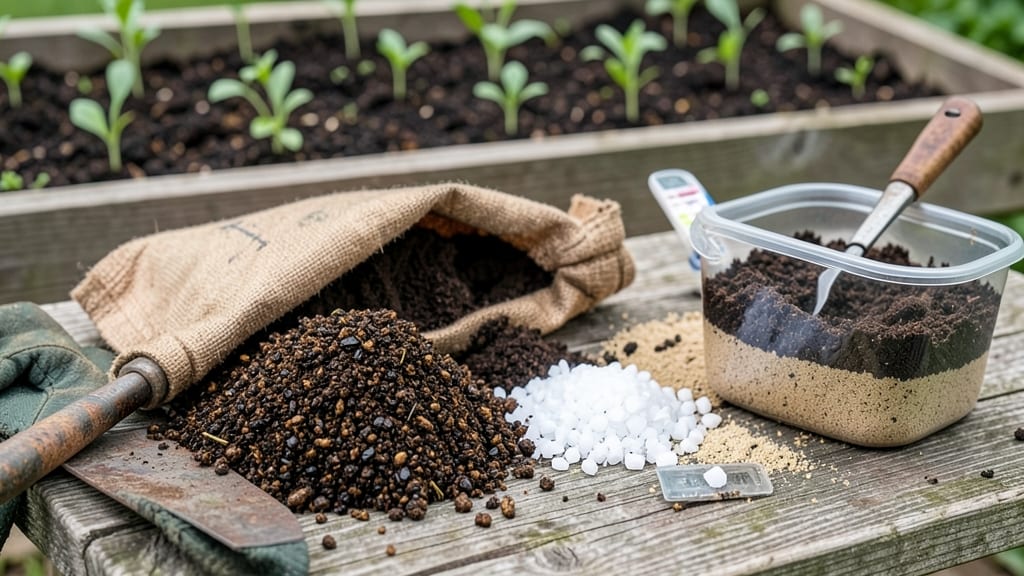
A balanced soil mixture for vegetable gardens should combine 60% topsoil or garden loam, 30% well-aged compost, and 10% coarse sand or perlite to improve drainage while retaining moisture and nutrients for healthy root development and plant growth.
A great soil mixture for vegetable gardens isn't just about throwing dirt in the ground—it's about creating the perfect foundation for your plants to thrive. The 60% loam base provides essential minerals and structure, while the 30% compost introduces beneficial microbes and organic matter that feed roots over time.
That final 10% sand or perlite is the secret weapon against waterlogged soil, ensuring roots get the oxygen they need. 🌱 I've seen firsthand how this ratio transforms struggling plants into vigorous growers, especially in heavy clay or overly sandy native soils.
What's fascinating is how this mix adapts to different vegetables. Root crops like carrots and potatoes actually prefer a slightly higher sand content (15%) to prevent forking, while leafy greens can handle more compost (35%) for their nitrogen needs.
The key is testing your soil first—most garden centers offer simple pH kits that'll tell you if you need lime to sweeten acidic soil or sulfur to lower alkaline levels. This small step makes all the difference in your harvest.
💡 In This Article
- Why Loam, Compost, and Sand Ratios Matter for Vegetable Soil
- Customizing Soil Mixes for Specific Vegetables and Climates
Why loam, compost, and sand ratios matter for vegetable soil
Vegetable gardens thrive when their soil acts like a living ecosystem—balancing structure, nutrients, and aeration. The 60% loam base (a mix of sand, silt, and clay) provides the ideal physical structure: particles that hold moisture but don't suffocate roots.
Loam's 25-30% porosity allows oxygen to reach roots while retaining 1-3% organic matter naturally. This is why plants in pure clay or sand struggle—clay compacts, cutting off oxygen, while sand drains too quickly, starving roots of water and nutrients.
The 30% compost transforms soil chemistry by introducing 1-2% organic matter that feeds microbes, which in turn break down nutrients into plant-available forms. Fresh compost adds 1.5-2% nitrogen and 0.5-1% phosphorus, while well-aged compost provides slow-release nutrients.
The microbial activity also improves soil structure by creating glomalin (a sticky glycoprotein) that binds soil particles into aggregates. Without this, even the best loam would compact over time.
That final 10% sand or perlite prevents compaction by maintaining 40-50% soil porosity—critical for root respiration. Coarse sand (0.5-1mm particles) works best for heavy soils, while perlite (2-4mm particles) is ideal for containers. The difference?
Sand adds weight and bulk, while perlite stays lightweight but still improves drainage. Both prevent the "wet sock" effect where roots suffocate in waterlogged soil, which is why vegetables like tomatoes (which hate soggy roots) perform so well in this mix.
Here's where pH comes into play: most vegetables prefer 6.0-7.0 pH. Loam naturally sits around 6.5-7.0, but adding compost (often slightly acidic) can push it toward 6.0-6.5.
If your soil tests higher (alkaline), a 10% lime addition can adjust it—just 1-2 pounds per 100 sq ft usually does the trick. The goal is creating a buffer zone where nutrients like iron and manganese stay available to plants rather than locking up.
Consider this: a 1 cubic yard of this mix contains roughly 20 gallons of water-holding capacity (thanks to loam) while providing 50-60 lbs of organic matter from compost. That's enough to sustain a 5x5 ft garden bed for an entire growing season without needing extra fertilizers.
The science isn't just about ratios—it's about creating a self-sustaining system where each component plays a specific role in the plant's growth cycle.
What most gardeners miss is how these ratios change with depth. The top 6 inches should be your nutrient-rich mix, while deeper layers (12+ inches) can be 70% loam with just 20% compost—enough to encourage deep root growth without overwhelming the plant.
This stratification mimics natural forest soil profiles, where surface layers are rich in organic matter while deeper layers provide stability.