
How To
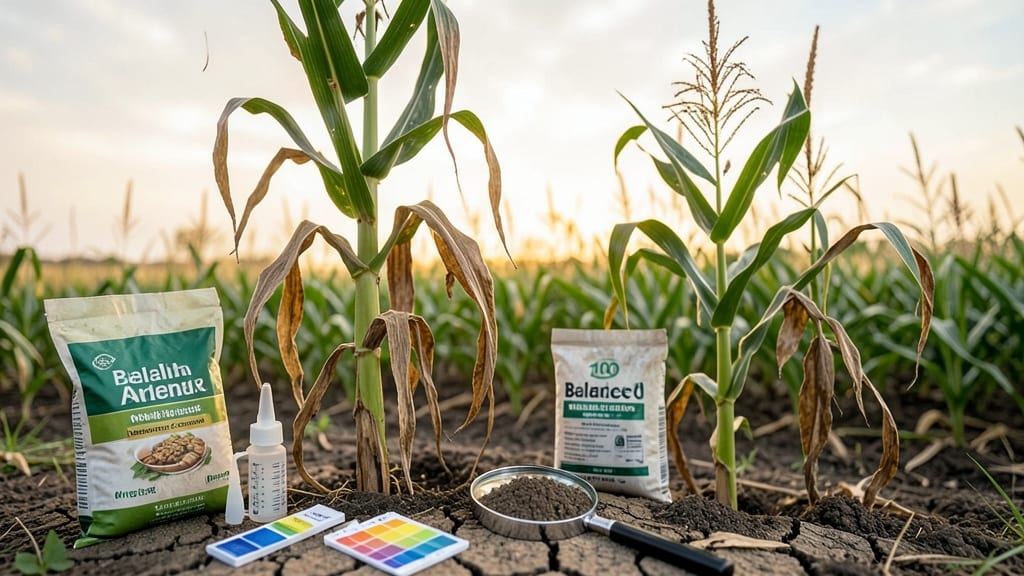
Soil infertility happens when your garden soil lacks the essential nutrients, organic matter, or balanced pH needed for healthy plant growth, leading to poor nutrient absorption and visibly struggling plants. This condition typically stems from excessive farming, poor drainage systems, or chemical overuse that depletes soil vitality.
Soil infertility isn't just about visible plant struggles—it's a complex imbalance where your garden's foundation fails to support life. 🌱 Without proper nitrogen, phosphorus, or potassium levels, roots can't access what they need to thrive, even if you're watering regularly.
Think of it like trying to build a house on weak ground; the structure will always be unstable. I've seen gardens with rich-looking soil that still produce weak plants because the underlying chemistry is off—this is why testing your soil's pH and nutrient levels is the first step toward revival.
One common misconception is that infertility only affects large farms, but even home gardens suffer from the same core issues. Over time, repeated planting in the same spot without replenishment drains nutrients, while synthetic fertilizers can actually disrupt the natural microbial communities that keep soil healthy.
The good news? With targeted amendments like compost or cover crops, you can often restore balance and give your plants the strong foundation they deserve.
💡 In This Article
- Scientific Causes of Soil Infertility
- Diagnosing Soil Infertility in Your Garden
Scientific causes of soil infertility
At its core, soil infertility stems from three interconnected failures: nutrient depletion, microbial imbalance, and chemical disruption. Plants require 16 essential nutrients—including nitrogen (N), phosphorus (P), and potassium (K)—to grow, and when these become scarce, roots struggle to absorb what's available.
For example, nitrogen deficiency causes leaves to turn pale yellow because chlorophyll production slows, while phosphorus deficiency stunts root development, making plants more susceptible to drought. 🌱 These nutrients don't disappear—they're often leached away by excessive watering or washed out during heavy rains, particularly in sandy soils where particles don't hold nutrients well.
The soil's microbial ecosystem plays an equally critical role. Beneficial bacteria and fungi break down organic matter, releasing nutrients in forms plants can absorb. However, synthetic fertilizers or pesticides can kill these microbes, creating a vicious cycle: fewer microbes mean less organic matter decomposition, which further reduces nutrient availability.
A healthy soil sample might contain 1-2 billion microbes per gram, but degraded soil can drop to just 100,000 per gram, drastically cutting nutrient cycling. This microbial decline also disrupts the soil structure, reducing its ability to retain water and air—two other essentials for root health.
pH imbalance is another silent killer of soil fertility. Most plants thrive in a pH range of 6.0-7.0, but soils can become too acidic (low pH) from organic matter breakdown or too alkaline (high pH) from lime overuse.
When pH strays from this range, nutrients like iron, manganese, and zinc become "locked" in the soil, unavailable to plants. For instance, in acidic soil (pH <5.5), phosphorus binds tightly to aluminum and iron oxides, making it inaccessible even if present in high quantities.
This is why plants in infertile soils often show deficiency symptoms despite appearing well-fed.
Organic matter is the glue that holds fertile soil together. It provides a slow-release reservoir of nutrients while improving soil structure and water retention. In healthy soil, organic matter makes up 5-10% of the total volume, but degraded soils can drop below 1%**.
This loss accelerates when soil is tilled excessively or left bare, exposing organic matter to oxidation and microbial breakdown without replenishment. Without organic matter, soil becomes compacted, reducing aeration and root penetration—imagine trying to grow plants in concrete rather than rich, crumbly loam.
One often-overlooked factor is soil salinity, which occurs when salts (like sodium chloride) accumulate due to poor drainage or excessive irrigation with salty water. High salinity disrupts the osmotic balance in plant roots, preventing water uptake even when soil appears moist.
This is particularly common in arid regions where evaporation concentrates salts at the surface. Salinity can push soil pH toward alkalinity, further exacerbating nutrient deficiencies. 💧 The result? Plants wilt despite adequate watering, a classic sign of hidden infertility.
To visualize these processes, think of soil like a living sponge: the sponge's fibers (soil particles) hold water and nutrients, while the microbes are the tiny pumps circulating these resources.
When the sponge dries out or gets clogged, the system fails—just like infertile soil. The key to revival lies in restoring this balance through targeted amendments and sustainable practices.