
Vegetables
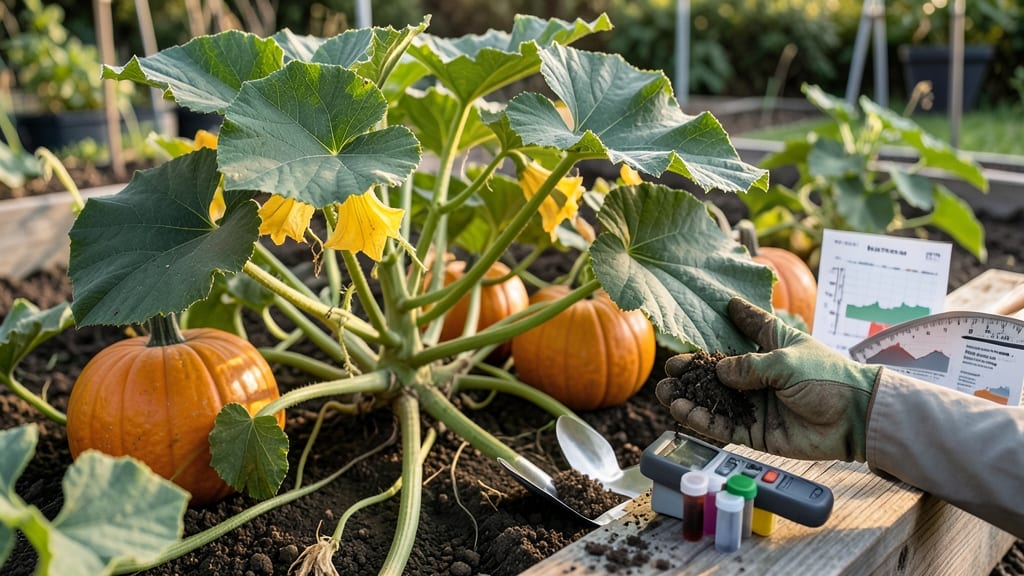
A soil test for pumpkins reveals the ideal growing conditions: a pH between 6.0–6.8, organic matter levels of 3–5%, and nutrient balance with phosphorus (40–60 ppm), potassium (150–200 ppm), and nitrogen (60–100 ppm). Correcting deficiencies boosts both fruit size and plant resilience.
Pumpkins are heavy feeders, so their soil needs to be rich in nutrients to support those massive vines and fruits. 🌱 The right pH range (6.0–6.8) ensures your plants can absorb nutrients efficiently, while organic matter improves soil structure and water retention.
For example, if your test shows low nitrogen, adding compost or a balanced fertilizer can prevent yellowing leaves and stunted growth. I always recommend testing before planting—it’s the best way to avoid costly mistakes later in the season.
One common misconception is that pumpkins only need nitrogen, but they actually require a balanced mix of nutrients. Phosphorus supports root development and flowering, while potassium strengthens disease resistance.
If your test reveals deficiencies, you can amend the soil with specific fertilizers or organic amendments like bone meal (for phosphorus) or wood ash (for potassium).
💡 In This Article
- Optimal Soil pH and Nutrient Requirements for Pumpkin Growth
- How to Conduct a DIY Soil Test for Pumpkin Gardens
Optimal soil pH and nutrient requirements for pumpkin growth
Pumpkins thrive in soil with a pH between 6.0–6.8 because this range allows their root systems to efficiently absorb essential nutrients.
At lower pH levels (below 6.0), aluminum and manganese become more available, which can be toxic to pumpkin roots, while higher pH (above 6.8) reduces the solubility of phosphorus and micronutrients like iron and zinc. 🌱 For example, if your soil test shows a pH of 5.5, adding agricultural lime (calcium carbonate) can gradually raise it to the ideal range over a few weeks.
The nutrient requirements for pumpkins are surprisingly specific. Nitrogen is critical for leafy vine growth, but too much can delay fruiting—aim for 60–100 ppm in the soil.
Phosphorus (40–60 ppm) supports robust root systems and flower development, while potassium (150–200 ppm) enhances disease resistance and fruit quality. Micronutrients like magnesium (for chlorophyll production) and boron (for cell wall strength) also play vital roles, often overlooked in basic soil tests.
Nutrient deficiencies manifest in distinct ways. Yellowing leaves between veins indicate magnesium deficiency, while weak stems or poor fruit set suggest boron or calcium shortages.
Powdery mildew, a common fungal disease, often thrives when soil zinc levels are low. 🔥 Regular soil testing helps you catch these issues early—before they stifle your pumpkin harvest.
For instance, applying chelated iron can correct chlorosis (yellowing) caused by high pH, while compost tea boosts microbial activity that unlocks nutrients for plant uptake.
Organic matter content (3–5%) is equally important as it improves soil structure, water retention, and microbial activity. Well-aged compost or cow manure adds this organic matter while slowly releasing nutrients.
The texture of healthy pumpkin soil should feel like a moist sponge—light enough for roots to penetrate but rich enough to hold moisture and nutrients. This balance prevents both nutrient runoff and waterlogging, which can lead to root rot.
Consider this comparison: A soil test revealing low potassium might show up as weak, wilted vines or fruits with poor color. Adding wood ash (potassium-rich) or a balanced organic fertilizer can correct this within weeks.
Conversely, excess nitrogen leads to lush foliage but fewer pumpkins—a classic case of misplaced priorities in plant nutrition.
For those growing pumpkins in containers, the nutrient demands are even more critical because the root zone is limited. In these cases, a slow-release fertilizer with micronutrients should be applied every 4–6 weeks to maintain consistent nutrient levels.
Container-grown pumpkins often need more frequent testing since nutrients deplete faster in smaller soil volumes.
Remember, soil isn't static—it changes with each growing season. Testing annually helps you fine-tune your amendments and avoid building up toxic levels of salts or heavy metals.
The goal is to create an environment where your pumpkins can focus their energy on growing massive, healthy fruits rather than struggling to access nutrients. 💫