
Plants
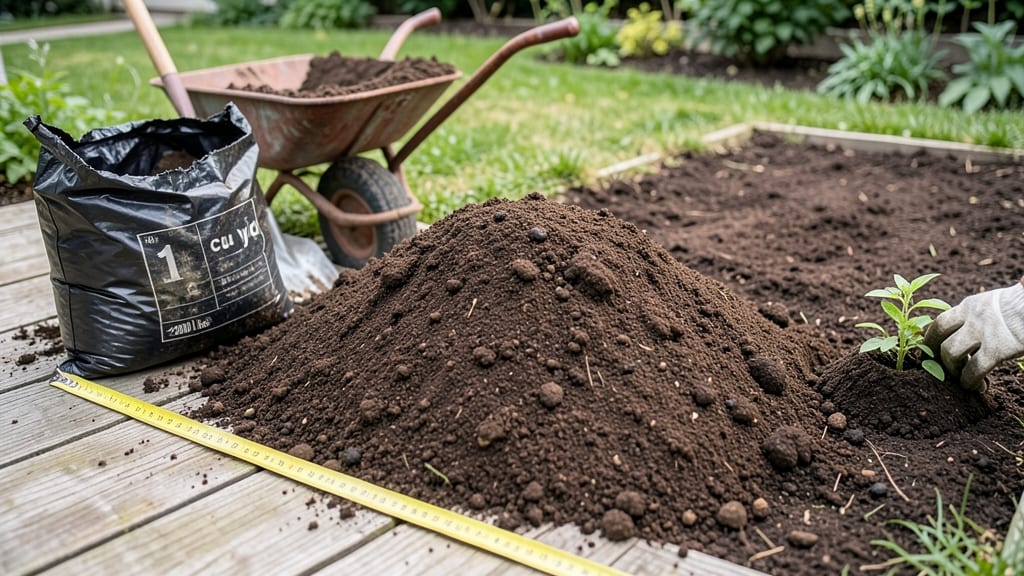
A yard of topsoil isn't just a vague measurement—it's a 3-foot cube of loose, dark brown, crumbly soil that looks like rich, damp earth straight from a farmer's field. 🌱 Picture a wheelbarrow full of this stuff (about 2 cubic feet), and you'd need roughly 27 of them to make one yard.
That's why most projects call for 1-2 yards: it adds up fast when you're filling garden beds or raised planters.
When you see it delivered, it arrives in a dump truck load that looks like a small pile of dark brown mulch—about 27 cubic feet total. The texture should be light enough to crumble between your fingers but still hold its shape when moistened.
If it feels powdery or compacted, it's not the right quality for planting.
For a 4x8-foot raised bed, you'll need about 1 yard of topsoil (12 inches deep). Spread it evenly, mix in compost, and you've got the perfect foundation for vegetables, flowers, or ground covers. The key is working with it while it's loose—once it's packed down, you'll want more.
Pro tip: Rent a dump truck for larger projects, but for smaller jobs, a wheelbarrow works fine. Just remember—topsoil settles, so always order 10-20% extra to avoid running short mid-project. Now you're ready to transform that bare soil into a thriving garden!
📚 In This Guide
- What you need
- Instructions
- Tips and common mistakes
- Wrapping up and next steps
What you need
- ● Main Material: 1 yard of loose, crumbly topsoil (≈ 27 cubic feet or 324 cubic inches). Look for screened topsoil (no rocks/clods) for best results.
- ● Type: Choose gardening topsoil (rich in organic matter) or bulk topsoil (lighter, for leveling). Avoid "fill dirt" (poor quality).
- ● Tools (Essentials): Wheelbarrow or garden cart (to haul soil; 2–3 cubic feet capacity per load).
- ● Shovel (round-point or spade for digging; 12–18" blade for efficiency).
- ● Rake (bow rake for spreading; 12–14" teeth for fine texture).
- ● Garden gloves (heavy-duty, waterproof to protect hands).
- ○ Knee pads (optional but helpful for comfort during long sessions).
- ○ Optional (But Useful!) Extras: Soil tester (pH kit to check soil health; $10–$20).
- ● Compost or fertilizer (5–10 lbs to amend soil if needed).
- ● Tarp (10’x10’ to cover soil when not in use and keep it dry).
- ● Water hose (for moistening soil before spreading).
- ● Measuring tape (to mark even layers, especially for raised beds).
- ● Prerequisites: Clear workspace (flat, stable surface near your project area).
- ● Access to water (hose or bucket for dampening soil if too dry).
- ● Sunny day (avoid rainy/windy conditions to prevent clumping or erosion).
Visual guide: how to identify a yard of topsoil
Here's how to spot quality topsoil and avoid common mistakes when buying or using it.
🌱 Step 1: Examine the Color and Texture
The best topsoil has a rich, dark brown color—almost black—that comes from decomposed organic matter. It should look like crumbly, damp cookie dough rather than dry powder or hard clumps. Run your fingers through it: quality topsoil breaks apart easily into small, loose particles, not dense chunks. If it feels gritty or sandy, it's missing the organic material that supports plant roots.
I always check for a slightly moist but not wet texture. You shouldn't see water pooling or dripping—just a slight dampness that holds its shape when squeezed gently. This moisture level indicates healthy organic content that won't compact into hardpan when watered.
🌿 Step 2: Check for Uniformity and Free of Debris
A proper yard of topsoil should look consistent throughout, with no visible rocks larger than 1 inch in diameter. Run your hands through it and feel for smoothness—you shouldn't encounter sharp stones or wood fragments. Quality topsoil is screened to remove debris, which means it's ready to use without extra sorting.
Look for a mix of fine particles and small clumps that break apart easily. If you see large roots, plastic pieces, or excessive gravel, that's a sign of poor screening. I've seen "topsoil" piles that were mostly construction fill—don't let that be your yard's foundation for plants.
☀️ Step 3: Test for Moisture and Drainage
Grab a handful of the topsoil and squeeze it firmly. Quality topsoil should hold together slightly but not stay in a solid clump when released—it should crumble apart. This indicates good moisture retention without becoming waterlogged. If it stays in a hard ball, it's too clay-heavy; if it falls apart completely, it's too sandy.
For drainage, place a small pile in a container and pour 1 cup of water over it. Good topsoil should absorb the water within 30 seconds without forming puddles. If water pools on top, the soil is too dense; if it disappears instantly, it's too coarse. The ideal topsoil balances both properties perfectly.
⏰ Step 4: Compare Volume to Standard Measurements
A yard of topsoil covers 100 square feet at 3 inches deep or 10 square feet at 12 inches deep. To visualize, imagine a pile about 3 feet wide, 3 feet long, and 1 foot high—that's roughly your yard. When delivered, it should arrive in a truck bed or dump pile that looks proportional to these dimensions.
If you're buying bags, remember that 1 cubic yard equals about 27 standard 1-cubic-foot bags. Stack them and compare to your project area—you'll quickly see if you're getting enough. I always order a little extra (about 10% more) because settling and compaction reduce actual coverage by 15-20% after spreading.
Tips & tricks for identifying quality topsoil
Here's what nobody tells you about spotting the good stuff—before you pay for what might be construction fill.
Color and Texture Clues: That rich, dark brown almost-black hue isn't just for show—it's proof of decomposed organic matter. I've seen "topsoil" that looked like dirty sand or hard clay chunks. Quality soil should feel like crumbly damp cookie dough between your fingers, not like dry powder or rock-hard clumps. If it feels gritty, you're missing the organic material that makes plants thrive.
Debris Detection: Run your hands through a pile and feel for anything larger than a golf ball. I once bought a load that contained plastic pieces and large roots—turns out it was screened yard waste, not topsoil. Quality soil should have smooth particles with no sharp edges or unexpected debris. If you find rocks bigger than your fist, walk away from that pile.
Moisture Test: Squeeze a handful firmly—it should hold together slightly but crumble apart when released. Too clay-heavy? It stays in a hard ball. Too sandy? It falls apart completely. The perfect balance is what gives plants both moisture retention and proper drainage. This test takes 10 seconds but saves you from buying the wrong product.
Volume Visualization: When delivered, a yard of topsoil should form a pile roughly 3 feet wide, 3 feet long, and 1 foot high. That's your visual benchmark. If the pile looks smaller, you're getting less than advertised. And remember: order 10% extra—settling and compaction reduce coverage by 15-20% after spreading. I learned this the hard way after running short on a raised bed project.
Pro Tips for What Does A Yard Of Topsoil Look Like
- Here's what nobody tells you about spotting the good stuff—before you pay for what might be construction fill.
- Color and Texture Clues: That rich, dark brown almost-black hue isn't just for show—it's proof of decomposed organic ...
- Debris Detection: Run your hands through a pile and feel for anything larger than a golf ball. I once bought a load t...
Frequently asked questions
Got questions about topsoil? Here are some of the most common ones—plus quick answers to help you plan like a pro!
What does a yard of topsoil actually cover?
A yard of topsoil (27 cubic feet) typically covers about 100 square feet at 3 inches deep. For deeper beds (like 6 inches), you’ll need roughly half a yard per 100 sq. ft. Always check your bag’s volume—some brands vary slightly!
How do I measure if I don’t have a tape?
No tape measure? No problem! Use a shovel or stick:
- Mark a 3-foot square (9 sq. ft.) with stakes.
- Dig a 3-inch-deep hole and fill it with topsoil. That’s 1 cubic foot.
- Multiply by 27 to estimate yards needed for your project.
Can I use topsoil in rain or extreme heat?
Timing matters! Spread topsoil on dry, mild days (50–75°F). Rain can turn it to mud, while scorching sun may dry it too fast. If you must work in heat, water lightly first to help it settle. Avoid freezing temps—soil won’t compact properly.
Is topsoil better than compost or potting mix?
Not always! Topsoil is for bulk projects (gardens, lawns), while compost adds nutrients to existing soil. Potting mix is lightweight for containers. Mix 1/3 topsoil + 2/3 compost for raised beds to balance structure and fertility.
Why does my topsoil look lumpy or uneven?
Lumpy soil? It’s normal! Break it up with a rake or shovel before spreading. If it’s clay-heavy, mix in sand or peat moss (1 part amendment per 3 parts soil). For rocky topsoil, sift it through a ½-inch mesh screen for smoother results.
How do I know if my topsoil is bad?
Watch for these red flags:
- Weeds/seeds: Sift or solarize (cover with plastic for 4–6 weeks) to kill them.
- Chemical smell: Avoid—it may be contaminated.
- Hard clumps: Overly compacted soil drains poorly; amend with perlite.
Wrapping up and next steps
Now that you’ve got the scoop on what a yard of topsoil looks like—that loose, dark brown, crumbly goodness—you’re ready to tackle your next gardening project with confidence! 🌱 Whether you’re prepping a flower bed, raising a veggie patch, or leveling your lawn, knowing how to measure and use topsoil makes all the difference. Pro tip: Grab a wheelbarrow, a shovel, and dive in—your future plants will thank you!
Still curious? Next up: Check out our step-by-step guide on spreading topsoil like a pro or explore how to amend it for your specific plants. Happy digging! 🛠️