
How To
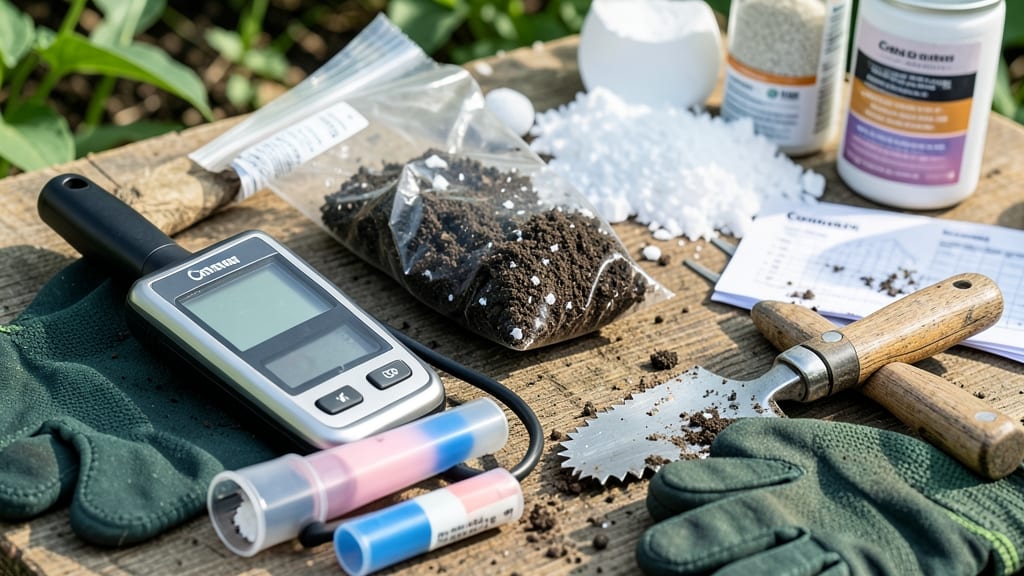
A soil test for calcium helps you determine its availability in parts per million (ppm) or meq/100g, with optimal levels typically falling between 1,000–4,000 ppm for healthy plant growth. Levels below 500 ppm signal deficiency, while readings above 5,000 ppm can inhibit other essential nutrients like magnesium and phosphorus. Correct imbalances using gypsum (calcium sulfate) or lime (calcium carbonate), adjusting based on your soil’s pH and specific plant needs.
A soil test for calcium isn’t just about numbers—it’s about unlocking your plants’ potential.
Calcium strengthens cell walls, preventing issues like blossom-end rot in tomatoes or stunted growth in young seedlings. 🌱 When levels drop too low, plants struggle to absorb other nutrients, while excess calcium can disrupt soil chemistry, making it harder for roots to access magnesium or potassium.
The key is balancing these levels through targeted amendments, like gypsum for quick fixes or lime for long-term adjustments, while keeping an eye on your soil’s pH to avoid unintended consequences.
For example, gypsum releases calcium quickly but doesn’t alter pH, making it ideal for sandy soils or when you need a fast boost. Lime, on the other hand, raises pH while adding calcium, which is great for acidic soils but requires careful monitoring.
I always recommend testing soil again after 3–6 months to ensure your amendments are working as intended.
💡 In This Article
- How Calcium Levels Affect Plant Health and Soil Chemistry
- Step-by-Step Guide to Adjusting Calcium Levels in Garden Soil
How calcium levels affect plant health and soil chemistry
Calcium acts as the structural backbone of plant cells, forming rigid complexes with pectin in cell walls to maintain rigidity and prevent collapse.
When calcium levels drop below 500 ppm, plants exhibit classic deficiency symptoms like blossom-end rot in tomatoes (dark, sunken lesions on fruit) or tip burn in lettuce (brown, crispy edges).
These issues arise because calcium is immobile in plants—once absorbed by older leaves, it can’t be redistributed to new growth areas where it’s needed most. 🌿
The science gets even more interesting when you consider calcium’s role in soil chemistry. It binds tightly to negatively charged clay particles and organic matter, forming what scientists call "calcium bridges" that stabilize soil aggregates. This improves soil structure, allowing roots to penetrate easily and water to drain properly.
However, when calcium levels exceed 5,000 ppm, it can displace magnesium and potassium from these binding sites, creating a competitive imbalance that stunts plant growth.
The pH of your soil also plays a critical role—calcium becomes more available in slightly acidic to neutral soils (pH 6.0–7.0), while alkaline conditions (pH 7.5+) can lock it away in insoluble forms.
Deficiency symptoms often appear as distorted new growth, such as cupped or curled leaves, because calcium is essential for proper cell division and expansion. In severe cases, young shoots may die back entirely.
The contrast with calcium toxicity is striking: excess levels cause leaf yellowing (chlorosis) and poor seed germination, as the high calcium-to-magnesium ratio disrupts enzyme function in plant cells. This is why soil tests always recommend balancing calcium with other nutrients rather than treating it in isolation. 💡
One fascinating aspect of calcium mobility in soil is how it moves with water. Unlike phosphorus or potassium, which can be quickly leached away, calcium tends to stay put in the upper soil layers.
This makes it relatively stable, but also means you need to apply amendments like gypsum (calcium sulfate) or lime (calcium carbonate) with precision. Gypsum, for example, dissolves rapidly in water, providing an immediate calcium boost without altering soil pH—a game-changer for sandy soils where nutrients wash away quickly.
For gardeners, understanding these interactions helps explain why some plants thrive while others struggle in the same soil. For instance, tomatoes and peppers are particularly sensitive to calcium deficiency, while grasses and legumes can tolerate slightly lower levels.
The key is matching your soil’s calcium availability to the specific needs of what you’re growing, which is why soil tests include plant-specific recommendations. This tailored approach ensures you’re not overcorrecting with amendments that could create new imbalances. 🌱
What most people don’t realize is that calcium deficiency often masks other nutrient issues. For example, a soil test might show low calcium, but the real problem could be poor water drainage preventing root uptake.
That’s why I always recommend testing both calcium levels and soil structure—sometimes the solution isn’t more fertilizer, but better soil aeration or organic matter additions. The interplay between calcium and other nutrients creates a delicate ecosystem that keeps your garden thriving. ✨