
Watering
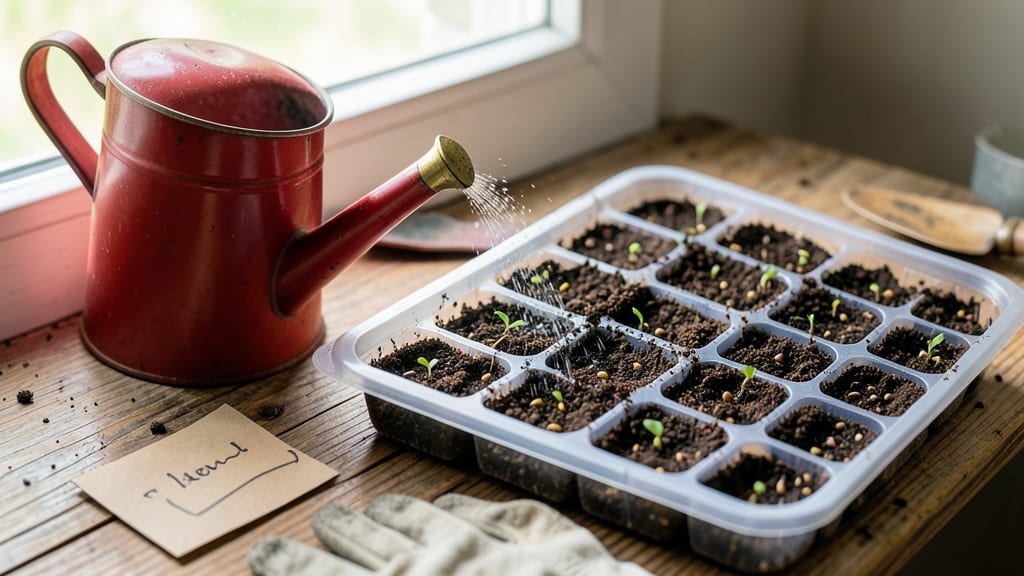
Watering soil before planting seeds creates the perfect moisture balance for germination, but too much water can drown seeds or trigger rot. Aim to moisten the soil to about 1-2 inches deep right before sowing—just enough to support root development without waterlogging.
Seed germination thrives when soil moisture is consistent but not soggy. 🌱 The right dampness activates enzymes that break down seed coatings, while proper aeration prevents suffocation. I’ve seen firsthand how seeds planted in bone-dry soil struggle to sprout, while those in overly wet conditions rot before emerging.
For best results, test soil moisture by squeezing a handful—it should hold together lightly but not drip water.
Different soil types require adjustments: sandy soils dry faster, so you’ll need to water more frequently, while clay holds moisture longer. A gentle watering can or spray bottle helps distribute water evenly without disturbing the soil surface.
After planting, maintain light moisture by watering at the base rather than overhead to prevent fungal diseases.
💡 In This Article
- How Moisture Levels Affect Seed Germination
- Best Practices for Pre-Planting Soil Moisture
How moisture levels affect seed germination
The germination process begins when seeds absorb water, triggering a biochemical cascade that activates enzymes. These enzymes break down stored nutrients (like starches and proteins) into simpler compounds that fuel the seedling’s growth. Without adequate moisture, this process stalls—seeds remain dormant or die from dehydration.
For example, tomato seeds need 50-60% soil moisture at planting depth to germinate successfully, while delicate flowers like petunias require even higher humidity near 70% to prevent seed desiccation.
Soil texture dramatically alters water retention and aeration. Sandy soils drain quickly, leaving seeds vulnerable to drying out within 24 hours, while clay soils can suffocate roots by trapping excess water.
The ideal balance is a loamy texture, which holds moisture like a sponge but allows oxygen to reach roots. Overwatering creates anaerobic conditions, where microbial activity produces toxic compounds like ethanol, which can kill seeds before they sprout.
I’ve seen basil seeds planted in soggy soil fail to emerge, while the same seeds in well-drained loam sprouted within 5-7 days.
Temperature plays a hidden role too. Cooler soils (60-65°F) require more consistent moisture because water evaporates slower, while warmer soils (>75°F) dry faster. This is why tropical plants like okra need frequent misting, whereas cool-season crops like spinach tolerate slightly drier conditions.
The key is maintaining moisture at the seed’s planting depth—typically 1-2 inches—without creating puddles that invite fungal pathogens like Pythium, which thrives in waterlogged environments.
Here’s what happens at the cellular level: when seeds imbibe water, their cell walls expand, rupturing the seed coat and allowing the radicle (root) to emerge. This process requires 10-20% of the seed’s dry weight in water—too little stunts growth, too much drowns the embryo.
For instance, lettuce seeds need 15% moisture to germinate, while corn seeds tolerate up to 30% due to their thicker seed coats. The difference explains why lettuce seeds sprout faster in humid conditions than corn.
Visual cues can help gauge proper moisture: damp soil should crumble when squeezed but not form a muddy ball. If it sticks to your fingers, it’s too wet; if it crumbles into dust, it’s too dry.
For container gardens, weigh the pot—it should feel 20% heavier after watering than when completely dry. This method eliminates guesswork and ensures consistent moisture levels for seeds like herbs, which have shallow root systems and need frequent hydration.
Understanding these dynamics helps explain why some gardeners swear by pre-watering while others avoid it entirely. The truth lies in the balance: seeds need enough moisture to activate, but not so much that they suffocate.
For example, marigold seeds germinate best in 60-70°F soil with 50% moisture, while pepper seeds prefer 80°F and 60% moisture. Tailoring your approach to the seed type ensures success without the trial-and-error frustration.