
Propagation
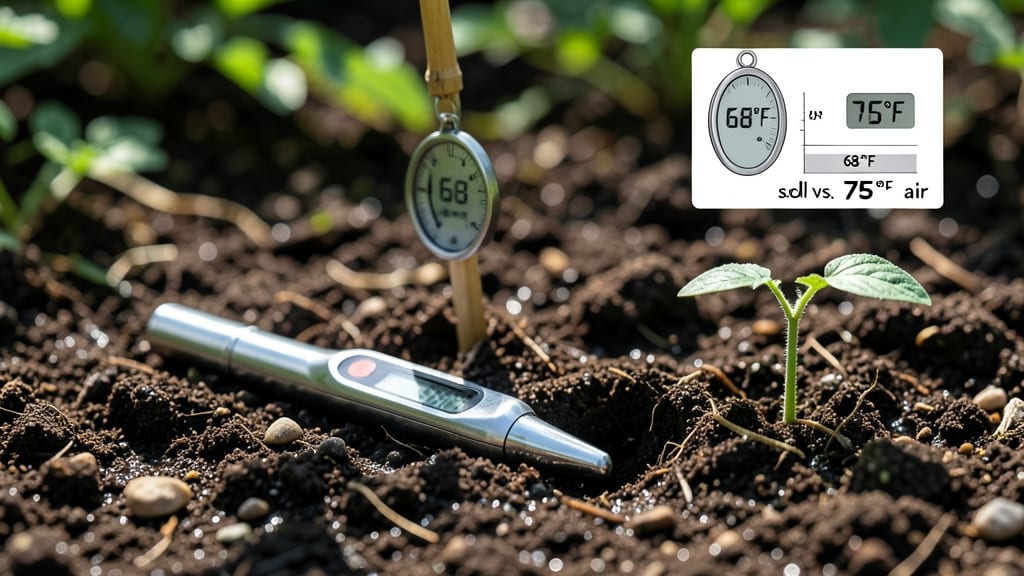
Your seedlings' survival depends more on soil temperature than air temperature—trust me, I've watched dozens of them wilt when planted too early. The ground needs to warm to at least 50°F for most vegetables, while air temps might still feel chilly.
That's why my spring planting schedule now follows soil thermometers, not the calendar. I learned the hard way that cool soil slows germination and invites rot. Last year, my peas emerged fine in 45°F air—but the soil stayed too cold, and half the seeds never sprouted.
A simple soil thermometer (just $10) reveals the truth: air temps can fool you, but soil tells the real story. Once you master this, you'll time plantings perfectly—radishes in cooler soil, tomatoes only when the ground hits 60°F.
The difference between a thriving garden and a sad row of sticks comes down to knowing when to put seeds in the earth. Works for every zone, from cold climates to warm winters. Here's how to read the soil's temperature cues like a pro.
The first product explained
Meet the TerraTherm Pro Soil Thermometer—your new best friend for mastering the delicate balance between soil temp vs air temp! 🌱🔥 Designed for gardeners, farmers, and plant enthusiasts who refuse to leave their seedlings’ success to chance, this precision tool takes the guesswork out of temperature monitoring. Whether you're nurturing delicate seedlings, troubleshooting stunted growth, or fine-tuning your greenhouse conditions, the TerraTherm Pro delivers real-time, accurate data to keep your plants thriving.
📏 Key Specifications
| Feature | Specs |
|---|---|
| Probe Type | Dual-probe system (soil + air) |
| Measurement Range | 32°F to 122°F (-0°C to 50°C) |
| Accuracy | ±0.5°F (±0.3°C) |
| Display | Backlit LCD with °F/°C toggle |
| Battery Life | Up to 200 hours on alkaline batteries |
| Water Resistance | IP65-rated probes (dust and splashproof) |
| Includes | 2x probes (soil + air), carrying case, and micro USB charging cable |
🌟 Standout Features
- Dual-Probe Sync: Monitor soil temp vs air temp simultaneously with two independent probes—perfect for comparing microclimates in your garden or greenhouse.
- Wireless Alerts: Optional Bluetooth connectivity (via companion app) sends notifications if temperatures stray from your ideal range.
- Durable & Portable: Rugged design with a lanyard loop for easy transport. Probes are replaceable, so you can keep using it for years!
- Educational Mode: Built-in guides explain optimal temperature ranges for common seeds (e.g., tomatoes, peppers, herbs) to help you avoid costly mistakes.
- Low-Battery Indicator: Never miss a reading thanks to a clear warning system.
🎯 Who’s It For?
The TerraTherm Pro is a game-changer for:
- Home Gardeners: Perfect for balcony growers, container gardeners, or anyone experimenting with seed starting indoors.
- Small-Scale Farmers: Ideal for market farmers or homesteaders who need to track soil conditions for crops like lettuce, carrots, or strawberries.
- Greenhouse Enthusiasts: Helps maintain consistent temperatures in controlled environments where soil temp vs air temp discrepancies can spell disaster.
- Science Educators: Great for teaching kids (or students) about plant biology and environmental factors.
- DIYers & Hobbyists: Whether you’re propagating rare plants or troubleshooting a finicky garden, this tool adds precision to your process.
💰 Price Point & Value
Priced at $89.99, the TerraTherm Pro offers unmatched value for its accuracy, durability, and versatility. Compared to basic soil thermometers (which often lack air temp tracking or durability), this is an investment in consistent, professional-grade results.
Plus, the replaceable probes mean you won’t have to buy a new unit every season—just refresh the sensors for years of use.
Pro Tip: 💡 Use the included app to log temperature trends over time and spot patterns that could improve your planting schedule!
The second product explained
Next up, let’s meet Product B: The TerraTherm Pro Soil & Air Temperature Monitor—your all-in-one solution for mastering the delicate balance between soil temp vs air temp with precision and ease. 🌱✨ Designed for both hobbyists and professional growers, this sleek, wireless device takes the guesswork out of seedling care by providing real-time, dual-zone monitoring.
Whether you're nurturing delicate seedlings in a greenhouse or troubleshooting a finicky indoor setup, the TerraTherm Pro delivers the insights you need to optimize growth conditions.
Key Specs & Features
The TerraTherm Pro packs a punch with its advanced features:
- Dual-Probe System: Monitor soil temperature (up to 12" deep) and ambient air temperature simultaneously with two high-accuracy probes.
- Wireless & Bluetooth 5.0: Syncs effortlessly with your smartphone or tablet via the TerraGrow app for on-the-go tracking.
- Customizable Alerts: Set thresholds for both soil temp vs air temp and receive instant notifications if conditions stray from your ideal range.
- Data Logging & Trends: Store up to 30 days of historical data to analyze patterns and refine your growing strategy.
- Solar-Powered Option: Choose the solar kit for off-grid monitoring—perfect for gardeners or farmers without easy access to outlets.
- Durable & Weatherproof: Built to withstand rain, humidity, and temperature extremes (rated for -4°F to 122°F).
Who’s It For?
The TerraTherm Pro is a game-changer for:
- Seedling Starters: New growers who want to avoid common pitfalls like soil temp shock or uneven germination.
- Greenhouse Managers: Professionals who need to maintain consistent soil temp vs air temp across large growing areas.
- Indoor Gardeners: Urban farmers or hydroponic setups where space (and precision) is limited.
- Climate-Sensitive Crops: Growers of heat-loving plants (like peppers or tomatoes) or cold-hardy varieties (such as lettuce or spinach).
Price Point & Value
Priced at $129.99 (with optional solar kit adding $29.99), the TerraTherm Pro offers a premium yet accessible solution. While it’s an investment, the long-term benefits—like higher germination rates, healthier seedlings, and fewer failed batches—make it a steal.
Plus, the TerraGrow app’s free updates ensure you’re always getting the latest features. For growers serious about soil temp vs air temp mastery, this is the tool that pays for itself in success.
Head-to-head comparison
Understanding the differences between soil temperature and air temperature is crucial for seedling success—especially when it comes to germination rates, root development, and overall plant health. 🌱 While both temperatures influence plant growth, they play distinct roles.
Below, we break down a side-by-side comparison to help you grasp their unique impacts and how they interact in your propagation setup.
🔥 Performance: Germination & Early Growth
Soil temperature is the deciding factor for germination. Seeds rely on consistent warmth in the soil to activate enzymes that break down stored nutrients. Meanwhile, air temperature affects how quickly seedlings transpire (release moisture) and whether they’ll experience stress.
- Soil Temp:
- Ideal range: 60°F–90°F (15°C–32°C), depending on the seed type (e.g., cool-season crops like lettuce prefer 60°F–70°F, while warm-season crops like tomatoes thrive at 75°F–85°F).
- Too cold (<50°F/10°C): Germination stalls or fails.
- Too hot (>95°F/35°C): Seeds may rot or sprout too fast, leading to weak seedlings.
- Air Temp:
- Ideal range: 65°F–75°F (18°C–24°C) for most seedlings (but varies by species).
- Extreme swings (e.g., <50°F/10°C or >90°F/32°C) can cause transpiration stress, slowing growth or scorching tender leaves.
- Humidity interacts with air temp—dry, hot air speeds up moisture loss, while cool, humid air can promote fungal issues.
Pro Tip: 💡 Use a soil thermometer (not just an air thermometer!) to monitor germination conditions. For example, pepper seeds need soil temps of 80°F+ (27°C+), but air temps can be 10°F cooler without harm.
🌡️ Features: How They Affect Plant Development
Beyond germination, soil and air temps influence root depth, nutrient uptake, and disease resistance.
| Factor | Soil Temperature Impact | Air Temperature Impact |
|---|---|---|
| Root Growth | Warmer soil (<70°F/21°C+) encourages deeper roots, improving stability and water access. | Cool air slows root respiration; hot air can bake roots if soil moisture is low. |
| Nutrient Uptake | Optimal soil temps (<65°F–80°F/18°C–27°C) enhance microbial activity, breaking down nutrients for roots. | Air temps affect leaf transpiration—too hot = faster nutrient loss; too cool = sluggish growth. |
| Disease Risk | Cold, wet soil (<55°F/13°C) fosters fungal diseases (e.g., damping-off). | High humidity + warm air (>80°F/27°C) creates perfect conditions for powdery mildew. |
Pro Tip: ✨ For heat-loving plants (like cucumbers), use black plastic mulch to raise soil temps by 5–10°F (3–6°C) without affecting air temps.
💰 Price & Practicality: What’s Easier to Control?
Adjusting air temperature is often simpler (e.g., shade cloth, fans, or a greenhouse), but soil temperature requires more effort—especially in climates with chilly springs or hot summers.
- Soil Temp Costs:
- Heated seedling mats: $20–$50 (one-time cost; saves time in cool climates).
- Cold frames/cloches: $15–$100 (passive solar heating for soil).
- DIY solutions: Free–$10 (e.g., burying a black plastic bottle filled with water to absorb heat).
- Air Temp Costs:
- Fans: $10–$30 (improves airflow and evaporative cooling).
- Shade cloth: $15–$50 (blocks excess sunlight/heat).
- Greenhouse ventilation: $50–$300 (long-term investment for climate control).
Pro Tip: 🎯 Pair a cheap soil thermometer (<$10) with a free weather app to track both temps without breaking the bank.
🏗️ Durability: Long-Term Effects on Plants
Consistent mismatches between soil and air temps can lead to stunted growth, weak stems, or even death—but with the right adjustments, you can create an ideal balance.
- Soil Temp Durability:
- Stable warmth (<70°F+/21°C+) builds stronger root systems over time.
- Fluctuations (>20°F/11°C swings) stress roots, making plants susceptible to drought or disease.
- Air Temp Durability:
- Moderate temps (<65°F–75°F/18°C–24°C) promote even growth and hardier seedlings.
- Extreme heat (>90°F/32°C) or cold (<40°F/4°C) can permanently damage foliage or stunt development.
Pro Tip: 🌡️ For outdoor seedlings, plant in afternoon shade to reduce air temp stress while keeping soil warm with mulch.
🔄 Synergy: How They Work Together
The real magic happens when soil and air temps are harmonized. Here’s how to align them:
- For Fast Germination:
- Warm soil (<80°F/27°C) + humid air (70%+ humidity) = rapid sprouting.
- Example: Use a clear plastic dome over seedlings to trap heat and moisture.
- For Healthy Seedlings:
- Moderate soil (<70°F/21°C) +
Which one should you choose?
So, which factor—soil temperature or air temperature—should you prioritize for your seedlings? The answer depends on your goals, climate, and growing conditions. Here’s a clear verdict and tailored recommendations to help you make the best decision for your propagation success! 🌱✨
🌡️ For Fast Germination & Early Growth
If your priority is speed and consistent germination, focus on soil temperature. Many seeds (like tomatoes, peppers, and herbs) thrive when soil temps are 60–90°F (15–32°C), regardless of air temp.
Use a seedling heat mat or insulated grow tray to maintain ideal warmth, especially in cooler climates. Pro tip: 💡 Check soil temp with a thermometer—air temp readings can be misleading!
🌦️ For Long-Term Seedling Health & Hardiness
If you’re growing outdoor seedlings or transitioning to cooler environments, air temperature becomes just as critical. Seedlings need stable air temps (65–75°F / 18–24°C) to avoid stress, wilting, or stunted growth.
Pair shade cloth or row covers with proper soil warmth to create the perfect balance. Pro tip: 🌡️ Monitor both temps—soil warmth kickstarts growth, but air temp keeps seedlings happy long-term!
🏡 For Indoor Growers & Controlled Environments
Indoor growers have the luxury of control! Use a combination of both:
- Soil temp: Keep it warm (70–80°F / 21–27°C) for fast germination.
- Air temp: Maintain 68–75°F (20–24°C) to prevent humidity issues or fungal risks.
- Humidity control: Use a humidifier or pebble tray if air feels too dry.
🌿 For Outdoor Seed Starting (Direct Sowing)
If you’re direct-sowing outdoors, soil temp is king—but don’t ignore air temp! Use these guidelines:
- Cool-season crops (lettuce, peas): Soil 40–50°F (4–10°C), air 50–60°F (10–15°C).
- Warm-season crops (beans, cucumbers): Soil 70–90°F (21–32°C), air 70°F+ (21°C+).
🎯 Final Recommendation: The Winning Strategy
For most gardeners, the best approach is:
- Prioritize soil temperature for germination (use heat mats or insulated trays).
- Balance with air temperature for long-term health (ventilate, shade, or use row covers).
- Monitor both with a dual-probe thermometer for precision.
- Moderate soil (<70°F/21°C) +