
Trees
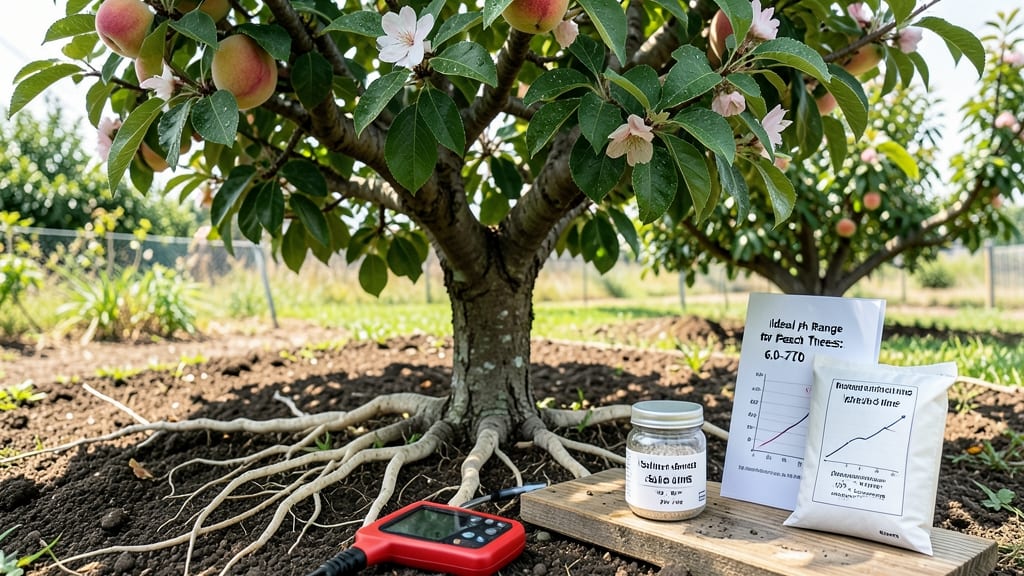
Your peach tree's sweetest harvest starts with soil pH between 6.0 and 7.0—the perfect balance for juicy, flavorful fruit. 🌱 I learned the hard way when my first tree produced tart, mealy peaches because the soil was too acidic.
A simple pH test and a few amendments transformed my harvest within a single season.
Testing your soil is easier than you think—just grab a pH meter or test kit (available for under $15) and take a sample from 6 inches deep. If your soil reads below 6.0, add crushed limestone to raise the pH gradually.
For soil above 7.0, sulfur or peat moss will acidify it over time. The key is patience—amendments take 3-6 months to fully adjust the soil.
Watch for signs of imbalance: yellowing leaves, stunted growth, or poor fruit development all scream "pH problem." Once you hit that sweet spot, your tree will reward you with rich, flavorful peaches that taste like summer in every bite.
The best part? Maintaining the right pH keeps diseases at bay and extends your tree's life for decades.
This method works for both young saplings and mature trees, whether you're planting in spring or adjusting an established orchard. Start testing now—your next harvest depends on it!
📚 In This Guide
- What you need
- Instructions
- Tips and common mistakes
- Wrapping up and next steps
What you need
- ● Soil pH Test Kit: Digital pH meter (for accuracy) or
- ● Home soil test kit (with color chart) – 1 kit
- ● Soil Amendments: Lime (pelletized or agricultural) – 10–20 lbs per 100 sq ft (for raising pH)
- ● Sulfur (powdered or elemental) – 5–10 lbs per 100 sq ft (for lowering pH)
- ● Peat moss or pine bark fines – 2–3 cubic feet per tree (for organic acidity)
- ● Basic Gardening Tools: Trowel or small shovel
- ● Garden fork (for aerating soil)
- ● Gloves (to protect your hands)
- ● Watering can or hose (for mixing amendments)
- ● Compost (to improve soil structure and fertility)
- ● Organic mulch (straw or wood chips) – 2–3 inches (retains moisture & moderates pH)
- ● pH buffer solution (for recalibrating test kits)
- ● Soil moisture meter (to ensure amendments are watered in properly)
How to test and adjust soil pH for peach trees
Peaches thrive in slightly acidic soil—here's how to check and tweak your pH for maximum sweetness.
🌱 Step 1: Test Your Current Soil pH
Use a digital pH meter or home soil test kit to measure your soil's acidity. Take samples from 4-6 inches deep in multiple spots around where you'll plant. Mix the soil with distilled water (1:1 ratio) and wait 30 minutes for accurate readings.
Peach trees prefer a pH between 6.0 and 6.5. If your reading is higher than 7.0, your soil is too alkaline. Below 5.5 means it's too acidic. I've found that backyard soils often skew alkaline, especially in areas with limestone bedrock—so don't be surprised if your test shows 7.5 or higher.
💧 Step 2: Lower pH if Needed (Add Organic Matter)
For alkaline soil (pH above 6.5), mix in 2-3 inches of compost or well-rotted manure into the top 12 inches of soil. Organic matter naturally lowers pH over time. Water the area thoroughly after amending to help microbes break it down.
For stubbornly high pH, apply elemental sulfur at 1 pound per 100 square feet. Work it into the top 6 inches of soil and water well. It takes 2-3 months to show results, so plan ahead. You'll know it's working when new growth appears darker green and more vigorous.
☀️ Step 3: Raise pH if Needed (Use Lime Sparingly)
If your soil tests below 6.0, you'll need to raise the pH slightly. Use pelletized lime at 5 pounds per 100 square feet for a 1.0 pH increase. Spread evenly and water in. Avoid powdered lime—it can burn roots.
Test again after 2-3 months to check progress. Peach trees are sensitive to sudden pH swings, so aim for gradual changes. I've seen growers overcorrect by adding too much lime, which actually stresses the tree more than the original acidic soil.
⏰ Step 4: Monitor and Maintain Yearly
Test your soil pH every spring before new growth begins. Peach trees have shallow roots, so focus on maintaining the top 12 inches of soil. If you notice yellowing leaves with green veins, it's often a sign of iron deficiency caused by high pH.
Keep a garden journal to track your pH adjustments. Note when you amended, how much you added, and the resulting pH. This helps you fine-tune future applications. Over time, you'll develop a routine that keeps your peach tree's soil in that perfect 6.0-6.5 range for optimal fruit sweetness.
Tips & tricks for perfect peach tree soil pH
Getting your peach tree's soil just right makes all the difference in fruit quality—here's how to avoid common pitfalls.
Sampling Depth Matters: When collecting soil samples in Step 1, focus on the top 4-6 inches where peach tree roots thrive. Use a clean trowel to dig small holes in multiple spots around your planting area—this gives you an accurate reading of the root zone environment. I've seen gardeners take surface samples that showed one pH, while deeper samples revealed a completely different story.
Timing is Everything for Accurate Testing: The 30-minute wait after mixing soil with distilled water is crucial—don't rush this step! I learned this the hard way after getting inconsistent readings when I checked too soon. Place your mixture in a clean container and let it sit undisturbed in a cool spot. This waiting period allows the soil particles to fully hydrate and settle, giving you the most accurate pH measurement possible.
Organic Matter Application Technique: When adding 2-3 inches of compost in Step 2, work it into the top 12 inches of soil using a broadfork or garden fork. This creates air pockets that help with drainage while gradually lowering pH. Spread the compost evenly and water immediately to activate microbial activity—this is what actually breaks down the organic matter and releases acids that adjust your soil pH.
Visual Cues for pH Adjustment Success: After applying elemental sulfur or lime, watch for these signs: Darker green leaves indicate improved pH balance, while new growth appearing more vigorous confirms your adjustments are working. I've found that peach trees often show results within 2-3 months after amendment—patience is key! If you see yellowing leaves with green veins, that's a classic sign of iron deficiency from high pH that needs immediate attention.
Pro Tips for Soil Ph For Peach Trees
- Getting your peach tree's soil just right makes all the difference in fruit quality—here's how to avoid common pitfalls.
- Sampling Depth Matters: When collecting soil samples in Step 1, focus on the top 4-6 inches where peach tree roots thrive.
- Timing is Everything for Accurate Testing: The 30-minute wait after mixing soil with distilled water is crucial—don't rush this step!
Frequently asked questions
Got questions about optimizing your peach tree’s soil pH? Here are some of the most common concerns—plus straightforward answers to help you grow the juiciest peaches possible!
What is the ideal soil pH range for peach trees?
The sweet spot for peach trees is a slightly acidic to neutral pH of 6.0 to 6.8. This range ensures they absorb nutrients like nitrogen, phosphorus, and potassium efficiently. Test your soil annually—especially if your fruit looks lackluster or growth stalls.
When is the best time to adjust soil pH for peach trees?
Fall or early spring (before bud break) is ideal for amending pH. Avoid mid-summer adjustments, as sudden changes can stress trees. If your soil is too acidic (<6.0), add lime; for alkaline soil (>7.0), use sulfur or peat moss. Give it 2-3 months to take effect.
Can I use vinegar or other household items to lower soil pH?
No—never use vinegar, coffee grounds, or citrus peels to adjust pH. These methods are unreliable and can harm soil microbes. Instead, use elemental sulfur (for gradual acidification) or peat moss, following package instructions for precise results.
Why do my peach tree leaves look yellow even after adjusting pH?
Yellowing leaves (chlorosis) can stem from iron or zinc deficiency, even in ideal pH ranges. If pH is correct, try chelated iron supplements or apply composted manure to boost micronutrients. Test soil again—sometimes pH isn’t the root cause!
Does soil pH affect peach tree disease resistance?
Peach trees in optimal pH (6.0–6.8) are less prone to fungal diseases like brown rot or leaf curl. Alkaline soils (high pH) can weaken trees, making them vulnerable to pests. Pro tip: Mulch with pine needles or oak leaves to naturally lower pH over time.
Wrapping up and next steps
Getting your soil pH for peach trees just right is the secret to luscious, sweet fruit and a thriving orchard! 🌱 Remember, peaches love a slightly acidic range of 6.0–7.0, but don’t stress—testing and adjusting is easier than you think.
With the right tools and a little patience, you’ll be well on your way to a bountiful harvest.
Ready to take action? Test your soil today and give your peach trees the perfect growing conditions. Happy gardening—your future fruit will thank you! 🍑✨