
Light Requirements
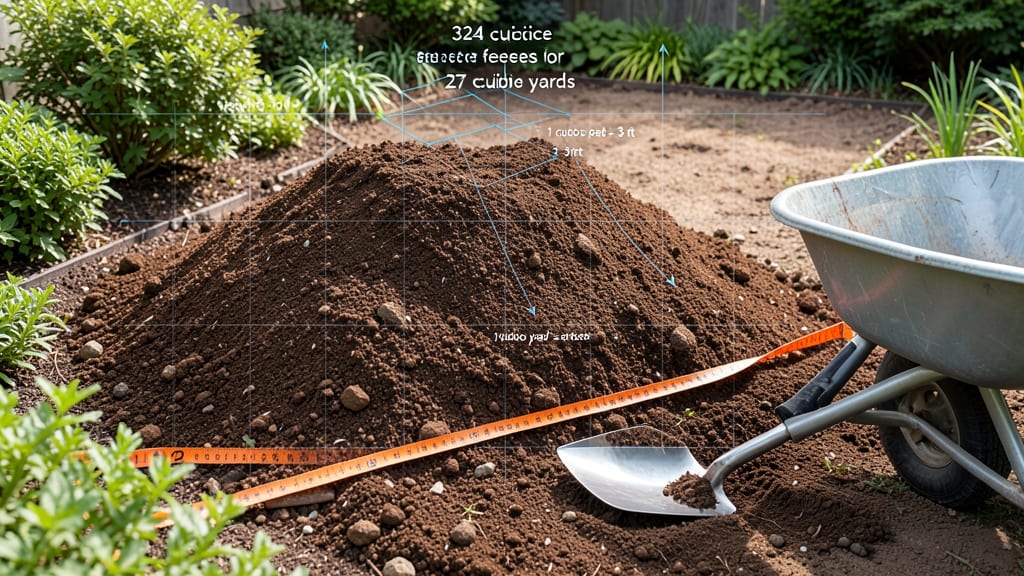
A yard of topsoil measures 27 cubic feet (3 ft × 3 ft × 3 ft), weighing roughly 1 ton when loose. This amount typically covers about 100 square feet at a 3-inch depth, making it perfect for garden beds, lawn leveling, or planting areas.
A yard of topsoil refers to a volume measurement, not an area—so think in three dimensions. 🌱 The 27 cubic feet comes from stacking three 3-foot layers (length × width × depth), which translates to about 1 ton by weight when dry.
This standard measurement helps gardeners estimate how much they need for projects like raised beds or lawn repairs. For example, a 10×10-foot garden at 6 inches deep would require three yards of topsoil, not one.
Understanding this conversion prevents over- or under-ordering. Many suppliers sell topsoil by the cubic yard, so knowing your project's square footage and desired depth lets you calculate precisely. A 3-inch layer over 100 sq ft uses exactly one yard, but steeper slopes or deeper planting may need adjustments.
Always check your soil's composition too—sandy blends drain faster than clay-heavy mixes, affecting how much you'll need for long-term plant health.
💡 In This Article
- Calculating Topsoil Volume for Garden Projects
- Best Topsoil Types and Uses for Landscaping
Calculating topsoil volume for garden projects
The "yard" measurement for topsoil refers to cubic yards, meaning it's a three-dimensional volume. Imagine a cube that's 3 feet long, 3 feet wide, and 3 feet deep—this equals 27 cubic feet or 1 cubic yard.
The math comes from multiplying these dimensions: 3 × 3 × 3 = 27. This standard volume helps gardeners visualize how much soil they're working with, especially when planning projects like raised beds or lawn leveling. 🌱
Depth plays a critical role in how much topsoil you'll need. A 3-inch layer over 100 square feet uses exactly one cubic yard. To calculate for other depths, use this formula: Area (sq ft) × Depth (inches) ÷ 324 (since 1 cubic yard covers 324 sq ft at 1 inch).
For example, a 10×10-foot garden at 6 inches deep requires 3 cubic yards of topsoil. Sloped areas or uneven terrain may need 10-20% more to account for extra volume needed to fill contours.
Project type also affects volume needs. A raised bed with straight sides and a uniform depth is straightforward to calculate, but sloped landscapes or hilly gardens require more soil to achieve consistent coverage.
For instance, a sloped lawn might need 1.5 cubic yards per 100 sq ft instead of 1, depending on the grade. Always measure your space carefully and consider compacting the soil slightly after spreading to reduce waste. 💫
Weight matters too—one cubic yard of loose topsoil weighs about 1 ton, but this can vary based on moisture content. Sandy topsoil is lighter (around 1.5 tons per cubic yard when wet), while clay-heavy blends can approach 2 tons per cubic yard.
When ordering, ask suppliers about moisture levels to avoid overestimating. Pro tip: Order 5-10% extra** if your project involves heavy compaction or deep planting. ✨
For precise planning, break your project into sections. Measure each area separately, calculate the volume needed, and sum the totals. Tools like online cubic yard calculators can simplify this process.
Remember, topsoil settles over time, so adding a little extra ensures your garden has the right foundation for healthy plant growth. 🌿