
Light Requirements
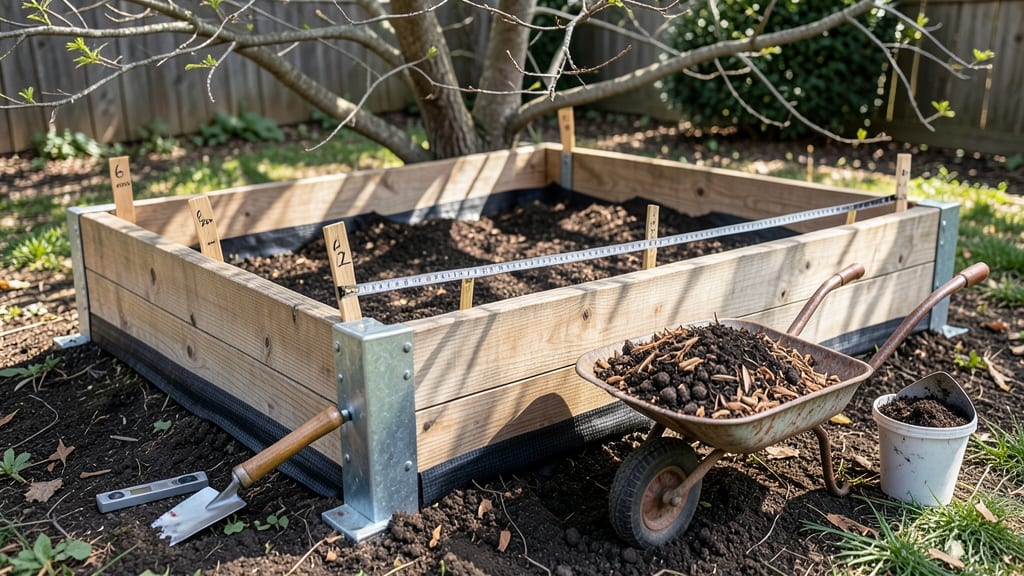
To determine how much soil for a raised garden bed, multiply the bed's length × width × depth (converted to feet), then add 10% extra for settling. For example, a 4×8-foot bed with 12-inch soil depth requires about 33 cubic feet total—plus an additional 3.3 cubic feet to account for compaction. Always use a high-quality soil blend or mix with compost for best results.
Calculating the right amount of soil prevents shortages or waste, and the formula is simpler than you might think. 🌱 Start by measuring your bed's dimensions in feet—this ensures accurate volume calculations.
For instance, a 3×6-foot bed with 8-inch soil depth would need roughly 15 cubic feet of soil before adding the 10% buffer. Using pre-mixed raised bed soil blends saves time, but custom mixes with compost improve drainage and fertility over time.
Depth matters too: most vegetables thrive in 6–12 inches of soil, while deeper beds (up to 18 inches) support root crops like carrots or potatoes. If your bed has a frame, account for the frame's height when measuring depth—this ensures you don't overfill or leave gaps.
Pro tip: buy soil in 1 cubic foot bags for easy measurement and transport.
💡 In This Article
- Calculating Raised Bed Soil Volume: Step-by-Step Formula
- Best Soil Mixes and Depth Guidelines for Raised Beds
Calculating raised bed soil volume: step-by-step formula
The core of soil volume calculation lies in converting all measurements to feet and applying the cubic feet formula: length × width × depth.
For example, a 4×8-foot bed with 12-inch soil depth translates to 4 × 8 × 1 (since 12 inches = 1 foot), yielding 32 cubic feet of raw volume.
This conversion is critical because soil bags are typically sold by the cubic foot, and working in feet eliminates confusion with inches. 🔥
Here's where precision matters: soil naturally compacts over time, especially under plant roots and foot traffic. That's why we add 10% extra to our calculation—this accounts for settling and ensures your plants have enough loose soil to thrive.
Using our 4×8-foot example, 32 cubic feet × 1.10 = 35.2 cubic feet total. For practicality, round up to 36 cubic feet to avoid running short during filling. This rule applies universally, whether your bed is 2×4 feet or 10×12 feet.
Depth plays a surprisingly large role in volume calculations. A 6-inch soil layer (0.5 feet) in that same 4×8-foot bed would require only 16 cubic feet—half the amount of a 12-inch layer.
This is why deeper beds (12+ inches) are ideal for root vegetables like carrots or potatoes, which need 12–18 inches of soil to develop fully. Shallow beds (6 inches) work for leafy greens but may struggle with moisture retention in hot climates. 💫
Real-world adjustments are key: if your bed has a frame with built-in height (like 2 feet tall), subtract the frame's height from your desired soil depth.
For instance, a 2-foot-tall frame with 12-inch soil depth means you only need 6 inches of soil inside the bed (since the frame provides the other 6 inches). Always measure from the base of the frame to avoid overfilling, which can cause spillage or poor drainage.
For irregularly shaped beds or those with slopes, divide the space into rectangles, calculate each section separately, then sum the totals. A kidney-shaped bed might be split into a 3×4 rectangle plus a 2×3 rectangle—each calculated individually before adding the 10% buffer.
This method ensures accuracy even with unconventional designs. ✨
Pro tip: buy soil in 1 cubic foot bags for easy measurement. Stack them visually to estimate how many you'll need before purchasing. For our 4×8-foot bed example, 36 bags would be perfect, but buying 40 bags gives you a safety net for adjustments or future top-ups.
Pre-mixed raised bed soil blends (often labeled "garden mix") typically come in 40-pound bags, which equals about 0.25 cubic feet per bag—so 40 bags would cover 10 cubic feet.
Remember: the 10% rule isn't arbitrary—it reflects real-world soil behavior. Loose soil settles 5–15% during watering and root growth, while clay-heavy mixes can compact up to 20%.
For maximum accuracy, test your soil's settling rate by filling a small container (like a 5-gallon bucket) and measuring how much it compresses after watering. Adjust your buffer accordingly! 🌱