
Light Requirements
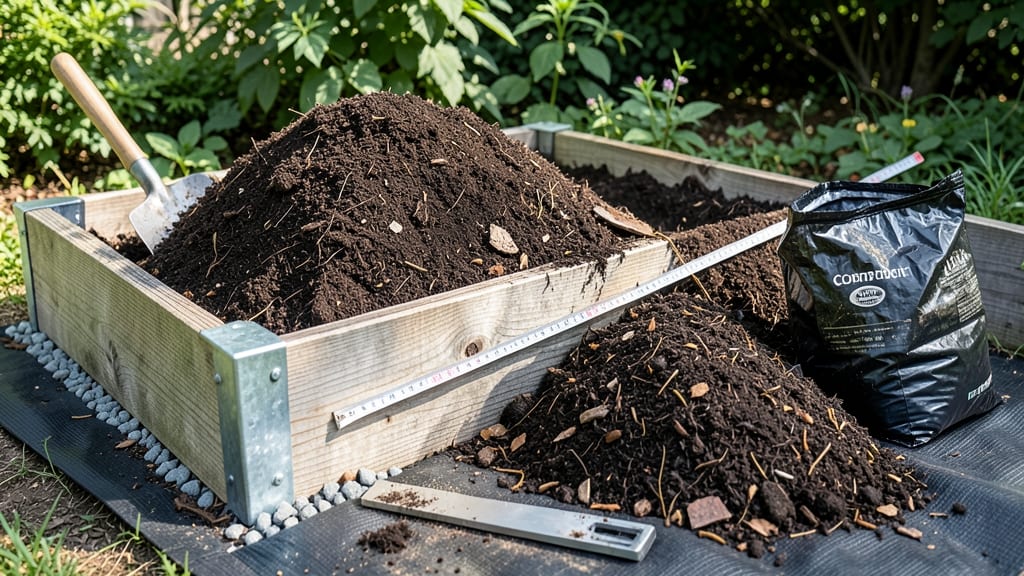
To fill a 4x8 raised bed, you'll need 1.33 cubic feet of soil per inch of depth—a standard 6-inch bed requires 8 cubic feet (about 0.5 cubic yards), while deeper 12-inch beds need 16 cubic feet (1 cubic yard). Always buy 10-20% extra to account for soil settling after watering.
Calculating soil volume is simpler than it sounds once you know the formula: multiply your bed's length, width, and depth in feet. 🌱 For example, a 4x8-foot bed filled to 6 inches (0.5 feet) needs 4 × 8 × 0.5 = 16 cubic feet, but since 1 cubic yard equals 27 cubic feet, you'll only need about 0.59 cubic yards.
Pro tip: pre-mix your soil with compost and perlite for better drainage and plant growth.
Most vegetables thrive in at least 6-12 inches of soil, while shallow-rooted plants like lettuce or strawberries do fine with 4-6 inches. 🌿 The deeper the bed, the more you can grow—just ensure proper drainage by adding a layer of gravel or landscape fabric at the bottom before filling with soil.
💡 In This Article
- Calculating Soil Volume for Raised Garden Beds
- Optimal Soil Depth for Vegetables, Herbs, and Flowers
Calculating soil volume for raised garden beds
The math behind filling a raised bed is straightforward once you understand the formula: length × width × depth = cubic feet. For a 4x8-foot bed, multiply 4 feet by 8 feet to get 32 square feet of base area.
Now, multiply this by the depth in feet—so a 6-inch bed (0.5 feet) requires 32 × 0.5 = 16 cubic feet of loose soil. This is why the rule of thumb is 1.33 cubic feet per inch of depth—it accounts for the bed’s footprint. 🌱
Converting to cubic yards (the unit most soil suppliers use) is key. Since 1 cubic yard equals 27 cubic feet, divide your cubic feet total by 27. A 6-inch bed needs 16 ÷ 27 ≈ 0.59 cubic yards, which rounds up to 0.6 cubic yards for practicality.
For a 12-inch bed, you’d need 1.18 cubic yards, or about 1.2 cubic yards when accounting for rounding. Always buy slightly extra—soil settles by 10-20% after watering, especially if mixed with organic matter like compost.
Soil composition also affects volume. A typical mix—60% topsoil, 30% compost, and 10% perlite—will settle more than pure topsoil because organic materials break down. For example, a bag labeled "1 cubic foot" of compost may only occupy 0.8 cubic feet after settling.
This is why gardeners often use a 1:1 ratio of topsoil to compost but still end up needing 15-20% more total volume than calculated. Weighing bags at the store helps ensure accuracy.
Consider the texture too: Sandy soil compacts less than clay-heavy mixes, while loamy soil (ideal for veggies) settles moderately. If your bed has wooden frames, check for rot or gaps—water seeping through can cause uneven settling.
For deeper beds (12+ inches), add gravel or landscape fabric at the bottom to improve drainage and reduce compaction pressure on roots. This layer doesn’t count toward your soil volume but prevents soil from compressing too much over time. ✨
Pro tip: Use a soil calculator (available online) to input your bed’s dimensions and mix ratios for precise estimates. These tools account for settling and even suggest amendments like vermiculite for moisture retention.
For example, a 4x8 bed filled to 10 inches with a 50% compost mix might need 12 cubic feet of topsoil + 6 cubic feet of compost, totaling 18 cubic feet (0.67 cubic yards)—but buy 20 cubic feet (0.74 cubic yards) to avoid running short.
Visualize the process: Start by laying down cardboard or newspaper to suppress weeds, then add a 2-inch layer of coarse wood chips or gravel for drainage. Fill the remaining space with your soil mix, tamping lightly every 4 inches to eliminate air pockets.
This step-by-step approach ensures even settling and prevents future compaction issues. 💛