
Light Requirements
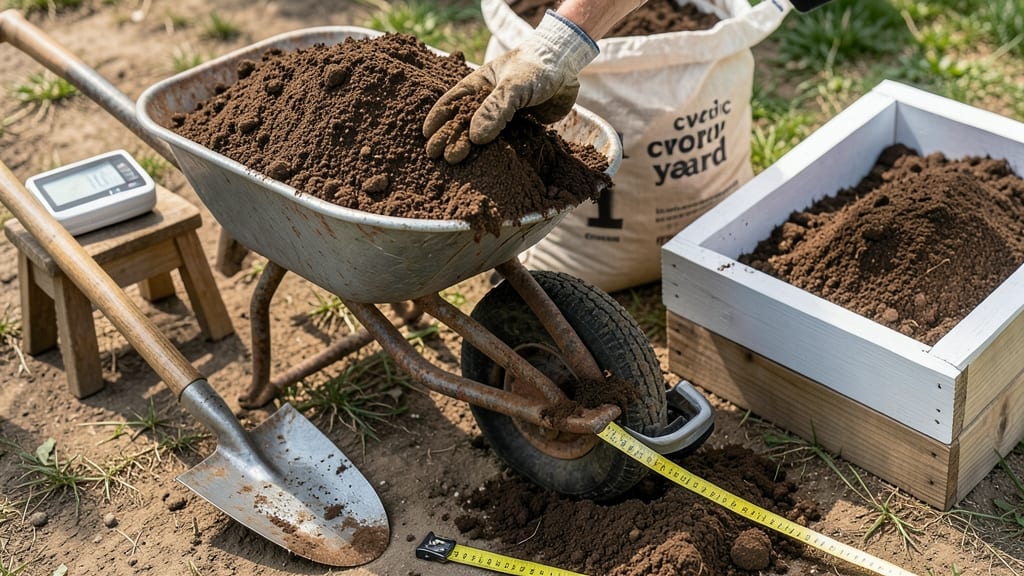
To determine how much topsoil weighs, expect 2,000 to 2,700 pounds per cubic yard, or 100 to 140 pounds per cubic foot, since weight depends on moisture levels and soil composition. Sandy topsoil is on the lighter end, while clay-heavy soil is significantly heavier.
Understanding topsoil weight helps with planning landscaping projects or garden beds.
The variation comes from how compact the soil is—wet clay can reach 2,700 pounds per cubic yard, while dry sandy soil might only hit 1,500 pounds. 🔥 For example, a 10 cubic yard delivery could weigh anywhere from 15,000 to 27,000 pounds, so checking moisture content before ordering is key.
I always add 10-15% extra for compaction when estimating needs for raised beds or lawn topdressing.
This weight difference also affects equipment needs—heavier clay soil may require heavier machinery for spreading. Always verify with your supplier, as some quote by volume while others guarantee weight limits for delivery trucks.
💡 In This Article
- Factors Affecting Topsoil Weight by Type
- Calculating Topsoil Weight for Landscaping Projects
Factors affecting topsoil weight by type
Topsoil weight varies dramatically based on its particle composition and moisture content. Sandy soil, with large particles and high air pockets, typically weighs 1,500-1,800 pounds per cubic yard when dry, while clay soil—packed with tiny particles—can surge to 2,700 pounds per cubic yard when saturated.
The difference? Clay particles bind water like a sponge, increasing density, while sand drains quickly, staying lighter. 🌱
Organic matter also plays a role—compost-rich topsoil may weigh 10-20% less than mineral-heavy soil due to its porous structure. For example, a 1 cubic foot sample of loam (balanced sand/silt/clay) might weigh 110 pounds when dry but 130 pounds after rain.
This explains why suppliers often specify "dry weight" for deliveries, as moisture can add 30-50% extra pounds per cubic yard.
Compaction is another critical factor. Foot traffic or machinery can reduce pore space by 20-30%**, increasing weight. Imagine walking on a sandy beach versus packed clay—your footprints show how pressure alters density.
In landscaping, this means freshly tilled soil weighs less than compacted backfill. Always account for a 15% weight increase if working with wet conditions. ✨
Here's a quick comparison of common soil types:
- Sandy soil: 1,500-1,800 lbs/yd³ (dry), 1,800-2,100 lbs/yd³ (wet)
- Loam (balanced): 1,800-2,200 lbs/yd³ (dry), 2,200-2,500 lbs/yd³ (wet)
- Clay-heavy: 2,200-2,700 lbs/yd³ (dry), 2,700-3,200 lbs/yd³ (saturated)
For precise calculations, always check the bulk density (pounds per cubic foot) provided by your supplier. This value accounts for all variables and ensures accurate ordering.
A bulk density of 1.2 g/cm³ (typical for loam) translates to about 75 lbs per cubic foot, while clay can reach 1.6 g/cm³ (nearly 100 lbs per cubic foot). 💫