
Light Requirements
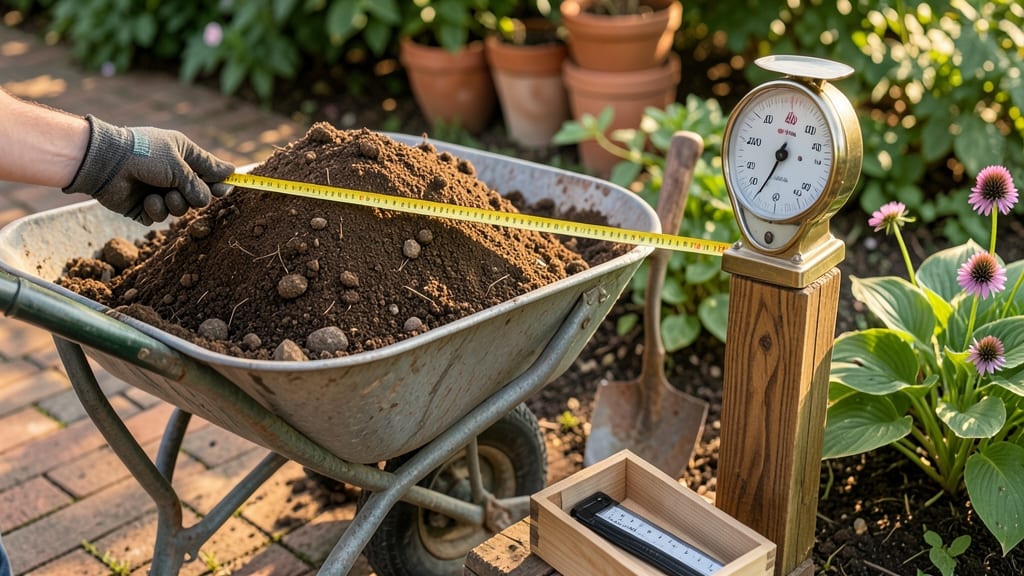
A cubic yard of soil weighs between 2,000 and 3,000 pounds, depending on its composition—sandy soil is lighter (around 2,200 lbs), while clay-heavy or moist soil can exceed 3,000 lbs. Loam, the ideal gardening mix, usually falls between 2,400 and 2,800 lbs per cubic yard.
A cubic yard of soil's weight varies dramatically based on its moisture content and particle makeup. 🌱 Sandy soil, with its larger air gaps, often tips the scales at 2,200 pounds—about half the weight of clay-heavy soil, which can reach 3,500 pounds when saturated.
Even a 10% increase in moisture can add 200-300 pounds to the total weight, making accurate estimates critical for landscaping projects. For example, a 3' x 3' x 1' raised bed would need roughly 1,500-2,000 pounds of loam, which is why many gardeners opt for pre-mixed bags with labeled weights.
Understanding these variations helps avoid overloading wheelbarrows or misjudging delivery costs. 🚛 Clay soils, in particular, can become surprisingly dense when wet, while organic-rich topsoil might weigh less due to its air pockets. Always account for moisture fluctuations—especially in rainy seasons—when calculating how much soil you'll need for large-scale projects.
💡 In This Article
- Factors Affecting Soil Weight per Cubic Yard
- Practical Weight Calculations for Gardening Projects
Factors affecting soil weight per cubic yard
Soil weight isn't just about volume—it's a science of particle density and moisture absorption. The three primary components—sand, silt, and clay—each contribute differently to weight due to their unique structures. Sand particles are large and angular, creating more air pockets that reduce overall density.
A cubic yard of pure sand typically weighs around 2,200-2,400 pounds, while clay particles are flat and tightly packed, allowing less air space and increasing weight to 3,000-3,500 pounds when saturated. Silt falls somewhere in between, usually weighing 2,500-2,800 pounds per cubic yard.
The moisture content plays an even more dramatic role than composition alone. Water fills the voids between particles, dramatically increasing weight—up to 50% more in clay soils.
For example, dry clay soil might weigh 2,800 pounds per cubic yard, but after a heavy rain, that same volume could swell to 3,800 pounds. This is why landscapers often specify "dry weight" when ordering soil—it accounts for typical seasonal moisture variations.
Organic matter also affects weight: compost-amended soils often weigh 10-20% less than mineral soils due to their porous structure.
Compaction is another critical factor that most people overlook. When soil is tilled or driven over, the particles pack more tightly, reducing air space and increasing weight. A compacted cubic yard of loam might weigh 3,000 pounds instead of the usual 2,500 pounds.
This explains why freshly delivered soil often feels lighter than soil that's been sitting in a garden bed for weeks—it naturally compacts under its own weight. 🌱 For precise calculations, always consider whether your soil is loose (like fresh delivery) or settled (like established garden soil).
Here's how these factors interact in real-world scenarios:
- Sandy soil: Low moisture retention means weight stays relatively stable at 2,200-2,400 lbs, but drainage makes it ideal for lightweight projects
- Clay soil: Can fluctuate 1,000+ pounds between dry and saturated states, requiring adjustments for seasonal changes
- Loam (ideal mix): Balances weight at 2,400-2,800 lbs with good moisture retention and workability
- Organic topsoil: Typically 10-20% lighter than mineral soils due to decomposition air pockets
The key takeaway is that soil weight isn't constant—it's a dynamic measurement influenced by both natural composition and environmental conditions. For accurate planning, always test your soil's moisture content and consider seasonal variations.
This level of detail makes all the difference when calculating how much soil you'll need for large projects or determining delivery costs. ✨