
Light Requirements
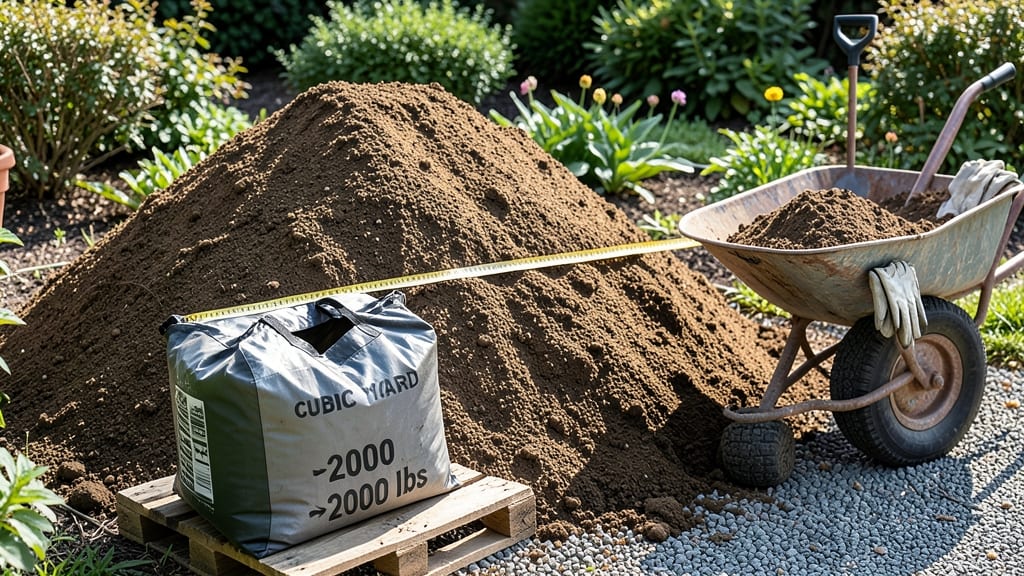
To determine how much 1 yard of topsoil weighs, expect a range of 1,800 to 2,200 pounds on average, though this shifts dramatically with moisture—dry soil sits at 1,500–1,800 lbs, while waterlogged soil can hit 2,400+ lbs. Soil composition and compaction play a huge role in these variations.
Understanding topsoil weight isn't just about the numbers—it's about the science behind what you're moving. 🌱 The moisture content alone can swing the weight by 500+ pounds, which is why I always check the weather forecast before ordering.
Sandy soils weigh less than clay-heavy mixes, and organic matter like compost adds bulk without significant extra pounds. For landscaping projects, I recommend adding 10% extra to your estimate to account for unexpected variations in delivery batches.
If you're planning a raised garden bed or lawn topsoil application, knowing the weight helps with truck capacity planning and labor costs. A common mistake is assuming all topsoil behaves the same—wet soil requires heavier equipment to spread evenly, while dry soil compacts more easily.
Always ask your supplier for a moisture-adjusted estimate if precision matters for your project.
💡 In This Article
- Factors Affecting Topsoil Weight per Yard
- Practical Topsoil Weight Estimates for Landscaping Projects
Factors affecting topsoil weight per yard
Moisture content is the single biggest variable in topsoil weight. Dry topsoil with 5-10% moisture typically weighs 1,500–1,800 lbs per cubic yard, while saturated soil (holding 30%+ water) can exceed 2,400 lbs.
This is because water adds 1.1 lbs per cubic inch of volume—so a yard of soil holding 20% extra water gains about 500 lbs instantly. Think of it like packing snow: the wetter it gets, the heavier the load becomes.
Soil composition creates dramatic differences too. Sandy loam—common in many garden mixes—weighs 1,800–2,000 lbs per yard due to its coarse particles, while clay-heavy topsoil can hit 2,200–2,500 lbs because clay particles pack tightly and hold more water.
Organic matter like compost adds bulk without much weight gain: a mix with 30% compost might weigh 1,600–1,900 lbs despite appearing fluffier. The key is particle density—clay's microscopic structure traps water and air differently than sandy grains.
Compaction plays a surprising role too. Loose topsoil in a truck bed weighs less than when spread and rolled. For example, loose topsoil might measure 1,800 lbs per yard in delivery, but after compacting with a lawn roller, the same volume could weigh 2,100+ lbs.
This happens because compaction reduces air pockets—water and solids take up more space when uncompacted. For precision projects, always ask suppliers about compaction factors in their delivery estimates.
Temperature also sneaks into the equation. Cold soil holds more moisture (since water expands when freezing), which can add 100–200 lbs per yard in winter months. Conversely, baked summer soil loses moisture rapidly, dropping weights closer to 1,500 lbs.
I've seen contractors adjust their truck loads by 15–20% between seasons just to account for these swings. The lesson? Always verify moisture content before ordering for large projects.
Here's a quick comparison to put it in perspective:
- Sandy loam (dry): 1,600–1,800 lbs per yard
- Clay-heavy (saturated): 2,300–2,500 lbs per yard
- Compost-amended (loose): 1,400–1,700 lbs per yard
- Compacted clay (spring): 2,000–2,200 lbs per yard
For most home gardeners, the 1,800–2,200 lb range covers 80% of scenarios, but knowing these variables helps avoid over-ordering (and costly returns) or under-estimating what your truck—or back—can handle. 💪