
Landscaping
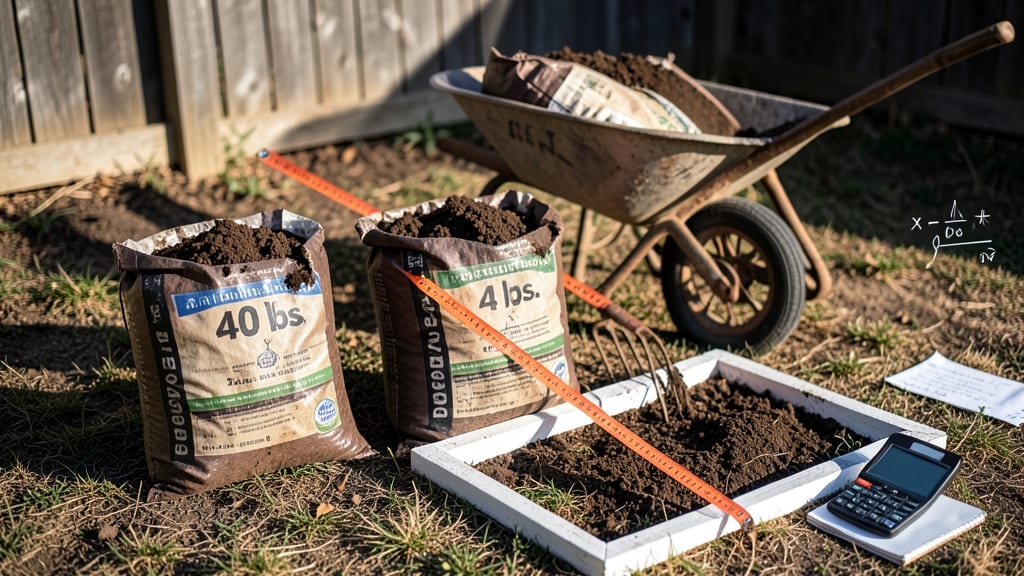
To determine how many bags of soil fit in a yard, calculate that one cubic yard equals 27 cubic feet—most bags contain 1–2 cubic feet. For example, 27 ÷ 2 = 13.5 bags of 2-cubic-foot topsoil. Always verify bag labels and adjust for soil compaction in raised beds or garden plots.
Understanding this conversion saves time and money at the garden center. 🌱 Most 1-cubic-foot bags require 27 bags per yard, while 2-cubic-foot bags cut that number in half.
The key is accounting for how soil settles—loose fill bags may need 10-15% more volume after settling, while pre-mixed bags often compact differently. For raised beds, I typically round up to ensure full coverage without gaps.
Different projects benefit from different bag sizes. 1-cubic-foot bags work well for small flower beds or container gardens, while 3-cubic-foot bags speed up larger projects like vegetable plots. Bulk purchases save 10-20% but require storage space and heavy lifting—smaller bags offer flexibility for touch-up projects later in the season.
💡 In This Article
- Converting Cubic Yards to Soil Bag Quantities
- Best Soil Bag Sizes for Common Gardening Projects
Converting cubic yards to soil bag quantities
The foundation of this calculation lies in understanding volume measurements. One cubic yard equals 27 cubic feet, which is a standard conversion in landscaping. When you see a bag labeled as 2 cubic feet, that means it occupies 2 cubic feet of space when loose.
To find how many such bags fit in a yard, divide 27 by the bag's cubic feet—so 27 ÷ 2 = 13.5 bags. This math works for any bag size, but the result changes dramatically based on whether you're using 1-cubic-foot, 2-cubic-foot, or 3-cubic-foot bags. 🔥
Here's where soil compaction becomes critical. Loose fill bags (like topsoil) settle when spread, reducing their volume by 10-15%. For example, a 2-cubic-foot bag might only yield 1.7 cubic feet after settling. This means you'll need slightly more bags to cover the same area.
Pre-mixed bags (like potting soil) often compact less, but they're also heavier—sometimes 30-40 pounds per cubic foot—so lifting becomes a factor. Always check the bag's weight label to plan for physical handling.
For practical application, consider this: A 4' x 8' x 12" raised bed holds about 2.67 cubic feet of soil. Using 2-cubic-foot bags, you'd need 2 bags per layer, but after settling, you might need 3 bags to fill it completely.
This is why gardeners often round up to the nearest whole number—better to have extra soil than run short mid-project. 💫
Another factor is soil type. Sandy soil compacts less than clay-heavy soil, which can shrink up to 20% when wet. If you're working with clay, increase your bag count by 10-20% to account for this.
For example, if your calculation suggests 15 bags, consider buying 17-18 bags instead. The extra cost is minimal compared to the hassle of running out mid-project.
Pro tip: When buying in bulk, ask the garden center to weigh your soil. Some loose fill bags are 5-10% lighter than their labeled volume due to air pockets.
Weighing ensures you're getting the advertised amount. For example, a 2-cubic-foot bag should weigh about 40-50 pounds if it's topsoil—if it's lighter, you're paying for air, not soil. ✨
Finally, consider the shape of your project. Rectangular areas (like raised beds) are straightforward, but circular or irregularly shaped gardens require more soil.
For a 5-foot diameter circular bed at 12" depth, you'd need about 1.5 cubic feet—so 1 bag of 1.5-cubic-foot soil or 2 bags of 1-cubic-foot soil. Always visualize the space in three dimensions to avoid underestimating volume.