
Light Requirements
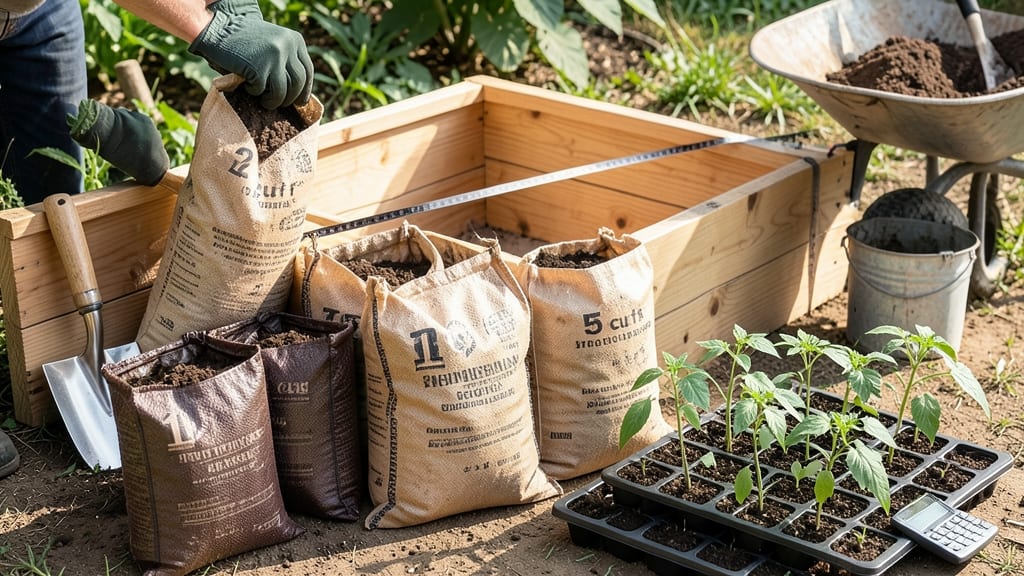
To determine how many bags of soil you need, multiply your container’s square footage by the desired depth (inches) and divide by the cubic feet per bag—typically 1-2 bags per 1 sq ft for 6-inch depth, adjusting for heavier plants or deeper roots.
Calculating soil volume starts with your container’s dimensions—length × width × depth—converted to cubic feet. For example, a 2-foot-wide by 4-foot-long raised bed with 12-inch depth needs 8 cubic feet of soil (2×4×1 = 8). Most soil bags cover 1-2 cubic feet, so you’d need 4-8 bags.
Root depth matters too: herbs like basil thrive in shallow 4-6 inches, while shrubs need 12+ inches for stability. Heavier soils (like clay) or amended mixes (with compost) also increase the total volume needed.
Pro tip: Always round up to account for settling and moisture absorption. For large projects, buying in bulk (e.g., 40-pound bags) saves money and reduces trips.
If your soil mix includes perlite or sand, factor in 10-20% extra volume—these amendments lighten the blend but expand the total cubic footage.
💡 In This Article
- Calculating Soil Volume by Container Size and Plant Needs
- Soil Bag Sizing Guide: What to Buy for Common Gardening Projects
Calculating soil volume by container size and plant needs
Understanding soil volume starts with basic geometry: multiply your container’s length by width by depth to get cubic feet. For example, a 2-foot-wide by 3-foot-long pot with 10-inch depth requires 5 cubic feet of soil (2×3×0.83 = 5).
This math ensures you account for every inch of space where roots will grow. 🌱 The key here is that most soil bags are labeled by volume (1 cu ft or 2 cu ft), not weight, so matching your container’s cubic footage to bag sizes prevents shortages or waste.
Root depth is where plant biology meets math. Herbs like basil or chives need only 4-6 inches of soil, while shrubs (e.g., lavender) require 12+ inches for stability. Trees and large perennials demand even deeper beds—think 18-24 inches—to support their extensive root systems.
Heavier soils (like clay) or amended mixes (with compost or perlite) also affect volume: clay compacts more, requiring fewer bags, while perlite adds air but increases total cubic footage by 10-20%.
Let’s break it down with a real-world example: a 4-foot-by-8-foot raised bed filled to 12 inches needs 32 cubic feet of soil (4×8×1 = 32). Using 2-cubic-foot bags means you’d need 16 bags.
But if you’re planting tomatoes (which need 18 inches of depth), recalculate: 4×8×1.5 = 48 cubic feet, or 24 bags. Always round up—soil settles over time, and moisture absorption can reduce usable volume by 5-10%.
Soil type isn’t just about nutrients—it’s about density. A bag of lightweight potting mix might weigh 10-15 pounds but occupy 1-2 cubic feet, while a bag of garden soil (heavier, with more clay) could weigh 30-40 pounds for the same volume.
This weight difference matters when transporting or lifting bags, especially for large projects like vegetable gardens or flower beds.
For containers with irregular shapes (like hanging baskets or spiral planters), estimate volume by filling the container with water, then measuring how much water it holds. This "water displacement" method gives you the exact cubic footage needed.
For example, a spiral planter holding 3 gallons of water needs roughly 0.375 cubic feet of soil (since 1 gallon ≈ 0.134 cu ft). 💧
Pro tip: If your project involves amending soil (adding compost, sand, or fertilizer), increase your total volume by 15-25%. Amendments like perlite or coconut coir expand when wet, adding bulk without adding weight.
For instance, a mix that’s 50% compost might require 25% more bags than pure garden soil to fill the same space.
Finally, consider settling: fresh soil compresses over time, especially under heavy plants. For long-term projects (like perennial beds), add 10-15% extra soil to account for this. The goal is to avoid mid-season top-ups, which disrupt root systems and waste resources. 🌿