
Tools
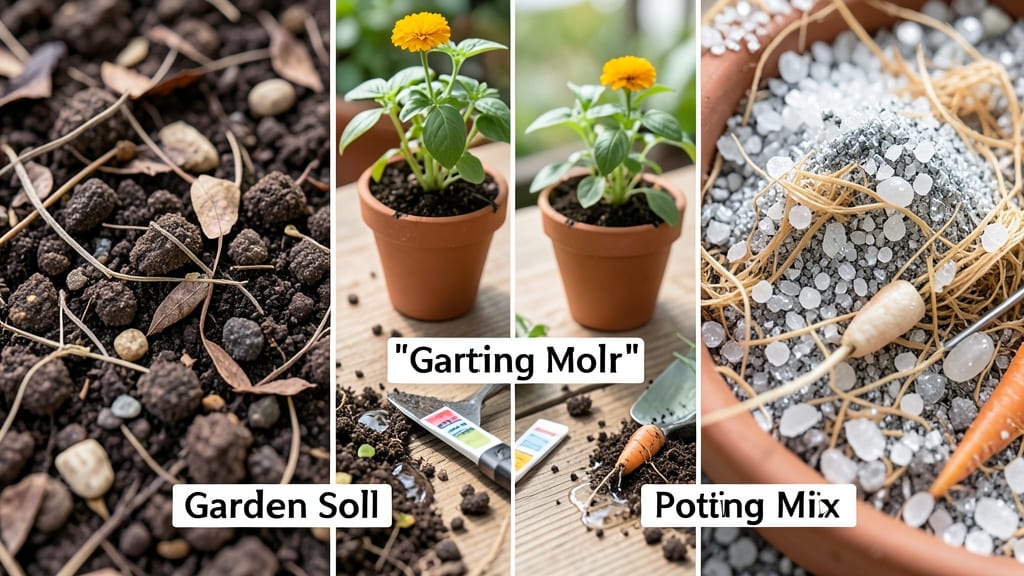
Understanding garden soil vs potting mix is the difference between plants that thrive and ones that just survive. 🌱 The wrong medium can leave roots gasping for air or drowning in compaction—something I learned the hard way when my container tomatoes wilted despite daily watering.
Garden soil is dense, nutrient-rich, and perfect for in-ground planting, while potting mix is lightweight and designed to prevent root rot in containers. Both have their place, but mixing them wrong can spell disaster for your plants.
Garden soil is what you dig up from your yard or buy in bulk—it’s packed with organic matter, minerals, and beneficial microbes. It’s ideal for vegetables, perennials, and shrubs planted directly in the ground, where roots can spread freely.
The downside? It compacts easily, especially when wet, which can suffocate roots in containers. That’s why I now use it only for in-ground beds, never for pots.
Potting mix, on the other hand, is a blend of peat, perlite, vermiculite, and sometimes coconut coir, designed to stay loose and well-draining. It’s the secret to keeping container plants happy, as it prevents waterlogging and encourages strong root growth.
The trade-off? It lacks the long-term nutrients of garden soil, so you’ll need to fertilize more often. For herbs, annuals, and seedlings, it’s a game-changer.
Here’s the trick: for containers, stick with potting mix, but for in-ground planting, garden soil is your best bet. If you’re mixing the two, aim for a 70/30 ratio—70% garden soil for nutrients, 30% potting mix for aeration. Your plants will thank you with stronger roots and bigger harvests.
The first product explained
Meet Miracle-Gro Indoor Potting Mix—your ultimate companion for thriving container gardens, houseplants, and balcony greens! 🌱 This premium potting mix is engineered to deliver optimal aeration, moisture retention, and nutrient balance, ensuring your plants grow lush and strong, whether you're a seasoned gardener or just starting your green thumb journey.
📏 Key Specs & Features
- Type: Lightweight peat-based potting mix (ideal for containers and indoor plants)
- Density: Fluffy and airy—30-40% less dense than garden soil, preventing compaction and promoting root expansion.
- Moisture Control: Slow-release water retention with added perlite and vermiculite to avoid soggy roots.
- Nutrient Boost: Pre-mixed with balanced, slow-release fertilizer for up to 6 months of growth.
- pH Level: 5.5–6.5 (perfect for most houseplants and veggies like herbs, peppers, and tomatoes).
- Sterilized & Pest-Free: Heat-treated to eliminate weeds, pathogens, and pests.
- Bag Size: 8-quart (enough for 10–15-gallon containers) or 2-quart (for small pots and seedlings).
- Eco-Friendly: Made with renewable peat and designed for reduced waste (biodegradable bag!).
🎯 Who’s It For?
This potting mix is a game-changer for:
- 🌿 Houseplant parents (think ferns, succulents, and monstera—your leafy friends will thrive!).
- 🍅 Container gardeners growing veggies, herbs, or flowers in pots, raised beds, or window boxes.
- 🏡 Balcony/patio gardeners with limited space but big dreams for greens.
- 👩🌾 Newbies & busy plant lovers who want low-maintenance soil with built-in nutrients.
- 🐝 Urban farmers or eco-conscious gardeners seeking sustainable, high-performance soil.
💰 Price Point & Value
Priced at $12.99 for the 8-quart bag and $6.99 for the 2-quart bag, this mix offers serious bang for your buck:
- 💡 Cost-effective: One 8-quart bag replaces multiple bags of generic potting soil—no need to buy fillers or amendments separately.
- 🌱 Long-term savings: Reduces the need for frequent fertilizing (thanks to slow-release nutrients).
- 🎯 Versatile: Use it for seed starting, repotting, or even as a top-dress for existing plants.
Pro Tip: 💡 Mix this with coco coir or compost for heavier feeders like tomatoes or peppers!
The second product explained
Meet Miracle-Gro Indoor Potting Mix—your go-to companion for thriving container gardens! 🌱✨ This premium potting mix is designed to give your plants the perfect lightweight, nutrient-rich foundation they crave, whether you're nurturing herbs on your windowsill or growing a lush balcony garden.
Key Specs & Features
- Composition: Blend of peat moss, perlite, vermiculite, and composted bark for ideal aeration and moisture retention.
- Nutrient Boost: Pre-mixed with Miracle-Gro® All Purpose Plant Food for up to 6 months of continuous feeding.
- pH Level: Balanced at 5.5–6.5, perfect for most houseplants, vegetables, and flowers.
- Weight & Volume: 8-quart bag (weighs ~12 lbs) covers up to 2 cubic feet of containers.
- Organic Matter: 100% organic, free from synthetic chemicals, and safe for edible plants.
Who’s It For?
This potting mix is a game-changer for:
- 🌿 Urban gardeners with limited space (balconies, patios, or windowsills).
- 🌶️ Herb and vegetable growers (basil, tomatoes, peppers—you name it!).
- 🌸 Houseplant parents (snake plants, pothos, ferns, and more).
- 🛠️ DIYers and beginners who want foolproof results without fuss.
Price & Value
Priced at $12.97 for an 8-quart bag, this mix delivers serious value. Compare that to garden soil (often $5–$10 for a similar volume) and you’ll see why pros and hobbyists alike swear by it. Pro Tip: 💡 Split the bag for multiple small pots to maximize savings!
Why Choose This Over Garden Soil?
| Feature | Potting Mix | Garden Soil |
|---|---|---|
| Density | Lightweight, fluffy, and airy for root expansion. | Heavy and compact—roots struggle to spread. |
| Drainage | Excellent (prevents root rot). | Poor (can waterlog plants). |
| Nutrients | Pre-fertilized for instant growth. | Nutrient-poor unless amended. |
Head-to-head comparison
🌱 Performance: How Each Soil Type Supports Plant Growth
When it comes to root health and plant vitality, garden soil and potting mix take very different approaches. Here’s how they stack up:
| Factor | Garden Soil | Potting Mix |
|---|---|---|
| Drainage | ⚠️ Poor to moderate – Heavy clay or compacted soil can trap water, risking root rot. Sandy soil drains too fast, leaching nutrients. | ✅ Excellent – Designed with perlite, vermiculite, or coconut coir to balance moisture and airflow, preventing soggy roots. |
| Nutrient Density | 🌿 High in organic matter – Naturally rich in decomposed plant material, microbes, and minerals (if well-maintained). | 💡 Controlled release – Often amended with slow-release fertilizers (like osmocote) or compost, but lacks the microbial diversity of garden soil. |
| Root Expansion | 🌍 Unrestricted – Roots spread freely in natural soil, accessing water and nutrients from a vast area. | 📏 Limited by pot size – Roots hit container walls quickly, leading to root-bound plants if not repotted. |
| Microclimate Control | 🌡️ Natural temperature swings – Soil heats/cools with the environment, which can stress heat-sensitive plants. | 🌡️ Stable conditions – Retains moisture and moderates temperature better, ideal for container gardens in extreme climates. |
| Best For | 🌳 Perennials, shrubs, trees, and large plants with deep root systems. | 🏺 Annuals, herbs, vegetables, and container plants needing precise moisture control. |
Pro Tip: 💡 Mix 50% garden soil with 50% potting mix for heavy clay or sandy soil to improve drainage and aeration without sacrificing nutrients.
💰 Price: Cost-Effectiveness for Your Budget
Your wallet will feel the difference between these two soil types—especially if you’re working with large volumes or container gardens.
| Metric | Garden Soil | Potting Mix |
|---|---|---|
| Upfront Cost | 💵 Free to low-cost – Dig your own or source from local farms/compost piles. Bagged garden soil costs $3–$10 per cubic foot. | 💸 Moderate to high – Pre-mixed bags cost $4–$15 per cubic foot. Bulk bags (4–5 cu. ft.) reduce per-unit cost but require storage. |
| Long-Term Savings | 🌱 Win for large gardens – No recurring costs if you amend with compost. Ideal for permanent plantings. | ⚠️ Ongoing expense – Must repot/replenish annually for container plants. DIY mixes (soil + perlite) cut costs but require effort. |
| Hidden Costs | 🔧 Amendments needed – May require lime, compost, or sand to improve texture/drainage. | 🛒 Specialty additives – Fertilizers, wetting agents, or mycorrhizal fungi can add $5–$20 per bag. |
| Best Value For | 🏡 Homeowners with yards or those willing to DIY soil blends. | 🏢 Urban gardeners, renters, or busy plant parents who prioritize convenience. |
Pro Tip: 🔥 Buy potting mix in bulk during sales (spring/fall) and store it in labeled bins to save 30–50% over retail prices.
🏗️ Features: Composition and Texture Breakdown
Under the surface, these soils are night and day in terms of ingredients and structure. Here’s what’s really in your bag (or backyard):
| Component | Garden Soil | Potting Mix |
|---|---|---|
| Primary Ingredients | 🪨 Mineral particles (sand, silt, clay) + organic matter (decomposed leaves, worms, microbes). | 🌿 Peat moss, coconut coir, or compost (organic base) + inorganic amendments (perlite, vermiculite, bark). |
| Texture | 📏 Variable – Can be clumpy, gritty, or sticky depending on clay/sand ratio. | ✨ Light and fluffy – Designed to break apart easily for optimal aeration. |
| pH Balance | 🌡️ Natural pH (5.0–8.0) – Varies by location (e.g., acidic in pine forests, alkaline in deserts). | 📊 Neutral (5.5–6.5) – Often amended with lime or sulfur to suit most plants. |
| Microbial Life | 🐛 Thriving ecosystem – Teeming with earthworms, fungi, and bacteria that boost nutrient cycling. | 🦠 Limited but targeted – May include beneficial microbes (like mycorrhizae) but lacks the diversity of natural soil. |
| Disease Risk | ⚠️ Higher for pathogens – Poorly drained soil can harbor fungi, nematodes, or bacteria. | 🛡️ Lower risk – Sterilized mixes reduce disease, but
Which one should you choose?So, you’ve weighed the density secrets of garden soil and potting mix—and now it’s time to pick your perfect match! 🌱 The right choice depends on your goals, space, and plant pals. Here’s a clear verdict to help you decide: 🌿 Use Garden Soil If...
🏺 Use Potting Mix If...
💡 Pro Tip for Hybrid Gardeners:Can’t decide? Combine both! For in-ground plants, top-dress with a 2-inch layer of potting mix to boost aeration. For containers, blend potting mix with 20% garden soil (if well-drained) to add nutrients. 🌍✨ Remember: Drainage is key—whether you choose soil or mix, ensure excess water has an escape route. And always tailor your choice to your plants’ needs! 🌿💧 |