
Container Gardens
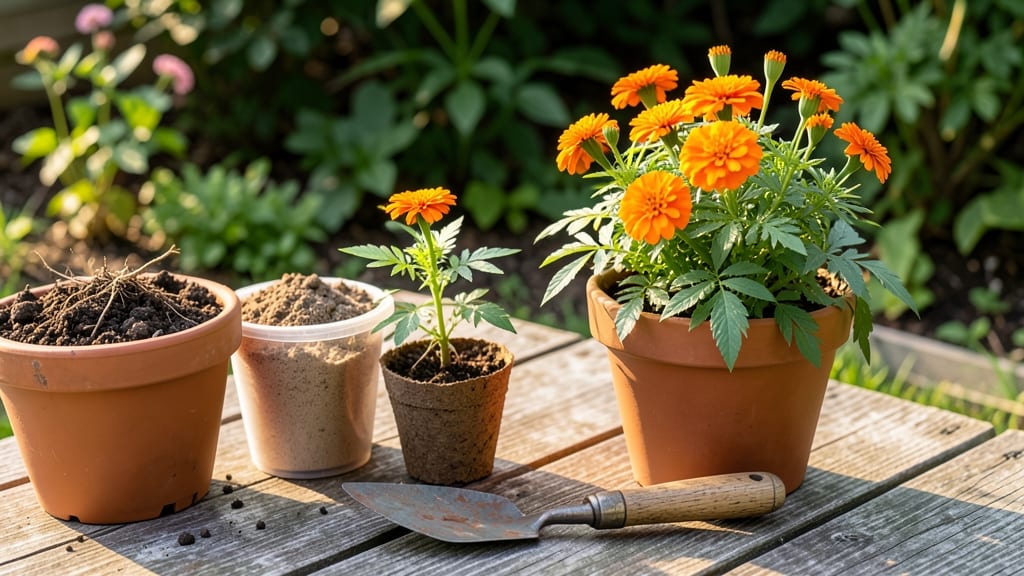
You shouldn't use garden soil in pots because it compacts easily, drains poorly, and can introduce pests or diseases that harm container plants. Instead, choose specially formulated potting mixes with perlite, vermiculite, or compost to create the ideal growing environment.
Garden soil is designed for in-ground planting where roots can spread freely, but pots create a confined space where soil behaves differently. 🌱 The dense structure of garden soil prevents proper aeration, leading to root suffocation, while its heavy texture makes it nearly impossible to maintain consistent moisture levels.
I’ve seen many beginners struggle with waterlogged pots or plants that wilt because the soil can’t release excess water fast enough—both problems stem from using the wrong soil type.
For container gardening, the key is balance: a mix that holds enough moisture to keep roots hydrated but drains quickly to prevent rot. Potting mixes are specifically engineered with organic matter like peat moss or coconut coir to retain nutrients while additives like perlite create air pockets for roots.
This combination mimics the natural conditions plants need without the risks of compacted garden soil.
💡 In This Article
- Why Garden Soil Fails in Container Gardening
- Best Potting Soil Mixes for Healthy Container Plants
Why garden soil fails in container gardening
Garden soil is engineered for in-ground planting where roots can expand freely, but pots create a confined space that changes everything.
The dense, clay-heavy structure of garden soil compacts over time, reducing pore space by up to 50%—this means roots suffocate from lack of oxygen, similar to how a too-tight shoe blisters your foot.
In containers, this compaction happens faster because the soil has nowhere to expand, creating a suffocating environment for delicate root systems.
The moisture dynamics also shift dramatically. Garden soil holds water like a sponge, but in pots, this becomes a double-edged sword: excess water pools at the bottom, leading to root rot, while the top layer dries out too quickly.
This is why plants in garden soil pots often show wilting leaves in the morning despite being watered the day before—the soil can't release moisture consistently. The ideal potting mix should drain within 30-60 minutes after watering, while garden soil can take hours or days to dry.
Pests and diseases thrive in garden soil's dense environment. Pathogens like Phytophthora (a water mold) or nematodes find the compacted, moist conditions perfect for spreading. I've seen containers using garden soil develop fungal infections within weeks because the soil's poor aeration creates the ideal breeding ground.
Unlike garden beds where pathogens can't spread easily, pots act like petri dishes, exposing all plants to the same risks.
Nutrient availability also suffers. Garden soil releases nutrients slowly over seasons, but container plants need immediate access to feed their rapid growth. The confined space means nutrients deplete faster, and without organic matter like compost or peat moss, plants starve even when fertilized.
This is why many container gardeners see stunted growth or yellowing leaves—signs of nutrient lockout from improper soil structure.
Consider this comparison: garden soil has a particle density of 1.3-1.6 g/cm³, while ideal potting mixes range from 0.5-0.8 g/cm³ due to added perlite or vermiculite.
This lighter structure allows roots to breathe while maintaining moisture—critical for container plants that can't seek out fresh soil like their in-ground counterparts. 🌱