
Tools
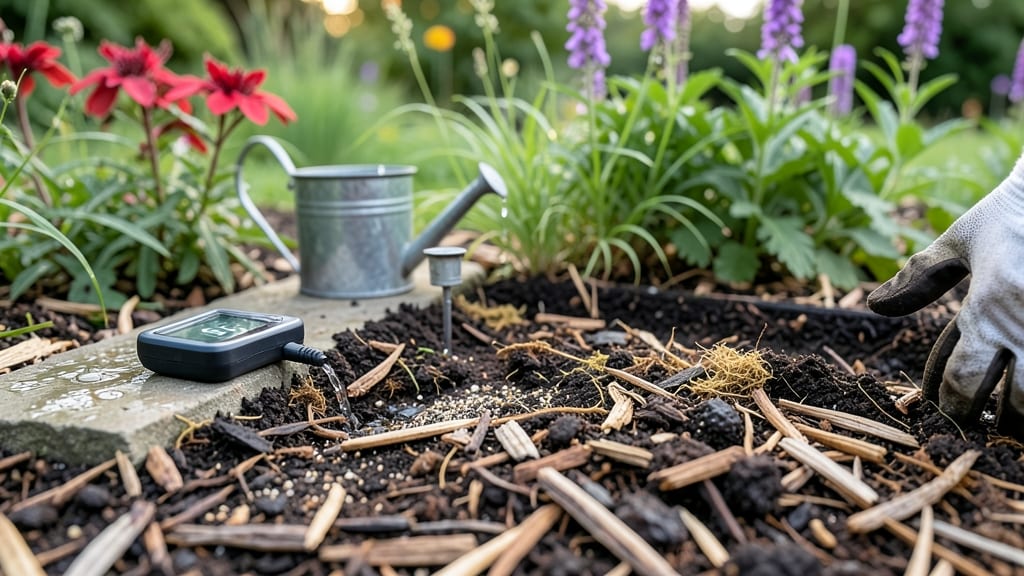
A rain garden soil mix creates the ideal foundation by blending equal parts native topsoil, organic compost, and coarse sand or perlite. This combination balances drainage and moisture retention, supporting thriving water-loving plants while preventing root rot or erosion.
A rain garden soil mix is all about getting the balance right between holding water and letting excess drain away. The native topsoil provides essential nutrients and structure, while the organic compost introduces beneficial microbes and improves water retention.
Coarse sand or perlite acts as a drainage enhancer, preventing compaction and ensuring roots get the oxygen they need. 🌱 This mix works particularly well for plants like asters, coneflowers, and switchgrass that thrive in moist but not waterlogged conditions.
For best results, test your native soil first—clay-heavy soils may need more sand, while sandy soils benefit from additional compost to boost nutrient capacity.
What sets this mix apart is its adaptability. In drier climates, you might increase the sand ratio slightly to prevent moisture loss, while wetter regions benefit from extra compost to support microbial activity.
Always aim for that 40-60% porosity target—this means about half the soil volume should be open space for air and water movement. The key is observing how your garden behaves after planting: if water pools too quickly, add more sand; if plants wilt despite regular watering, incorporate additional compost.
💡 In This Article
- Why Soil Composition Matters in Rain Gardens
- DIY Rain Garden Soil Mix Recipes for Different Climates
Why soil composition matters in rain gardens
The foundation of a successful rain garden starts with understanding how each soil component plays a unique role in plant survival. Native topsoil provides the essential nutrients and minerals plants need to thrive, but its natural structure often lacks the aeration required for healthy root systems.
This is where organic compost steps in—it introduces beneficial microbes that break down organic matter, creating a sponge-like texture that holds moisture while allowing excess water to drain.
Coarse sand or perlite acts as the soil's circulatory system, preventing compaction that would suffocate roots. When mixed at equal parts, these ingredients create a 40-60% porosity structure where water can move freely through the soil profile.
Imagine a sponge with the right number of holes: it can absorb water but won't drown the plants inside. The sand particles create air pockets that prevent anaerobic conditions (where roots suffocate from lack of oxygen), while the compost's organic matter helps retain moisture during dry spells. 🌧️
What happens when you get the proportions wrong? Too much sand creates a desert-like environment where plants dry out quickly, while too much compost can lead to waterlogging and root rot.
The ideal mix supports plants that naturally thrive in moist conditions—like cardinal flowers or blue flag iris—by giving their roots both stability and breathability. This balance is especially critical during heavy rains when proper drainage prevents erosion and nutrient runoff.
Consider the texture differences: native topsoil feels dense and slightly gritty, while compost has a crumbly, almost velvety texture. When mixed with the sharp, angular particles of sand or perlite, the result is a soil that's neither too heavy nor too loose.
This structural diversity mimics natural wetland ecosystems where plants have evolved to handle fluctuating water levels. The key is creating a medium that holds 30-50% water by volume while maintaining good aeration—this sweet spot keeps roots happy without creating soggy conditions.
For visual learners, think of this mix as a three-layered system: the topsoil provides the foundation, compost adds the life-supporting microbial layer, and sand/perlite creates the drainage pathways. When properly balanced, this combination prevents the "bathtub effect" where water pools on top of compacted soil.
The result? Plants that stay healthy through both droughts and downpours, with roots that can access both water and oxygen simultaneously. 🌿
One often-overlooked factor is the soil's cation exchange capacity (CEC). The compost portion significantly increases CEC, allowing the soil to hold onto essential nutrients like nitrogen and potassium that would otherwise wash away.
This is particularly important in rain gardens where frequent water movement can leach nutrients from the soil profile. The sand component doesn't contribute to CEC but prevents the soil from becoming too dense, maintaining that crucial air-water balance.