
Light Requirements
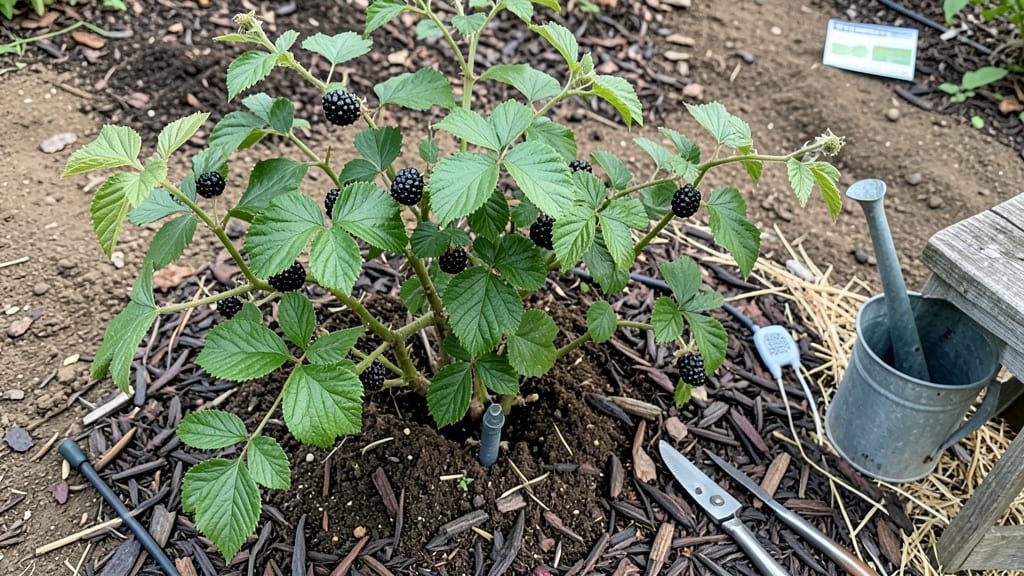
Blackberry soil requirements include well-draining, slightly acidic loam with a pH between 5.5 and 6.5, enriched with organic matter like compost or aged manure, while avoiding heavy clay or waterlogged conditions that stunt root growth.
Blackberries demand specific soil conditions to flourish, and the right mix makes all the difference. 🌱 The ideal acidic loam supports root development while preventing common issues like fungal infections.
I've found that amending garden soil with aged compost or leaf mold improves both drainage and nutrient retention—critical for heavy-feeding blackberry plants. For sandy soils, mixing in peat moss helps retain moisture, while clay-heavy areas benefit from gypsum to break up compaction.
Testing your soil's pH before planting is a game-changer. Most garden centers offer simple test kits, and adjusting with sulfur (to lower pH) or lime (to raise it) ensures your bushes get the perfect growing environment.
Remember, blackberries are sensitive to waterlogged roots, so raised beds with perforated drainage pipes work wonders in wet climates. The key is creating a balance—fertile enough to feed hungry plants, yet loose enough to prevent root suffocation.
💡 In This Article
- Why Blackberries Need Acidic, Well-Aerated Soil
- Step-by-Step Soil Preparation for Blackberry Bushes
Why blackberries need acidic, well-aerated soil
Blackberries thrive in acidic soil because their root systems are highly sensitive to aluminum toxicity, which becomes a problem when soil pH rises above 6.5. The ideal 5.5-6.5 pH range keeps aluminum in an insoluble form, allowing roots to absorb essential nutrients like phosphorus and iron more efficiently.
In alkaline conditions, these nutrients bind tightly to soil particles, becoming unavailable to plants—a phenomenon called "nutrient locking." 🌱
The slightly acidic environment also supports beneficial soil microbes, including mycorrhizal fungi that form symbiotic relationships with blackberry roots. These fungi extend the root system's reach by up to 10-20%, improving water and nutrient uptake.
Organic matter like compost or aged manure further enhances this by creating a loose, crumbly soil structure that improves aeration—a critical factor since blackberry roots need 15-20% oxygen for optimal growth. Without proper aeration, roots suffocate, leading to stunted growth and increased susceptibility to diseases like crown rot.
Drainage is equally crucial because blackberries are particularly vulnerable to fungal infections when roots sit in soggy soil. The Rhizopus stolonifer fungus, which causes crown rot, thrives in waterlogged conditions, often killing plants within 2-4 weeks of infection.
Well-draining soil prevents this by allowing excess water to move through the root zone quickly, while also maintaining moisture during dry spells. A mix of 60% mineral particles (sand/silt/clay) and 40% organic matter achieves this balance perfectly.
Organic matter also plays a dual role: it improves soil structure by binding particles together while creating tiny air pockets that enhance root respiration. For example, a 3-inch layer of compost can increase soil porosity by 30-40% compared to untreated soil.
This structural improvement helps prevent compaction, which can reduce root growth by up to 50% in heavy clay soils. The organic material also slowly releases nutrients, providing a steady supply of nitrogen, potassium, and micronutrients that blackberries need throughout their growing season.
One often-overlooked aspect is the role of soil temperature. Blackberry roots grow best in soil that stays between 60-75°F, and well-aerated, organic-rich soil warms up faster in spring while retaining heat longer in fall.
This extended growing window allows plants to develop stronger root systems before winter dormancy. In contrast, compacted or waterlogged soil stays cooler longer, delaying root growth and reducing overall plant vigor.
Consider this comparison: a sandy loam with 5% organic matter drains quickly but may lack nutrients, while a clay loam with 10% organic matter retains moisture but risks compaction.
The perfect balance is a loamy soil with 7-10% organic matter, which combines drainage with nutrient retention—ideal for blackberry cultivation. 🌿