
Landscaping
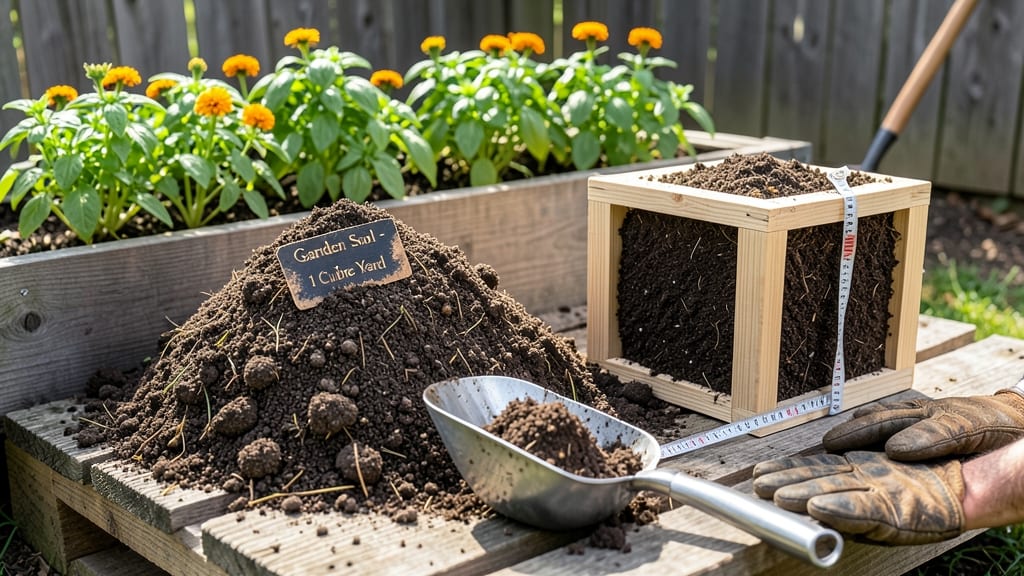
To convert 1 yard of soil to cubic feet, you get 27 cubic feet, because a cubic yard measures 3 feet in length, width, and depth (3 × 3 × 3 = 27). Dry garden soil typically weighs 2,200–2,700 pounds per cubic yard, while loamy soil can exceed 3,000 pounds depending on moisture and organic material.
Understanding this conversion is essential for landscaping projects, especially when calculating how much soil you'll need for garden beds or mulch layers. 🌱 For example, a 4-foot-wide by 8-foot-long garden bed filled 6 inches deep would require about 1.33 cubic yards of soil—converting that to cubic feet gives you a more precise measurement for ordering.
The weight difference between dry and wet soil also affects delivery costs, so checking with suppliers about moisture content can save you money on bulk purchases.
Here's a pro tip: always account for soil settling. Loose soil compacts over time, so ordering 10-15% more than your calculated volume ensures you won't run short mid-project. For heavy loamy soils, you might even need to factor in truck weight limits if ordering in large quantities.
💡 In This Article
- How to Calculate Soil Volume in Cubic Feet for Landscaping
- Soil Weight Variations and Their Impact on Delivery Costs
How to calculate soil volume in cubic feet for landscaping
Let's break down the conversion process for practical landscaping applications. A cubic yard is essentially a cube measuring 3 feet × 3 feet × 3 feet, which gives you the 27 cubic feet total.
When planning a garden bed, you'll often work with partial cubic yards—like a 4-foot by 8-foot area filled 6 inches deep—which equals about 1.33 cubic yards (or 36 cubic feet). This conversion becomes crucial when ordering materials, as suppliers typically sell by the cubic yard.
The key factor here is soil compaction. Loose, freshly delivered soil occupies more volume than settled soil. For example, a 1 cubic yard bag of topsoil might measure 33 cubic feet when loose but compact down to 27 cubic feet after settling.
This is why experts recommend ordering 10-15% more than your calculated volume—especially for projects requiring precise depth, like vegetable gardens or lawn leveling. 🌱 The difference between loose and compacted soil can mean the difference between finishing your project or needing an emergency delivery.
For mulch applications, the calculation changes slightly due to different settling characteristics. A 3-inch layer of mulch over a 100-square-foot area requires about 2.08 cubic yards (or 56 cubic feet) of loose mulch.
However, once settled, it might only cover 1.8 cubic yards. This is why landscape professionals often use the "rule of thumb" for mulch: 1 cubic foot covers about 10 square feet at 3 inches depth—a handy shortcut for quick estimates.
Consider the shape of your project area too. Circular garden beds or irregularly shaped landscapes require dividing the space into geometric sections (rectangles, triangles) for accurate volume calculations. For instance, a 5-foot-diameter circular bed filled 12 inches deep needs 0.31 cubic yards (or 8.4 cubic feet) of soil.
Using a calculator or spreadsheet helps avoid costly miscalculations, especially when dealing with multiple beds or terraced designs.
Another practical tip: measure depth in inches and convert to feet first. A 6-inch depth becomes 0.5 feet, making multiplication straightforward. For example, a 10-foot by 12-foot area at 6 inches deep equals 60 square feet × 0.5 feet = 30 cubic feet (or 1.11 cubic yards).
This method ensures consistency across all calculations, reducing errors in material ordering.
Finally, account for existing soil conditions. If you're amending native soil with compost, the mixture's volume may expand slightly due to air pockets. For heavy clay soils, adding 20% organic matter can increase the total volume needed by 5-10%—so adjust your calculations accordingly.
Always verify with your supplier about their soil's compaction characteristics to avoid surprises during your project.