
Landscaping
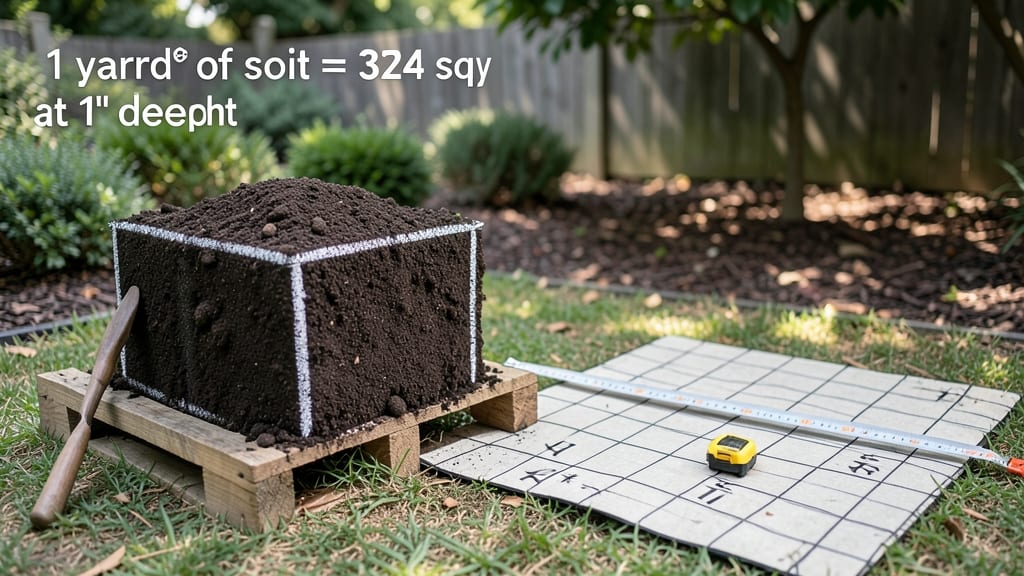
A yard of soil covers 100 square feet when spread at a standard depth of 3 inches, the most common layer for garden beds. For deeper beds, adjust calculations accordingly—each additional inch reduces coverage by roughly 33 square feet per yard.
A cubic yard of soil isn't just about surface area—it's about volume, and depth makes all the difference. 🌱 For example, if you need a 4-inch layer for healthy root growth, that same yard will only cover about 66 square feet.
This math helps avoid common mistakes like buying too little (and scrambling mid-project) or overpaying for extra soil that just sits unused. I always recommend measuring your space first, then adding 10-15% extra to account for settling and uneven terrain.
Why does this matter? Soil compaction and moisture loss change how much space your yard actually fills. Loose, airy soil settles over time, while clay-heavy mixes may expand when wet. For raised beds or slopes, break the project into sections—calculate each layer separately to avoid surprises.
Pro tip: Use a leveling rake to create a uniform base before spreading soil, which maximizes coverage and prevents waste.
💡 In This Article
- Calculating Soil Coverage for Different Depths
- Practical Tips for Buying the Right Amount of Soil
Calculating soil coverage for different depths
The relationship between soil depth and coverage follows a simple volume formula: 1 cubic yard equals 27 cubic feet. When spread at 3 inches (the standard depth for most garden beds), that cubic yard covers exactly 100 square feet.
Here's why: divide 27 cubic feet by 0.25 feet (3 inches converted to feet), and you get 108 square feet of surface area—but real-world settling reduces this slightly to 100 square feet due to compaction. 🌱
For deeper beds, the math gets more interesting. A 2-inch layer (common for top dressing) stretches that yard to 135 square feet, while a 4-inch layer (ideal for root zones) cuts coverage to 67.5 square feet. The pattern?
Each additional inch reduces coverage by about 33 square feet per yard. This is because volume is a 3D measurement—more depth means less horizontal spread. For example, a 6-inch layer (great for vegetable gardens) would cover just 45 square feet.
Understanding this helps avoid costly mistakes. I once saw a gardener buy 5 yards of soil for a 200-square-foot bed—only to realize they needed 6 inches depth. The correct amount? Just 3 yards.
Always measure your space first, then calculate backward: divide desired square footage by coverage at your target depth. For uneven terrain, break the project into 10-foot sections and calculate each separately.
Soil type also affects coverage. Sandy soil settles more, reducing effective coverage by 10-15%, while peat-based mixes retain volume better. Pro tip: Use a laser level or string line to ensure uniform depth—even ½-inch variations can waste 5-10% of your soil.
For slopes, calculate the average depth between high and low points to avoid overestimating.
Here's a quick reference table for common depths:
- 2 inches: Covers 135 sq ft (top dressing, lawn renovation)
- 3 inches: Covers 100 sq ft (standard garden beds)
- 4 inches: Covers 67.5 sq ft (root zones, vegetable gardens)
- 6 inches: Covers 45 sq ft (deep-rooted plants, raised beds)
For custom depths, use this formula: Coverage (sq ft) = (27 ÷ depth in feet). For example, a 5-inch layer (5/12 feet) gives 64.8 sq ft coverage. Round up to the nearest yard—precision matters when budgeting for large projects! ✨