
Propagation
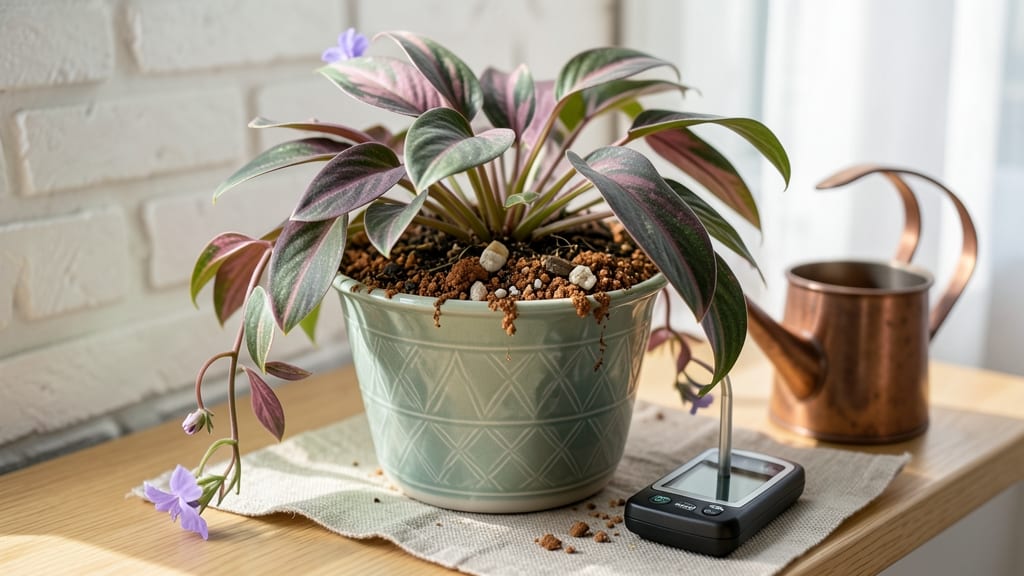
Your Wandering Jew will spread faster than you can say "purple leaves" when you nail the soil mix. 🌿 The secret to those lush, trailing vines isn't just water—it's a light, airy blend that lets roots breathe while holding just enough moisture.
Too dense, and you'll end up with root rot; too sandy, and the plant wilts faster than a forgotten houseplant. Start with equal parts potting mix and perlite or coarse sand—this creates those crucial air pockets.
Add a handful of worm castings or peat moss for moisture retention without compacting the mix. I swear by this combo: my Wandering Jew now fills a 12-inch pot in three months, not six. The payoff?
Vibrant foliage that stays perky through summer heat, plus roots that spread aggressively (which is exactly what you want for propagation). Just avoid overwatering—this mix drains fast, but roots still need consistent dampness, not sogginess. Works for both trailing varieties and bushier types.
Here's how to mix it right the first time—no more leggy, sad-looking plants!
📚 In This Guide
- What you need
- Instructions
- Tips and common mistakes
- Wrapping up and next steps
What you need
- ● Peat moss or coco coir: 40% of the mix (2 parts) – holds moisture while allowing airflow
- ● Perlite or pumice: 20% of the mix (1 part) – boosts aeration and prevents compaction
- ● Sand (coarse horticultural or perlite alternative): 20% of the mix (1 part) – ensures drainage
- ● Garden soil or compost: 20% of the mix (1 part) – adds nutrients and structure
- ● Large mixing container (wheelbarrow, bucket, or clean tub)
- ● Garden trowel or shovel for blending
- ○ Fine-mesh sieve (optional, for smoothing texture)
- ● Spray bottle (to dampen mix post-blending)
- ○ pH testing kit (optional, to check acidity—ideal range: 6.0–7.0)
- ● Worm castings: 5–10% of the mix – enhances microbial activity
- ● Charcoal (activated): 1 tbsp per gallon – prevents fungal issues
- ● Slow-release fertilizer: 1 tsp per 2 gallons – kickstarts root development
How to create the perfect wandering jew soil mix
This fast-draining, airy blend keeps wandering jew roots happy and spreading quickly.
🌱 Step 1: Combine Base Materials for Drainage
Start by mixing 2 parts peat moss with 1 part perlite in a large container. The peat moss holds moisture while the perlite creates those crucial air pockets wandering jew roots love. I like to use my hands to gently fold these together—just until they look evenly distributed, not overworked.
Here's the thing—wandering jew hates soggy roots. If you skip the perlite, you'll end up with yellowing leaves and slow growth. Take your time blending until the mix looks fluffy but not dry. You want it to hold its shape when squeezed but crumble easily.
🌿 Step 2: Add Organic Matter for Nutrient Boost
Now stir in 1 part coconut coir and ½ part worm castings. The coir adds structure while the castings feed those hungry roots. I sprinkle the worm castings last so they don't get buried too deep—they'll work their magic right where new roots form.
Don't worry if it looks a little uneven at first. Wandering jew isn't fussy about perfect uniformity. Just give it a final mix with your hands until everything looks blended. You'll see tiny dark specks from the castings—those are the good stuff for fast growth.
✂️ Step 3: Adjust Moisture for Ideal Planting
Slowly add warm water until the mix feels like a damp sponge—it should hold together when squeezed but not drip water. Wandering jew roots need oxygen, so you want it moist but never soggy. I like to test by grabbing a handful: if water beads up on the surface, you've added too much.
This is the moment that matters: the right moisture level prevents root rot while keeping the mix workable. If it's too dry, roots won't spread; too wet, and you'll smother them. Aim for that perfect in-between where it feels cool to the touch but doesn't feel heavy.
🪴 Step 4: Fill Containers and Plant
Fill your 4-inch hanging baskets or containers with the mix, leaving ½ inch from the top for watering. Gently press down to settle the soil without compacting it. Wandering jew roots need room to breathe, so don't pack it down like you would for heavy plants.
Plant your cuttings at a 45-degree angle, burying about 1 inch of the stem. The angled planting encourages more roots to form along the stem. Water lightly after planting—just enough to settle the soil around the stems without disturbing them.
☀️ Step 5: Maintain Fast Growth Conditions
Place your containers where they'll get bright, indirect light—think east or north-facing windows. Wandering jew grows quickly in these conditions, and you'll see new growth within 2-3 weeks. If leaves start stretching toward the light, it's time to move it slightly closer.
Water when the top ½ inch feels dry to the touch, and always water from the bottom if possible. This prevents the soil from becoming compacted, which wandering jew roots absolutely hate. A quick check with your finger tells you everything you need to know about moisture levels.
Tips & tricks for perfect wandering jew soil mix
These little details make all the difference when creating that ideal airy blend for wandering jew—trust me, your plants will thank you.
Ingredient Ratio Precision: Measure your 2 parts peat moss and 1 part perlite by volume, not weight. I use a large mixing bowl and scoop the peat moss first, then the perlite, to ensure those 2:1 proportions stay accurate. Too much perlite makes the mix too dry, while too little peat moss means it won't hold moisture properly—both can stress wandering jew roots.
Mixing Technique Matters: When combining the ingredients in Step 1, use your hands to gently fold rather than stirring vigorously. This prevents compacting the mix, which wandering jew roots absolutely hate. Think "light as a cloud" texture—if you press a handful and it holds its shape but crumbles easily, you've got it right.
Worm Casting Placement: Sprinkle those ½ part worm castings last and keep them near the surface in Step 2. Wandering jew roots grow quickly, and you want the nutrients where new roots will form. If you bury them too deep, the castings won't do their job of feeding those hungry roots as effectively.
Moisture Test Trick: For Step 3, grab a handful of your mix after adding water. If it feels cool to the touch but doesn't drip when squeezed, you've nailed the moisture level. Too wet? Add more perlite. Too dry? Spritz with a bit more warm water. This balance is everything for preventing root rot while keeping the mix workable.
Pro Tips for Wandering Jew Soil Mix
- These little details make all the difference when creating that ideal airy blend for wandering jew—trust me, your plants will thank you.
- Ingredient Ratio Precision: Measure your 2 parts peat moss and 1 part perlite by volume, not weight.
- Mixing Technique Matters: When combining the ingredients in Step 1, use your hands to gently fold rather than stirring vigorously.
Frequently asked questions
What’s the ideal ratio for a Wandering Jew soil mix?
A balanced mix typically uses 50% peat moss or coco coir (for moisture retention), 30% perlite or vermiculite (for aeration), and 20% garden soil or compost. Adjust perlite if your climate is extra humid—more drainage prevents root rot!
How often should I repot Wandering Jew in this mix?
Repot every 1–2 years or when roots outgrow the pot. Signs it’s time: roots circling the bottom or slow growth. Spring is ideal—your plant will thank you with explosive new growth!
Can I reuse old soil from a previous Wandering Jew plant?
Only if it’s sterilized (bake at 200°F for 30 mins) and free of pests/disease. Otherwise, mix in 10–20% fresh perlite to refresh aeration. Pro tip: Add a handful of worm castings for a nutrient boost!
Why is my Wandering Jew turning yellow in this mix?
Yellow leaves often mean overwatering (check drainage!) or nutrient deficiency. Flush the soil with water to remove salts, then fertilize lightly with a balanced liquid feed (20-20-20). Too much perlite? Reduce it to 20% and add compost.
What’s a quick alternative if I don’t have all the ingredients?
Mix equal parts potting soil and sand (or fine gravel) for a fast fix. For extra moisture-loving varieties, swap sand for orchid bark. Just avoid heavy clay—it suffocates roots!
Wrapping up and next steps
Mastering the wandering jew soil mix is your ticket to lush, fast-spreading plants with vibrant foliage! 🌿 The secret lies in its airy, nutrient-rich blend—perfect for encouraging those tradescantia roots to stretch and thrive.
Whether you’re a seasoned propagator or just starting, this mix gives you the edge to grow bold, healthy plants with minimal fuss.
Ready to level up your propagation game? Grab your supplies, mix up a batch, and watch your wandering jews flourish! For extra confidence, try experimenting with organic amendments like worm castings or perlite to fine-tune your mix. Happy growing! 🌱✨