
Companion Plants
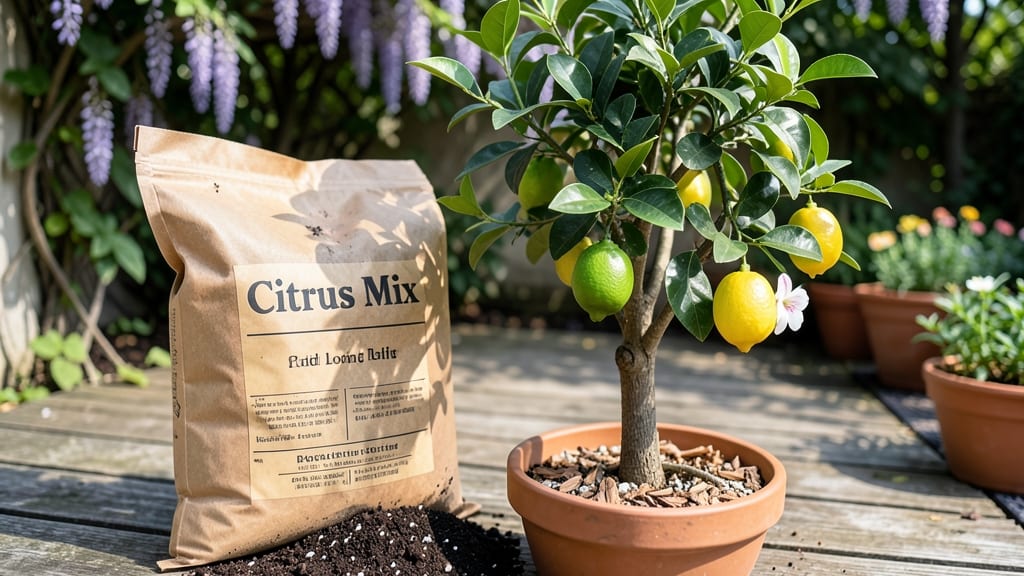
Your citrus trees need fast-draining potting soil for citrus plants that mimics their Mediterranean roots—too much moisture and you’ll end up with sad, root-rotten plants. 🌱 I learned this the hard way when my Meyer lemon’s leaves turned yellow after just two weeks in heavy garden soil.
The fix? A blend that lets water escape while holding enough nutrients to keep roots happy.
Start with 50% peat moss or coconut coir for moisture retention, then add 30% perlite or coarse sand to keep things airy. Finish with 20% compost or worm castings for nutrients—citrus loves slightly acidic to neutral soil (pH 6.0–7.0).
Commercial mixes like Miracle-Gro Citrus, Palm & Bonsai work, but DIY is cheaper and lets you tweak drainage for your climate.
You’ll see the difference immediately: bright green leaves, fewer dropped fruit, and roots that stay healthy even when you forget to water (okay, maybe not that forgiving).
The key is never letting soil stay soggy—stick your finger in first. If it’s damp after 24 hours, your mix needs more perlite.
For container citrus, refresh the top inch of soil every 3–4 months to avoid compaction. And if you’re in a humid area, raise pots on feet to improve airflow—root rot thrives in standing water. Trust me, your trees will thank you with juicy fruit and glossy foliage all season.
📚 In This Guide
- What you need
- Instructions
- Tips and common mistakes
- Wrapping up and next steps
What you need
- ● Base Soil: 50% well-draining potting mix (e.g., cactus/succulent blend or peat-based mix). Quantity: 2 parts.
- ● Amendments: 25% perlite or pumice (for aeration). Quantity: 1 part.
- ● 25% coarse sand or horticultural grit (improves drainage). Quantity: 1 part.
- ● Organic Matter: Compost or worm castings (boosts nutrients). Quantity: 10-15% of total mix.
- ○ Optional but Helpful: Lime or crushed eggshells (to balance acidity, especially for acid-loving citrus like lemons). Quantity: 1 tbsp per gallon of mix.
- ● Slow-release fertilizer (e.g., citrus-specific pellets). Quantity: 1 tsp per plant.
- ● Mixing Container: Large bucket, wheelbarrow, or clean trash can (sterilized with a 10% bleach solution if reused).
- ● Gloves & Mask: To protect hands from grit and dust.
- ● Measuring Tools: Ruler or bucket (to ensure accurate ratios).
- ○ pH Test Kit (Optional): To verify soil acidity (ideal range: 6.0–7.0 for citrus).
Step-by-Step guide to creating fast-draining potting soil for citrus plants
Citrus trees need soil that breathes—here's the exact mix I use to keep roots happy and rot at bay.
🪴 Step 1: Start with a High-Quality Base Mix
Begin with 40% premium potting mix—this provides essential nutrients while staying lightweight. I avoid garden soil entirely; it compacts too easily and holds moisture far too long for citrus roots. Look for a mix labeled "orchid" or "cactus/succulent" blend if you can't find citrus-specific soil. These are formulated to drain quickly while retaining just enough moisture.
Sift the potting mix to break up any clumps. Citrus roots need air pockets to thrive, and compacted soil suffocates them. If you're using a bagged mix, feel it first—it should crumble easily between your fingers. If it holds together like wet sand, sift it again until it feels fluffy and loose.
💧 Step 2: Add Perlite or Pumice for Drainage
Incorporate 30% perlite or pumice—this is the secret to preventing root rot. These materials create air pockets that allow excess water to drain while still holding onto moisture for the roots. I prefer perlite because it's lightweight and easy to find, but pumice adds a slight mineral boost that citrus trees love. Mix it in thoroughly so every spoonful of soil has these drainage agents evenly distributed.
Don't skimp here. If your mix feels dense after adding perlite, add a little more—citrus roots will thank you by growing strong and healthy. You'll know it's right when the soil looks like a light, airy cake batter rather than wet concrete. Press it gently; it should hold its shape but not feel compacted.
✂️ Step 3: Blend in Organic Matter for Nutrition
Add 20% coarse sand or horticultural grit to improve drainage further. I use coarse builder's sand because it's sterile and won't compact over time. This size ensures water moves through quickly without washing away nutrients. Mix it in gently, using a trowel to fold it into the base mix until it's evenly distributed.
Next, stir in 10% compost or worm castings for nutrients. Citrus trees are heavy feeders, and this organic matter provides slow-release food without the risk of compacting the mix. I like to use worm castings because they're gentle on roots and packed with beneficial microbes. Sift it lightly to avoid clumps—you want fine, crumbly texture throughout.
☀️ Step 4: Test the Mix Before Potting
Fill a small container with your mixed soil and pour water into it. The water should drain through within 10-15 minutes, leaving the soil damp but not soggy. If it drains too quickly (within 5 minutes), add a little more compost to help retain moisture. If it takes longer than 20 minutes, increase the perlite or sand content.
Press the soil gently—it should hold its shape but not feel waterlogged. Stick your finger in; it should feel moist but not dripping. This is the perfect balance for citrus: enough moisture to support growth, but never enough to suffocate the roots. If you're unsure, let it sit for an hour and check again. The ideal mix should feel like a well-wrung sponge.
🌱 Step 5: Pot Your Citrus Tree with Confidence
Fill your citrus pot with the custom mix, leaving 1-2 inches at the top for watering. Gently remove the tree from its nursery pot and place it in the center of the new container. The top of the root ball should sit just below the pot's rim—this ensures stability without burying the trunk too deep.
Fill the gaps around the roots with more of your mix, pressing lightly to eliminate air pockets. Water thoroughly until it drains from the bottom, then let it sit for 10 minutes before adding any saucer water. This prevents overwatering right away. Your citrus tree will thrive in this fast-draining mix, with roots that stay healthy and rot-free for years.
Tips & tricks for perfect citrus potting soil
Creating the ideal blend for citrus roots takes just a few smart moves—here's how to avoid common pitfalls and elevate your mix every time.
Texture is Everything: In Step 1, when sifting your premium potting mix, don't rush this process. I've seen citrus roots struggle because gardeners skipped sifting, leaving dense pockets that trap moisture. Aim for a consistency where the mix feels like dry cake crumbs—light enough to crumble between your fingers but with just enough structure to hold its shape when pressed. This airy texture mimics natural citrus growing conditions and prevents that dreaded waterlogging.
Drainage Balance in Step 2: The 30% perlite or pumice recommendation isn't arbitrary—it's the sweet spot for citrus drainage. Too little, and you risk root rot; too much, and your tree will dry out between waterings. Here's my trick: mix the perlite first with the coarse sand (Step 3) before adding the base mix. This creates micro-channels for water flow right from the start. Also, if you're using expanded shale instead of perlite, reduce to 25%—it's denser and works differently.
Nutrient Timing Matters: When adding compost or worm castings in Step 3, think of them as a slow-release fertilizer rather than immediate nutrition. The 10% ratio gives you just enough organic matter to support growth without overwhelming the drainage system. For faster results, I sometimes add a sprinkle of citrus-specific fertilizer granules (about 1 teaspoon per gallon of mix) during this step. Just be sure to mix them in thoroughly so they don't create hot spots where roots might burn.
Test Like a Pro in Step 4: The 10-15 minute drainage test is your quality control moment. If your mix drains too quickly (under 5 minutes), don't just add more perlite—try increasing the compost by 2-3% first. The organic matter helps retain just enough moisture while still allowing excess to escape. For containers with drainage holes, this test becomes even more critical. I like to perform it twice: once immediately after mixing, and again after letting the soil sit overnight. The second test often reveals how the mix will behave after the first watering.
Pro Tips for Potting Soil For Citrus Plants
- Creating the ideal blend for citrus roots takes just a few smart moves—here's how to avoid common pitfalls and elevate your mix every time.
- Texture is Everything: In Step 1, when sifting your premium potting mix, don't rush this process.
- Drainage Balance in Step 2: The 30% perlite or pumice recommendation isn't arbitrary—it's the sweet spot for citrus drainage.
Frequently asked questions
Got questions about the perfect potting mix for your citrus trees? You’re not alone! Here are answers to the most common concerns—so you can keep your lemons, limes, and oranges thriving without stress.
What’s the best ratio of potting soil to perlite/sand for citrus plants?
A well-balanced mix for citrus typically uses 60% potting soil (or a cactus/succulent blend), 20% perlite or pumice (for aeration), and 20% coarse sand or grit. This ratio prevents compaction while allowing excess water to drain quickly—critical for root health! Adjust slightly if your soil is already sandy.
How often should I repot citrus plants, and when is the best time?
Repot citrus every 2–3 years or when roots circle the pot (a sign of root-bound stress). The best time is early spring (just before new growth starts), as this gives roots time to establish before summer heat. Avoid repotting in winter—citrus are dormant and vulnerable to shock.
Can I use regular garden soil for citrus in pots?
Nope! Regular garden soil is too dense and retains too much moisture, leading to root rot—a citrus killer. Stick to a fast-draining potting mix with amendments like perlite or orchid bark. If you’re in a pinch, blend garden soil with 50% coarse sand or coconut coir, but this isn’t ideal long-term.
Why do my citrus leaves turn yellow, even with the right soil?
Yellow leaves often signal overwatering, nutrient deficiencies, or poor drainage. Check your pot’s drainage holes, reduce watering (let the top 1–2 inches dry out between waterings), and fertilize lightly with a citrus-specific feed (high in iron and zinc). If the problem persists, test your soil’s pH—citrus thrive in slightly acidic to neutral (6.0–7.0) conditions.
Are there any DIY potting soil alternatives for citrus?
Try this budget-friendly mix:
- 50% peat moss or coconut coir (holds moisture without suffocating roots)
- 30% perlite or vermiculite (improves aeration)
- 20% coarse horticultural sand or orchid bark (boosts drainage)
Wrapping up and next steps
Choosing the right potting soil for citrus plants is the secret to thriving, vibrant trees that burst with flavor!
A well-draining mix—rich in organic matter but light on compaction—keeps roots happy and root rot at bay. 🌱 With the right blend, your citrus will reward you with luscious fruit and lush growth year after year.
Ready to give your citrus the perfect home? Grab your supplies, mix that soil, and watch your plants flourish—then share your progress with fellow gardeners! 🌟