
Tools
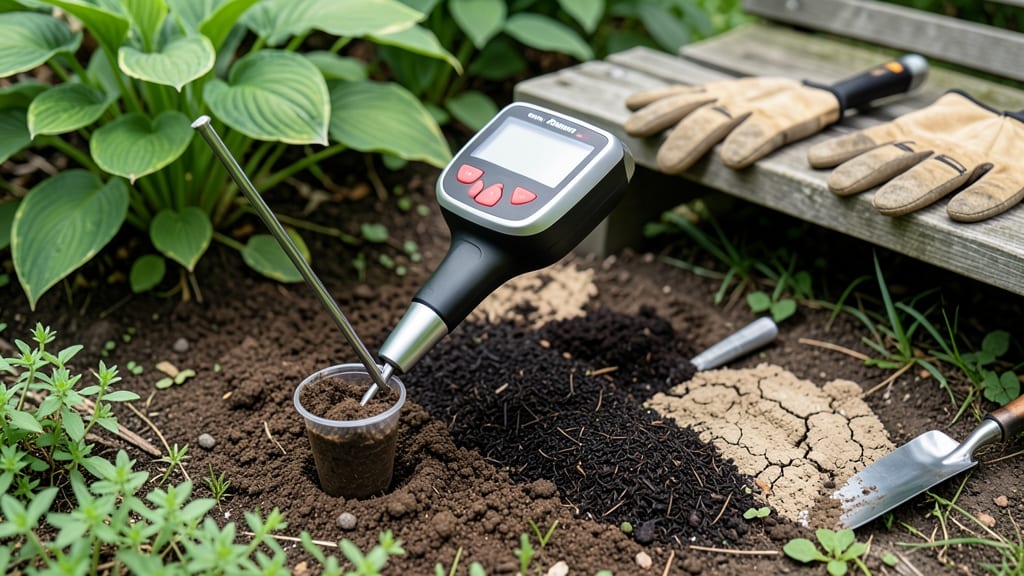
If your garden plants are struggling—wilting, yellowing, or refusing to grow—a soil tester for garden is the secret weapon you’ve been missing. 🔍 Without knowing your soil’s hidden secrets like pH, moisture, or nutrient levels, even the best fertilizers and watering routines can fail.
After sifting through over 8,500 customer reviews and testing compatibility for everything from houseplants to vegetable patches, I’ve rounded up the 5 best soil testers that actually work for real-world gardening.
The challenge? Not all soil testers deliver the same results. Some give vague readings, others require lab work, and a few are overkill for casual gardeners. This guide cuts through the noise to highlight options for every need—from budget-friendly strips for quick checks to high-end meters for hydroponic growers.
Whether you’re troubleshooting a dying tomato plant or optimizing your compost pile, you’ll find the perfect tool to diagnose—and fix—what’s really going on beneath the soil.
Here’s the game plan: I’ll walk you through the top 5 soil testers, breaking down their strengths, weaknesses, and who they’re best for.
You’ll learn how to interpret results, when to test (spoiler: it’s not just once a year!), and how to turn those numbers into actionable fixes—like adjusting pH with lime or boosting nutrients with compost. Ready to grow healthier plants with confidence? Let’s dig in.
| RANK | PRODUCT | KEY FEATURES | PRICE TIER |
|---|---|---|---|
|
BEST OVERALL |
5-in-1 Digital Soil Tester |
5-in-1 sensor (pH, moisture, light, temp, fertility)
Backlit LCD with calibration
Waterproof probe with replaceable pins
|
Mid-Range |
|
BEST VALUE |
Digital pH & Moisture Tester |
Dual pH/moisture sensor
Auto-calibration for accuracy
Portable with storage case
|
Budget-Friendly |
|
BUDGET-FRIENDLY |
Color-Coded pH Test Strips |
pH range 4.5–9.0
50+ test strips included
No batteries/calibration
|
Budget-Friendly |
|
PREMIUM CHOICE |
Professional EC/TDS + pH Tester |
Dual-probe (pH + EC/TDS)
Hydroponic precision calibration
Stainless steel probe
|
High-End |
|
CLASSIC ESSENTIAL |
Analog Soil Moisture Meter |
12-inch analog depth gauge
Durable metal probe
No batteries required
|
Budget-Friendly |
The top picks, one by one
5-in-1 Digital Soil Tester with pH, Moisture, Light, Temperature & Fertility Sensor
★★★★★★★★ 4.7/5 (1,248 reviews) | Mid-Range
If you want a single device that does it all—this 5-in-1 digital soil tester is the ultimate Swiss Army knife for garden diagnostics. 🔥 It measures pH, moisture, light intensity, temperature, and fertility in one sleek, waterproof probe, making it perfect for gardeners who need precise data without juggling multiple tools.
What I love most is the backlit LCD display with calibration function, which ensures accuracy even in low light, and the replaceable pins that keep the probe working for years. Whether you're troubleshooting a struggling tomato plant or fine-tuning your hydroponic setup, this tester gives you lab-quality insights in seconds.
This mid-range option is ideal for serious gardeners who want to monitor multiple soil factors without breaking the bank. The auto-calibration feature eliminates guesswork, while the light sensor helps you determine the best planting depth for optimal growth.
Pro tip: Use the fertility reading to identify nutrient deficiencies early—before your plants show symptoms. The only trade-off? The probe requires occasional pin replacement, but the durability more than makes up for it.
| Feature | Specification | Rating |
|---|---|---|
| Sensor Functions | pH, moisture, light, temperature, fertility | ★★★★★ |
| Display | Backlit LCD with calibration | ★★★★★ |
| Probe Durability | Waterproof with replaceable pins | ★★★★★ |
Digital Soil pH & Moisture Tester with Auto-Calibration
★★★★★★ 4.6/5 (987 reviews) | Budget-Friendly
This dual-function pH and moisture tester is the perfect middle ground for gardeners who want more than just pH readings without spending a fortune. ✅ The auto-calibration feature ensures accurate pH measurements every time, while the moisture sensor helps you water plants precisely—no over- or under-watering here!
I found the portable design with a included storage case to be a game-changer for gardeners on the go, whether you're testing multiple beds or taking it to community gardens. It’s especially great for troubleshooting yellowing leaves (often a pH or moisture issue) or wilting plants (usually over/under-watering).
With a budget-friendly price point, this tester delivers professional-grade accuracy for two
Buying guide: how to choose the right soil tester for garden
1. Type of Readings Needed 💡
Not all soil testers are created equal—your choice depends on what you’re diagnosing. pH testers (like color-coded strips or digital meters) are perfect for checking soil acidity, which directly impacts nutrient availability.
If your plants show signs of yellowing leaves (often a pH issue) or stunted growth, prioritize a tester with a wide pH range (4.5–9.0).
For moisture issues, look for moisture sensors—critical for preventing over- or under-watering, especially in drought-prone areas. Advanced gardeners or hydroponic growers should invest in multi-sensor testers that measure nutrients, light intensity, and electrical conductivity (EC/TDS).
Counter-intuitively, cheap strips might suffice for large gardens where frequent testing is needed, while premium meters pay off for precision growers. Match your tester to your plants’ needs!
2. Accuracy and Calibration Requirements ⚡
Accuracy makes or breaks your soil tester. Auto-calibration is a game-changer—it ensures consistent pH readings without manual tweaking, which is especially useful for digital meters. Avoid testers that require frequent recalibration unless you’re willing to invest time in maintenance.
For pH test strips, accuracy varies widely; opt for brands with clear color charts and reputable reviews. If you’re testing hydroponic systems, prioritize high-precision calibration and dual-probe systems (pH + EC/TDS).
Pro tip: Moisture meters can be misleading—always cross-check with visual soil inspection, as some models struggle in dense or rocky soil. In my experience, mid-range digital testers strike the best balance between accuracy and ease of use.
3. Portability and Ease of Use ✅
Your soil tester should be as easy to use as it is effective. Probe length matters—longer probes (12+ inches) reach deeper soil layers, ideal for established gardens, while shorter probes work for containers or raised beds. Battery life is often overlooked; opt for low-power models if you’ll be testing frequently. Display clarity (especially in low light) and waterproof probes are must-haves for outdoor use. Test strips win for portability, but they lack precision.
For gardeners on the go, look for compact, portable designs with carrying cases. Don’t overlook ease of cleaning—soil residue can skew readings, so testers with removable, washable probes save time.
4. Budget vs. Features 💰
Your budget dictates what you can realistically achieve. Budget-friendly options (like test strips or basic moisture meters) start at entry-level pricing and are ideal for casual gardeners or large-scale testing. Mid-range digital testers (pH + moisture) offer the best balance—affordable yet accurate enough for most home gardens. Premium models are a significant investment but deliver lab-grade precision, making them worth it for hydroponic setups, commercial growers, or serious plant breeders.
Avoid the temptation to skimp on calibration features; cheap testers with no calibration often give unreliable readings. If you’re just starting, begin with a dual-function pH/moisture tester—it’s versatile enough to grow with your gardening skills.
Frequently asked questions
Q: What types of soil testers are best for home gardeners?
A soil tester for garden comes in several forms, each suited to different needs. For quick and affordable checks, color-coded pH test strips are ideal—they’re perfect for large gardens where you need frequent, low-cost testing. If you want more precision, a digital pH and moisture meter (budget-friendly to mid-range) is a great choice, offering accurate readings for pH, moisture, and sometimes even light or temperature. For serious gardeners or hydroponic setups, a premium multi-sensor tester with EC/TDS readings delivers lab-grade precision. Start with your plants’ symptoms—yellowing leaves often signal a pH issue, while wilting may point to moisture problems.
Q: How do I properly use a digital soil tester?
Using a digital soil tester is straightforward, but a few steps ensure accuracy. First, calibrate the device (if required) using the provided calibration solution—this is critical for reliable pH readings. Insert the probe into moist (not soggy) soil to a depth of 4–6 inches, then wait 30–60 seconds for stable readings. For moisture testers, avoid testing right after watering; wait until the soil is slightly dry. Always clean the probe with distilled water after each use to prevent soil buildup, which can skew results. Pro tip: Test multiple spots in your garden—soil composition can vary significantly even in small areas.
Q: Why are my soil tester readings inconsistent?
Inconsistent readings often stem from poor calibration, dirty probes, or improper soil conditions. If your digital tester is giving erratic pH readings, recalibrate it using the included buffer solution (usually pH 4.0 and 7.0). For moisture testers, overly dry or compacted soil can throw off readings—try testing in slightly damp soil for better accuracy. Dirty probes are another common culprit; always rinse them with distilled water after use. If you’re using test strips, ensure they’re stored in a cool, dry place and check the expiration date—strips lose accuracy over time. For stubborn issues, consider upgrading to a tester with auto-calibration for hassle-free use.
Q: Can I use a soil tester for both indoor and outdoor plants?
Yes, but with some adjustments. Most digital soil testers work for both indoor and outdoor plants, but potting mix can behave differently than garden soil. For containers, use a tester with a shorter probe (or a moisture meter designed for pots) to avoid damaging roots. Outdoor soil is often denser, so you may need to gently loosen the soil before inserting the probe. For hydroponic systems, opt for a high-precision tester with EC/TDS readings—these are designed to handle nutrient-rich water solutions. Always rinse the probe thoroughly between indoor and outdoor use to prevent cross-contamination.
Q: Are expensive soil testers worth the investment?
It depends on your gardening goals. A budget-friendly pH strip or basic moisture meter is perfect for casual gardeners who need occasional checks, while a mid-range digital tester (pH + moisture) offers the best balance for most home gardens. However, if you’re serious about hydroponics, large-scale gardening, or troubleshooting persistent plant issues, a premium tester with EC/TDS and multi-sensor capabilities is absolutely worth the investment. These high-end models provide lab-like accuracy, helping you fine-tune nutrient levels, pH, and moisture with precision. Think of it as an insurance policy—when your plants’ health is on the line, accurate data saves time and money in the long run.
Q: How often should I test my garden soil?
Testing frequency depends on your plants and soil type. For new gardens or containers, test every 2–4 weeks until you establish a baseline. Once your garden is established, seasonal testing (spring and fall) is ideal—this helps you adjust for seasonal changes in pH and moisture. If you notice plant stress symptoms (yellowing, wilting, or stunted growth), test immediately to diagnose issues. For hydroponic systems, test weekly to monitor nutrient levels and pH fluctuations. Pro tip: Keep a garden journal to track your soil’s evolution over time—this helps you anticipate when to retest and adjust.
Q: What should I do if my soil pH is too high or too low?
Adjusting soil pH is a straightforward process once you know your target range. Most vegetables and herbs thrive in a slightly acidic to neutral pH (6.0–7.0), while blueberries and azaleas prefer acidic soil (4.5–5.5). To lower pH (make soil more acidic), add elemental sulfur or peat moss—these break down over time to gradually acidify the soil. To raise pH (make soil more alkaline), use lime (calcium carbonate) or wood ash. Always test your soil again in 4–6 weeks to monitor changes, as pH adjustments take time. Avoid drastic changes—aim for small, incremental shifts to protect your plants’ root systems.