
Tools
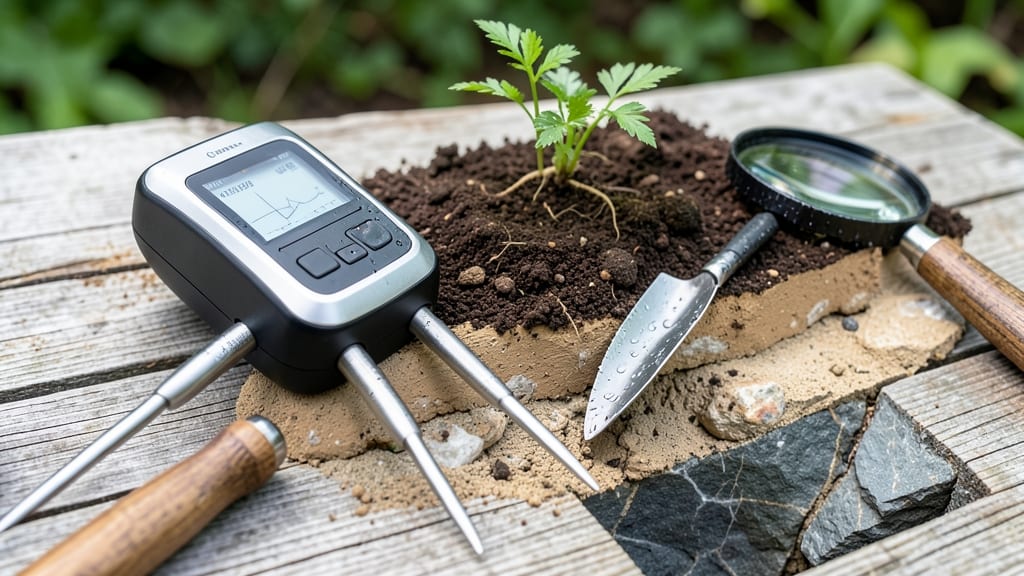
Understanding garden soil layers reveals how decomposition, erosion, and organic buildup create distinct zones that directly impact root development, moisture retention, and nutrient flow for your plants. These horizontal strata—topsoil, subsoil, and parent material—work together to determine your garden's overall health and productivity.
The topmost layer, called topsoil, is where most plant roots thrive due to its rich organic content and microbial activity. Below that lies the subsoil, often denser with minerals but less organic matter, which stores water and nutrients for deeper-rooted plants.
The deepest layer, parent material, consists of broken rock and mineral deposits that gradually weather into soil over centuries. 🌱 Each layer's unique composition affects drainage, aeration, and nutrient availability—making soil testing a smart first step before planting.
For example, adding compost to topsoil boosts microbial life, while breaking up compacted subsoil improves water infiltration.
What's fascinating is how these layers interact: healthy topsoil feeds the subsoil through leaching, while the parent material slowly releases minerals upward through weathering. This natural process explains why some garden spots flourish while others struggle—even with the same plants.
Understanding this vertical ecosystem lets you tailor amendments precisely where they're needed, whether that's organic matter for topsoil or gypsum for subsoil compaction.
💡 In This Article
- How Soil Horizons Develop in Garden Beds
- Improving Each Soil Layer for Better Plant Growth
How soil horizons develop in garden beds
The formation of garden soil layers begins with organic decay at the surface. When leaves, grass clippings, and plant debris fall, they create a dark, crumbly layer called topsoil—typically 6-12 inches deep.
This layer is a powerhouse of microbial activity, where bacteria, fungi, and earthworms break down matter into humus, the nutrient-rich "glue" that binds soil particles. For example, a single earthworm can process up to 10 pounds of soil per year, accelerating this process while aerating the earth.
Beneath the topsoil lies the subsoil, often 12-24 inches deep, where minerals leach downward from above. This layer accumulates clay, iron, and aluminum oxides, giving it a denser, lighter color (often reddish or brown).
The transition between layers, called the B horizon, acts like a sponge—holding water and nutrients for drought-resistant plants like native grasses. Meanwhile, the bottom layer, parent material, consists of fragmented rock and minerals that gradually weather into soil over centuries through freeze-thaw cycles and chemical reactions.
Seasonal changes dramatically accelerate this process. During spring rains, water carries dissolved nutrients downward, while summer heat promotes microbial activity. In winter, frost wedges break rocks apart, adding fresh mineral particles to the mix.
This natural cycle explains why garden soil in forested areas develops faster than in open fields—leaf litter provides constant organic input, while tree roots loosen compacted layers below.
What most gardeners overlook is how these layers interact. Healthy topsoil feeds the subsoil through leaching, while the parent material slowly releases minerals upward—a process called capillary rise.
For instance, gypsum added to subsoil can improve clay dispersion, while compost in topsoil boosts microbial populations that break down toxic buildups like aluminum. This vertical ecosystem means your garden's health depends on all three layers working in harmony.
Consider this: A 1-inch layer of compost on topsoil can increase microbial biomass by 30-50% within a season, while breaking up compacted subsoil with a broadfork can double water infiltration rates.
The key is observing how water moves through your soil—if it pools at 6 inches deep, your subsoil may need amendment. This layered approach transforms gardening from guesswork to precision science.
Think of your garden soil like a living filter system. The topsoil acts as the "active layer" where most plant roots grow, the subsoil stores water like a reservoir, and the parent material provides the raw minerals that fuel the entire system.
When you understand this natural progression, you can troubleshoot problems like poor drainage or nutrient deficiencies by targeting the right layer with the right solution.