
Propagation
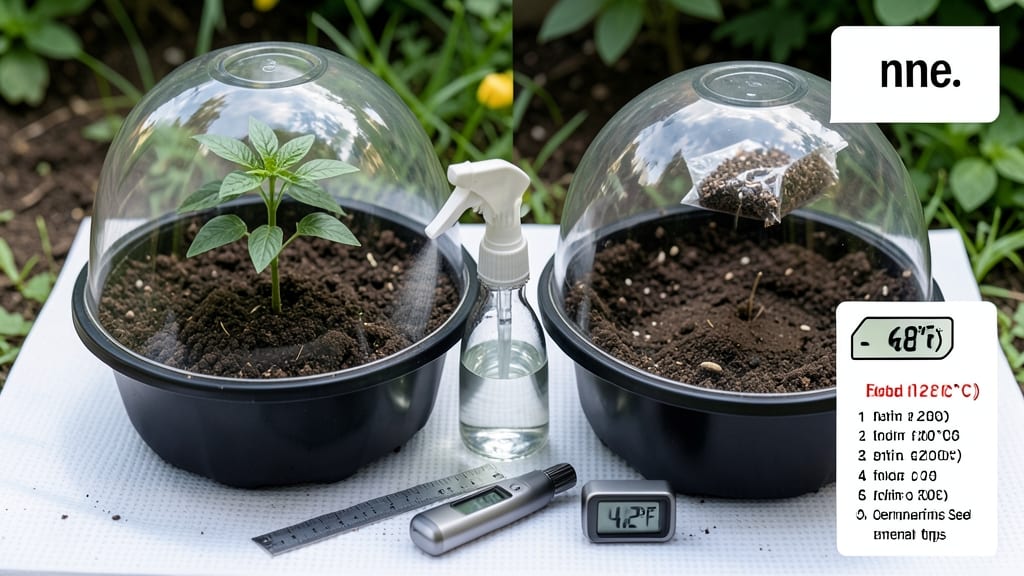
Soil temperature for seed germination determines sprouting success, ranging from 50°F to 95°F (10°C–35°C), with cool-season crops like lettuce thriving at 60–70°F (15–21°C) and warm-season plants such as tomatoes needing 75–90°F (24–32°C). Always verify seed packet guidelines for precise temperature needs.
Getting the right soil temperature isn't just about waiting for spring—it's about unlocking the biochemical processes that trigger growth. 🌱 Too cold, and enzymes stall; too hot, and seeds can overheat.
For example, peppers and eggplants need consistent warmth above 80°F (27°C) to break dormancy, while carrots and onions germinate best in cooler 60–70°F (15–21°C) ranges. Even a 5°F (3°C) drop can delay sprouting by days or weeks, which is why seed packets specify exact ranges.
Most gardeners use soil thermometers or heating mats for precise control, but even simple tools like black plastic mulch can raise soil temps by 10–15°F (5–8°C) under sunlight. If your seeds aren't sprouting after 2–3 weeks, check both temperature and moisture—dry soil can mimic cold conditions by slowing metabolic activity.
Pro tip: Start warm-season seeds indoors under grow lights if your outdoor soil hasn't warmed enough yet.
💡 In This Article
- How Soil Temperature Affects Germination Rates and Plant Growth
- Best Soil Warmers and Germination Tools for Fussy Seeds
How soil temperature affects germination rates and plant growth
Soil temperature directly controls the metabolic speed of seeds through enzyme activity, particularly α-amylase, which breaks down starches into sugars for energy. At 60°F (15°C), cool-season seeds like spinach activate these enzymes slowly, leading to germination in 7–14 days.
But when soil hits 75°F (24°C), warm-season seeds like basil trigger enzymes 3x faster, sprouting in just 3–5 days. Below 50°F (10°C), enzyme activity nearly halts, while above 95°F (35°C), proteins denature, killing embryonic cells.
This is why seed packets specify ranges—extremes disrupt the delicate balance of respiration and hydration.
The relationship between temperature and moisture retention adds another layer. Warmer soil (80°F+/27°C+) causes water to evaporate 20–30% faster, requiring frequent irrigation to maintain the 40–60% moisture needed for seed swelling. Conversely, cold soil (50°F/10°C) holds moisture longer but slows cell division, delaying root emergence.
For example, tomato seeds germinate in 5–7 days at 85°F (29°C) with consistent moisture, but take 2+ weeks at 70°F (21°C)—a 150% increase in sprouting time. This explains why late-spring plantings often fail: soil warms unevenly, creating microclimates where some seeds overheat while others stay dormant.
Temperature also influences seedling vigor. Peppers and eggplants, which need 80–90°F (27–32°C), develop 25% stronger roots when germinated in warm soil because their metabolic rate accelerates. In contrast, cool-loving crops like kale (60–70°F/15–21°C) produce longer, more fibrous roots in cooler conditions, adapting to deeper moisture sources.
The trade-off? Warm-germinated seedlings often bolt (flower prematurely) if transplanted too early, while cool-germinated ones may wilt under sudden heat stress. This is why gardeners use heat mats for warm-season starts and shade cloth for cool-season ones.
What most gardeners overlook is how diurnal temperature swings (day-night fluctuations) affect germination. Seeds like beans (75–85°F/24–29°C) thrive with 10°F (5°C) daily variations, but delicate seeds like snapdragons (65–75°F/18–24°C) struggle with swings wider than 5°F (3°C).
This is why indoor germination under grow lights (consistent 75°F/24°C) often succeeds where outdoor sowing fails. Even a 2°F (1°C) dip at night can stall germination for 24–48 hours, as the seed’s circadian rhythms pause until conditions stabilize.
For advanced gardeners, stratification (pre-chilling seeds) or scarification (breaking seed coats) can override temperature limits. For instance, lupine seeds, which need 80°F (27°C) to germinate, can be pre-soaked in warm water (100°F/38°C) for 24 hours to mimic natural heat shocks.
Meanwhile, poppy seeds, which require 60°F (15°C), benefit from 4–6 weeks of cold stratification to break dormancy. These techniques exploit the seed’s evolutionary adaptations to extreme conditions, giving gardeners control over germination timing.
To test your soil’s readiness, use a digital soil thermometer (accurate to ±1°F) and take readings at 2-inch depth (where most seeds germinate).
For example, tomato seeds need soil at 80°F (27°C) for 3+ consecutive days before planting, while cucumber seeds can tolerate 70°F (21°C) but grow leggy if soil drops below 65°F (18°C).
Pro tip: If your soil is 10°F (5°C) below the ideal range, cover seed beds with black plastic mulch for 3–5 days to raise temps by 10–15°F (5–8°C)—a trick used by commercial growers to jumpstart spring plantings.