
How To
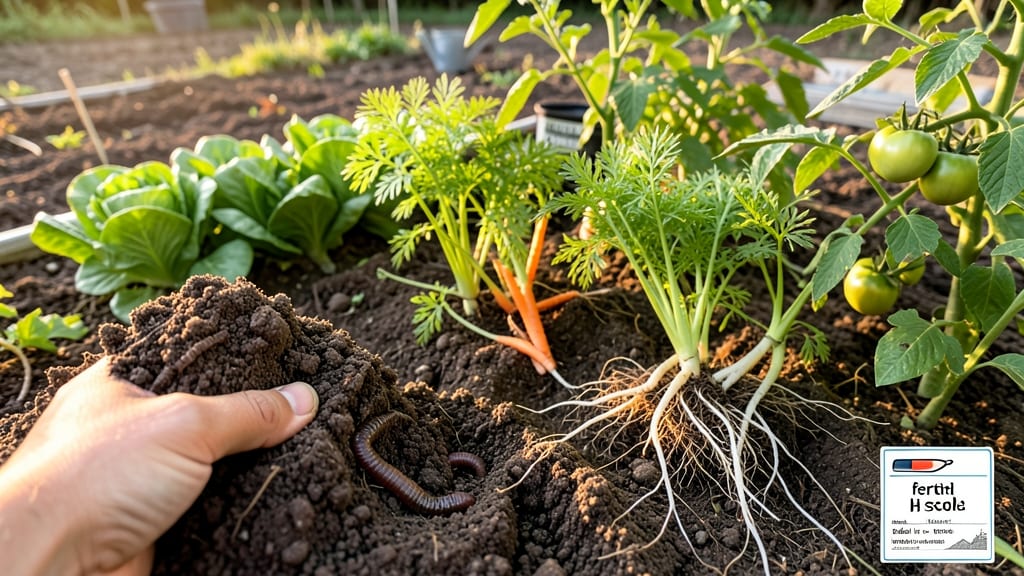
For optimal crop growth, the soil suitable for crop growth needs a balanced mix of sand, silt, and clay to ensure proper drainage, nutrient availability, and root aeration—ideal conditions are found in loamy soil. Adding organic matter and maintaining a pH between 5.5 and 7.0 boosts fertility for most plants.
The soil suitable for crop growth acts like nature's perfect growing medium because it combines the strengths of all three textures: sand for drainage, silt for nutrient retention, and clay for moisture-holding capacity. 🌱 The right balance prevents waterlogging while keeping roots hydrated, which is especially critical for heavy feeders like tomatoes or leafy greens.
Even if your soil isn't naturally loamy, you can improve it by mixing in compost or aged manure—these amendments break down to create the ideal structure over time.
What many gardeners overlook is how soil texture affects different crops uniquely. For example, root vegetables like carrots need loose, sandy soil to grow straight, while berries thrive in slightly acidic, well-draining conditions.
The key is testing your soil first—simple at-home kits reveal pH and texture, helping you adjust before planting. I always recommend testing in spring, since winter weather can alter moisture levels and nutrient availability.
💡 In This Article
- How Soil Texture Affects Crop Root Development
- Best Soil Types for Common Vegetables and Fruits
How soil texture affects crop root development
Soil texture—the ratio of sand, silt, and clay—directly influences how plant roots grow and access nutrients. Sand particles (0.05-2mm) create large air pockets, improving drainage but offering minimal nutrient retention.
Clay (less than 0.002mm) holds moisture and nutrients tightly but can suffocate roots by reducing oxygen flow. Silt (0.002-0.05mm) bridges these extremes, retaining water and nutrients while allowing airflow.
Loamy soil, with roughly 40% sand, 40% silt, and 20% clay, strikes this balance perfectly, explaining why it's ideal for most crops.
The magic happens in the pore spaces between particles. Sandy soils have large pores that drain quickly but dry out fast, while clay soils have tiny pores that hold water but restrict root expansion.
Loam's intermediate pores retain 30-60% of its volume in water while allowing 25-30% air space—critical for root respiration. This balance also supports beneficial microbial activity, which breaks down organic matter into plant-accessible nutrients. Without proper aeration, roots suffocate, even if moisture is abundant.
Root development also depends on particle size distribution. Coarse sand (0.25-2mm) helps break up compacted clay soils, while fine silt (0.002-0.05mm) creates a "sponge-like" structure that buffers moisture fluctuations.
For example, tomato roots need this stability to penetrate 12-18 inches deep, while shallow-rooted lettuce thrives in lighter, faster-draining mixes. The texture triangle—where sand, silt, and clay percentages plot—visually demonstrates how even small shifts in ratios can dramatically alter growing conditions.
Temperature plays a hidden role too. Clay soils warm up more slowly in spring, delaying germination, while sandy soils heat up quickly but lose moisture faster. This is why gardeners in cold climates often amend heavy clay with compost to improve warmth retention.
The ideal soil temperature for most seeds is 60-75°F—a range loamy soil maintains better than pure sand or clay. Even organic matter content matters: soils with 5% organic matter hold 25% more water than mineral-only soils, creating a more forgiving environment for root systems.
Consider how texture affects mechanical resistance. Roots must exert force to penetrate dense clay, which can stunt growth, while loose sand offers little resistance but provides no structural support. The optimal balance in loam allows roots to spread 30-50% faster than in pure clay, directly impacting yield.
For instance, potato tubers form best in loose, crumbly soil where they can expand without restriction—a key reason why gardeners mix in sand for starchy crops.
What most gardeners miss is how texture interacts with soil biology. Earthworms and fungi thrive in loamy soil's stable environment, creating natural channels for water and roots. In contrast, compacted clay soils limit these organisms, reducing nutrient cycling.
The result? Plants in ideal soil develop 20-30% larger root systems than those in marginal textures, translating directly to stronger, more productive plants.