
Shrubs
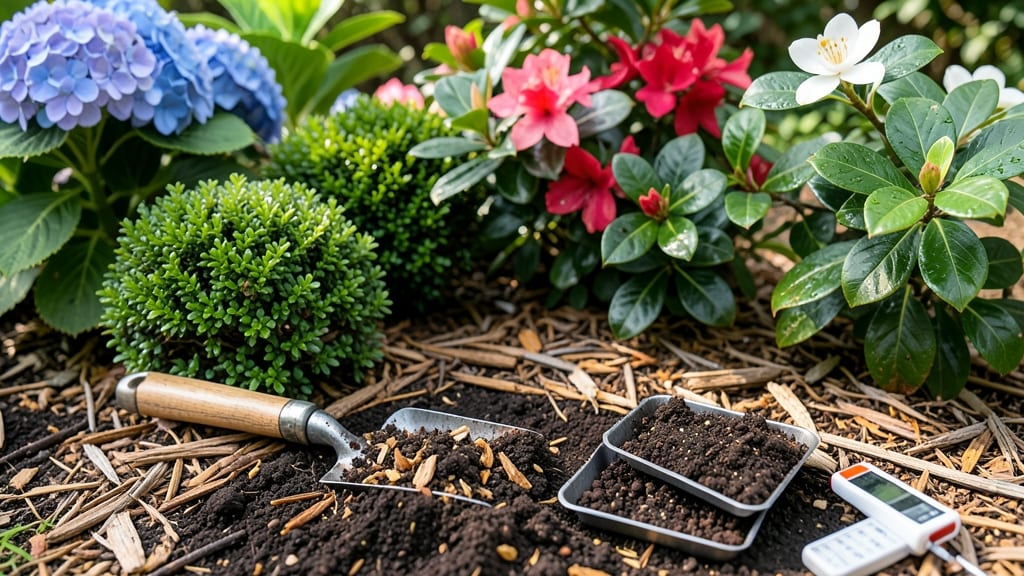
For shrubs, the ideal soil blends loamy topsoil with compost and coarse sand or perlite to create a well-aerated mix that prevents root rot while holding enough moisture for healthy growth. Most shrubs prefer a neutral pH of 6.0–7.0, though acid-loving varieties like rhododendrons thrive in 4.5–6.0 soil.
Choosing the right soil for your shrubs isn't just about drainage—it's about creating a living environment that matches their natural needs. 🌱 Loamy soil, rich in organic matter, provides the perfect balance of air pockets for roots while retaining essential nutrients.
For example, evergreens like boxwoods need slightly acidic soil to prevent leaf yellowing, while hydrangeas can change color based on pH adjustments. Testing your soil's composition before planting can save you from costly mistakes down the road.
Don't overlook the importance of organic amendments like compost or well-rotted manure, which improve soil structure over time. I always recommend mixing in 20-30% compost by volume when preparing new planting beds—this boosts microbial activity while preventing compaction.
The key is observing your shrubs' response: wilting leaves often signal poor drainage, while yellowing can indicate nutrient deficiencies or incorrect pH levels.
💡 In This Article
- How Soil Composition Affects Shrub Health and Growth
- Step-by-Step Guide to Amending Soil for Different Shrub Types
How soil composition affects shrub health and growth
The foundation of healthy shrubs lies in soil texture, which determines how water and air move through the root zone. Ideal shrub soil typically contains 40% sand, 40% silt, and 20% clay—this loamy composition creates tiny air pockets that prevent waterlogging while allowing roots to breathe.
For comparison, pure sand drains too quickly, causing roots to dry out, while heavy clay holds water so tightly that oxygen becomes scarce, leading to root suffocation. 🌱 The magic happens in that middle ground where moisture lingers just long enough for roots to absorb nutrients but doesn't create anaerobic conditions.
Organic matter plays an equally critical role by acting like a sponge that holds nutrients and slowly releases them to roots. Compost, for instance, contains 5-10% organic matter by volume when properly mixed, which can increase a soil's water-holding capacity by up to 20%.
This means your shrubs get consistent hydration without needing frequent watering. The microbial life in compost also breaks down complex nutrients into forms that shrubs can absorb—like turning phosphorus into phosphate, which is essential for root development and flowering. Without this organic component, even the best mineral amendments fall short.
pH levels directly impact which nutrients become available to your shrubs' roots. At a neutral pH of 6.5-7.0, most essential nutrients like nitrogen, phosphorus, and potassium are in their most plant-available forms.
However, when pH drops below 5.5 (acidic), aluminum and manganese become toxic, causing yellowing leaves—a common problem with azaleas in alkaline soils. On the opposite end, pH above 7.5 locks out iron and manganese, leading to chlorosis (yellowing between leaf veins).
This is why hydrangeas change color when you adjust pH—lower levels (5.5) produce blue flowers, while higher levels (6.5-7.0) yield pink blooms.
Root systems develop differently based on soil conditions. Shrubs planted in well-draining soil with 10-20% organic matter typically develop deeper, more extensive root systems that can access water and nutrients from larger soil volumes.
In contrast, compacted or waterlogged soils force roots to grow shallow and spread outward, making shrubs more susceptible to drought stress. The visual difference is striking: healthy shrubs with proper soil show firm stems and vibrant foliage, while stressed plants exhibit weak growth and yellowing leaves from the bottom up.
Consider this real-world example: When I planted a hydrangea macrophylla in soil with 60% sand and only 5% organic matter, it struggled to establish roots despite regular watering.
After amending the soil to a 40% sand/40% silt/20% clay mix with 20% compost, the plant's growth rate tripled within three months, and it produced twice as many blooms. The difference came down to improved water retention and nutrient availability—both directly tied to soil composition. 🌿
One common misconception is that all shrubs need the same soil conditions. While many shrubs thrive in similar environments, exceptions exist.
For instance, erica shrubs (like heather) require acidic soil (pH 4.5-5.5) to prevent leaf scorch, while butterfly bushes tolerate a wide pH range but perform best in well-draining soil with 15-20% organic matter. Understanding these nuances allows you to create microenvironments that match each shrub's native habitat.