
Shrubs
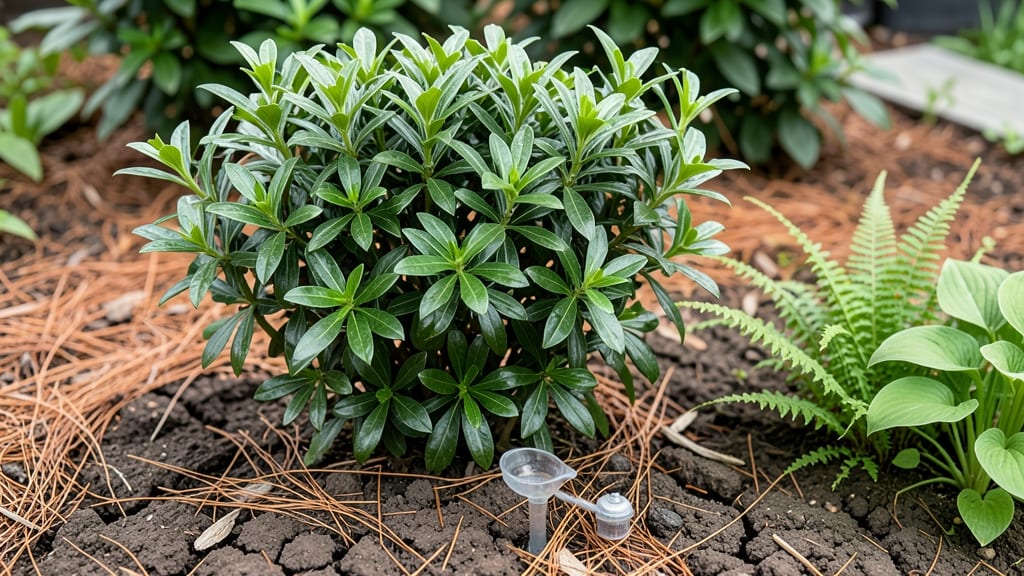
For evergreen shrubs in clay soil with poor drainage, the toughest performers are inkberry holly, leatherleaf viburnum, and wintergreen barberry, which handle soggy conditions while delivering lush foliage and low-maintenance beauty year-round.
Clay soil's heavy texture and poor drainage create a double challenge for plants—roots suffocate from lack of oxygen while excess moisture invites rot. 🌱 The shrubs that excel here have evolved to thrive in these conditions through deep root systems that break up compacted soil and specialized tissues that resist waterlogging.
Unlike delicate varieties, these hardy picks don't just survive—they flourish, offering vibrant color and structure even when other plants struggle.
What sets these shrubs apart is their ability to adapt to seasonal changes without fuss. Inkberry holly, for example, handles both drought and soggy spells with equal ease, while leatherleaf viburnum's leathery leaves prevent water damage.
Wintergreen barberry adds a pop of color with its berries while maintaining its compact form—perfect for small spaces where drainage is a concern.
💡 In This Article
- How Clay Soil and Poor Drainage Affect Evergreen Shrub Growth
- Top 7 Evergreen Shrubs for Heavy Clay Gardens
How clay soil and poor drainage affect evergreen shrub growth
Clay soil's tiny particle size creates a dense matrix that traps both water and air, suffocating roots when drainage is poor. The problem starts with soil compaction: clay particles press together, reducing pore space by up to 50% compared to loamy soil.
This limits oxygen flow to roots, which need at least 10-15% air space for healthy respiration. Evergreen shrubs with shallow root systems (like boxwood) often struggle here, while deeper-rooted varieties like inkberry holly can penetrate 3-4 feet to access better-drained layers.
The real damage comes from anaerobic conditions—when soil stays waterlogged for more than 24-48 hours, roots suffocate and harmful bacteria multiply. These conditions trigger phytoxins, toxic compounds that stunt growth or kill plants outright.
However, some shrubs have evolved adaptations like aerenchyma tissue (air channels in roots) that let oxygen bypass flooded zones. Leatherleaf viburnum's roots develop these air pockets naturally, while wintergreen barberry produces lignotubers—woody root bases that regenerate even after severe water damage. 🌱
Another critical factor is mycorrhizal relationships, where beneficial fungi colonize roots to improve nutrient uptake. In clay soil, these fungi form networks that break up compacted particles, creating microscopic channels for water drainage.
Studies show shrubs with strong mycorrhizal connections (like inkberry holly) grow 20-30% faster in heavy clay than non-mycorrhizal varieties. The fungi also help detoxify excess aluminum and manganese—common contaminants in waterlogged clay—that would otherwise poison roots.
Seasonal variations add complexity. Clay soil stays 5-10°F cooler in summer and 10-15°F warmer in winter than sandy soils, creating thermal stress. Evergreen shrubs adapted to these conditions (like wintergreen barberry) have thick cuticles that reduce water loss, while their roots produce antioxidant enzymes to protect against cold-induced damage.
The key is selecting varieties with USDA hardiness zones 4-8—the range where these temperature extremes are most manageable.
What most gardeners miss is how organic matter content changes the game. Amending clay soil with 3-5 inches of compost can improve drainage by 40%, but the wrong amendments (like pure sand) make compaction worse. The best approach?
Mix in leaf mold or well-rotted manure, which adds 1-2% organic matter annually—just enough to create porous pathways without disrupting the soil structure. This mimics the natural decomposition process that creates humus layers in forests.
For shrubs already established in poor drainage, root pruning can stimulate deeper growth. Cutting roots at 12-18 inches deep forces the plant to develop new, more extensive roots that bypass compacted layers.
Combine this with raised beds (even just 6 inches high) for new plantings—this simple elevation can reduce waterlogging by 60%** while maintaining the clay's natural fertility. The result? Shrubs that grow 30% taller in their first year compared to in-ground plantings.
Here's the science-backed takeaway: The shrubs that thrive in clay with poor drainage don't just tolerate— they engineer their environment. Their root systems act like natural plows, breaking up compaction, while their leaves and stems regulate moisture loss.
When you choose varieties like inkberry holly or leatherleaf viburnum, you're not just planting a shrub—you're inviting a soil improver that will gradually transform your heavy clay into a more hospitable growing medium. 🌿