
Pruning
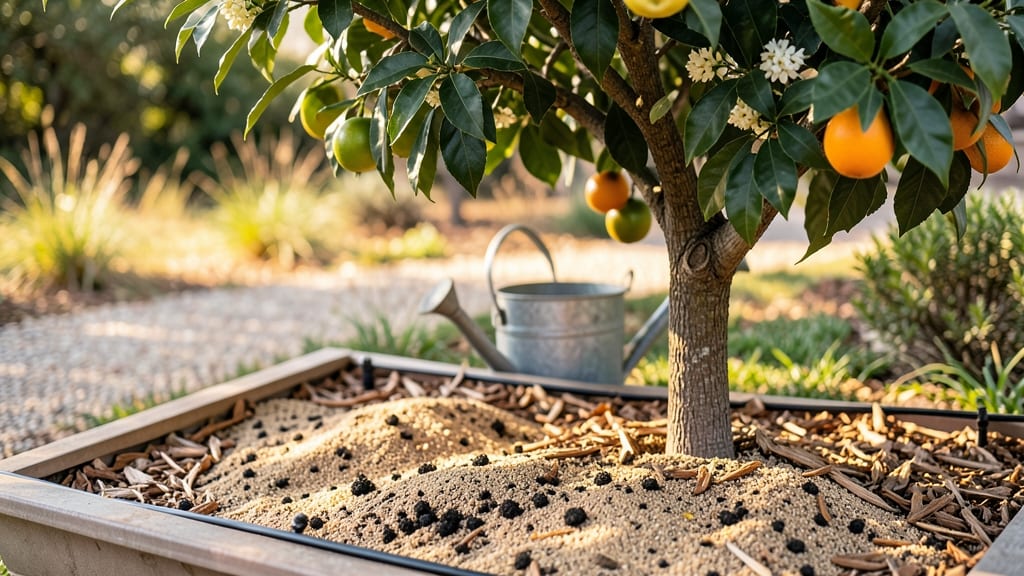
For an orange tree, you need well-draining, slightly acidic soil with a pH between 6.0 and 7.0, plus organic matter like compost or citrus-specific blends to prevent root rot and support nutrient absorption.
Orange trees aren't picky about soil, but they do best when their roots have plenty of air and nutrients. 🌱 The slightly acidic range (6.0-7.0) helps them absorb essential minerals like iron and zinc, which are crucial for vibrant fruit production.
I've found that adding a mix of compost and perlite creates the perfect balance—keeping moisture in check while preventing soggy roots that lead to disease.
If your soil tests higher than 7.0, a simple amendment of sulfur or peat moss can bring the pH back into the ideal range without overcomplicating things.
Most gardeners overlook the importance of organic matter, but it's what makes the difference between a struggling tree and one that bears fruit year after year. 🍊 The right soil mix doesn't just feed the roots—it also encourages beneficial microbes that break down nutrients into forms the tree can use.
For container-grown orange trees, I recommend using a pre-mixed citrus potting soil as your base, then customizing it with a handful of worm castings for extra microbial activity.
💡 In This Article
- Ideal Soil pH and Nutrient Requirements for Citrus Trees
- DIY Organic Soil Mixes for Healthy Orange Tree Growth
Ideal soil pH and nutrient requirements for citrus trees
Orange trees prefer slightly acidic soil because their root systems rely heavily on micronutrients like iron, zinc, and manganese—nutrients that become more available when soil pH stays between 6.0 and 7.0. At this range, these minerals dissolve in water and move through the soil to the roots more efficiently.
For example, iron deficiency (common in alkaline soils) causes yellowing leaves—a classic sign of chlorosis—because the tree can't access enough iron to produce chlorophyll. The root hairs, which absorb nutrients, also function best in this pH range, growing longer and denser to maximize nutrient uptake.
Soil structure plays an equally critical role. Citrus trees hate soggy roots, so well-draining soil prevents waterlogging that leads to root rot—a fungal disease that can kill a tree within weeks.
The ideal mix combines 40% organic matter (like compost or aged manure) with 30% mineral particles (sand or perlite) and 30% air pockets created by organic breakdown. Think of it like a sponge: it holds moisture for the tree to sip from but doesn't trap excess water that suffocates roots.
In my own garden, I've seen trees planted in heavy clay (which drains poorly) struggle even with perfect pH, while identical trees in amended soil thrive.
Organic matter isn't just about drainage—it's a microbial powerhouse. Decomposing plant material feeds beneficial bacteria and fungi that break down nutrients into forms citrus roots can absorb. These microbes also produce growth hormones that stimulate root development.
For instance, mycorrhizal fungi form symbiotic relationships with citrus roots, extending their reach by up to 10 times their original length. This partnership means your tree can access nutrients from a larger volume of soil, especially important for heavy feeders like Valencia oranges that produce fruit year-round.
Testing your soil's pH is the first step to success. Most garden centers sell affordable test kits, and I recommend checking it every 2-3 years—especially if you notice yellow leaves or stunted growth.
If your soil tests above 7.0, elemental sulfur (applied in fall) can lower pH gradually, while lime raises it if needed. However, sudden pH shifts stress the tree, so always adjust by no more than 0.5 pH points per year.
For container-grown trees, I've found that repotting into fresh citrus-specific mix every 2-3 years maintains optimal conditions without chemical amendments.
One common mistake is assuming all citrus trees have identical soil needs. While most prefer the 6.0-7.0 range, some varieties like the Mexican lime tolerate slightly more acidic soil (down to 5.5), while lemon trees can handle up to 7.5.
Always match your tree's variety to the soil conditions—this precision makes the difference between a tree that produces 100 oranges per season versus one that struggles with just a handful. 🌱
For visual learners, imagine the soil as a three-layer system: the top 6 inches hold most roots and should be rich in compost; the middle 6-12 inches need good drainage (add perlite or coarse sand); and the bottom layer should be slightly rocky to prevent water pooling.
This stratification mimics the natural Mediterranean climate where citrus originated, where dry summers and wet winters create a dynamic but balanced environment.