
Pruning
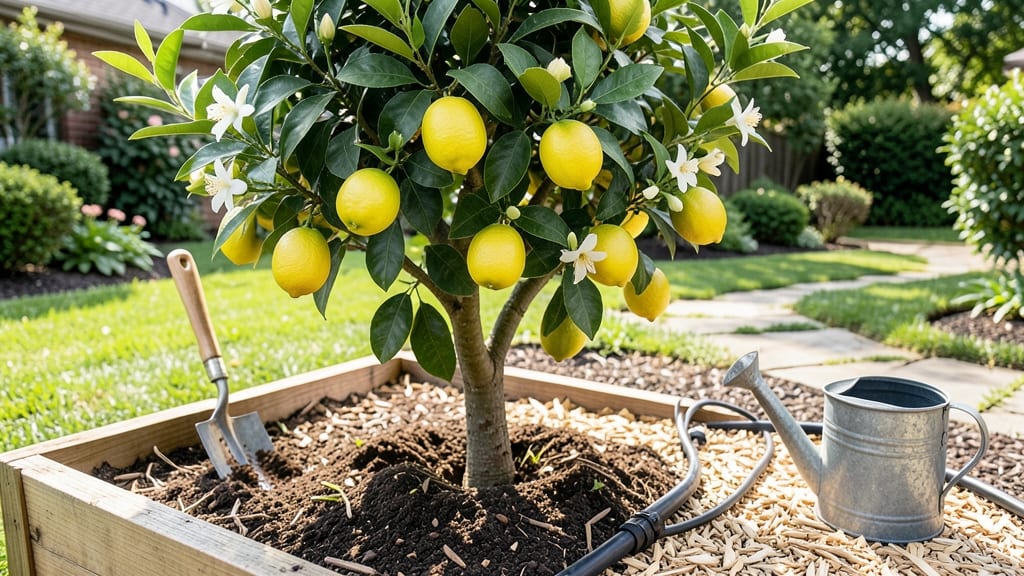
For Meyer lemon trees, the ideal soil is slightly acidic and well-draining with a pH of 6.0 to 7.0, best achieved by mixing equal parts sand, peat moss, and compost to balance moisture retention and root aeration while preventing rot.
Meyer lemon trees demand specific soil conditions to thrive, and their roots are particularly sensitive to both waterlogging and compacted soil. 🌱 The slightly acidic range (6.0–7.0) ensures they absorb essential nutrients like iron and zinc efficiently, which are critical for vibrant foliage and fruit production.
I’ve found that adding perlite or coarse sand to the mix improves drainage further, especially in containers where roots can’t spread as freely.
If your soil leans toward clay, amending it with organic matter like worm castings can transform its structure over time, creating a looser, more hospitable environment for these citrus trees.
What’s often overlooked is how soil texture affects temperature regulation—sandy mixes warm up faster in spring, giving young trees a head start, while peat moss retains moisture during dry spells.
For in-ground plantings, I recommend testing your native soil first; if it’s alkaline or dense, consider creating a raised bed with the ideal blend to give your Meyer lemon tree the best possible foundation.
💡 In This Article
- Optimal pH Levels and Soil Composition for Meyer Lemon Trees
- DIY Soil Mix Recipes for Meyer Lemon Trees in Pots and Ground
Optimal pH levels and soil composition for Meyer lemon trees
The pH range of 6.0 to 7.0 isn't arbitrary—it's directly tied to how Meyer lemon trees absorb critical nutrients. At this slightly acidic level, the roots can efficiently uptake iron and zinc, which are essential for preventing yellowing leaves and ensuring vibrant fruit production.
When soil pH drifts above 7.0, these micronutrients become locked out, leading to chlorosis (yellowing between leaf veins), while pH below 6.0 can make aluminum and manganese toxic to the roots. 💫
Soil texture plays an equally vital role in root health. Sandy soil drains too quickly, forcing roots to work harder to access moisture, while heavy clay holds too much water, suffocating roots and inviting fungal diseases like root rot.
The ideal mix—equal parts sand, peat moss, and compost—strikes a balance: sand provides aeration, peat moss retains moisture without becoming waterlogged, and compost adds essential organic matter that feeds beneficial soil microbes. These microbes, in turn, break down organic material into forms the tree can absorb.
Organic matter isn't just food for your tree—it's also a sponge that improves soil structure. Compost and worm castings create tiny air pockets that roots need to breathe, while their decay releases slow-release nutrients.
In my experience, amending clay soil with 30% compost can transform its texture within a season, making it crumbly and friable. For sandy soils, adding 20% peat moss or coconut coir helps retain moisture while maintaining that critical drainage.
One often-overlooked factor is soil temperature. Sandy mixes warm up faster in spring, giving young trees a growth advantage, while peat moss keeps roots cool during summer heatwaves. The microbial activity in well-amended soil also generates heat through decomposition, which can be particularly beneficial in cooler climates.
For container-grown trees, this means choosing a pot with good insulation properties and monitoring soil temperature—roots prefer consistency around 65-75°F.
If you're dealing with alkaline soil (pH above 7.0), sulfur amendments can help lower the pH gradually, but it's a slow process that may take months. For immediate results, consider planting in raised beds filled with the ideal mix.
The key is patience—soil chemistry changes take time, but the investment pays off in healthier trees and better fruit production. 🌱
For visual learners, imagine your soil as a three-layer cake: the top layer (sand) provides structure, the middle (peat moss) holds moisture, and the bottom (compost) feeds the roots.
This balance ensures your Meyer lemon tree gets everything it needs without drowning or starving. Regular soil tests every 6-12 months will help you maintain this delicate equilibrium.