
How To
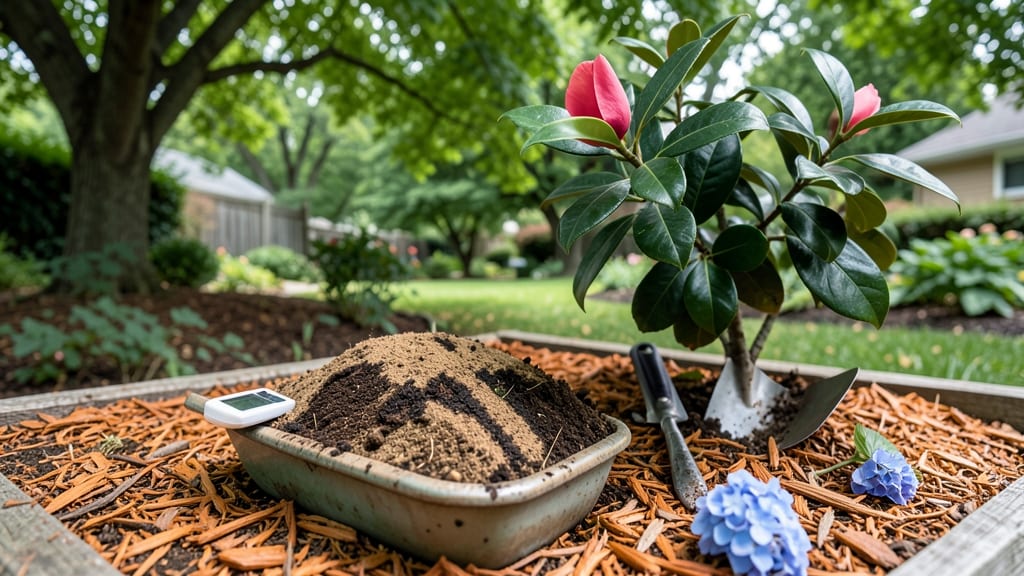
The best soil for camellias combines well-draining, acidic loam with a pH between 5.0 and 6.5, enriched with organic matter like peat moss or pine bark to replicate their native forest soil conditions. Heavy clay or alkaline soils will inhibit growth and flowering.
Camellias are picky about their growing conditions, and soil chemistry plays a starring role in their health. 🌱 The acidity level isn't just about numbers—it directly impacts how well the plant absorbs essential nutrients like iron and manganese.
Without the right pH, you'll often see yellowing leaves (chlorosis) even when the soil looks fertile. I've found that adding elemental sulfur or pine fines to garden beds can gradually lower pH over time, while container growers benefit from pre-mixed acidic potting mixes designed specifically for ericaceous plants.
What many gardeners overlook is the importance of soil structure. Camellias hate soggy roots but also struggle in compacted soil that doesn't allow oxygen to reach their extensive root systems. The ideal mix should hold moisture without becoming waterlogged while still providing good aeration.
For container plants, I recommend using a blend of 60% peat moss or coconut coir, 30% perlite or pumice, and 10% composted pine bark—this combination gives you the perfect balance of moisture retention and drainage.
💡 In This Article
- Why Acidic Soil Is Essential for Camellia Health
- How to Amend Garden Soil for Optimal Camellia Growth
Why acidic soil is essential for camellia health
Camellias evolved in acidic forest soils where the pH naturally stays between 4.5 and 6.0, creating an ideal environment for nutrient absorption.
The key mechanism here is how low pH increases the solubility of essential micronutrients like iron, manganese, and zinc—nutrients that become locked in unavailable forms when soil becomes alkaline.
For example, iron deficiency (chlorosis) appears as yellowing leaves with green veins because the plant can't access iron in alkaline conditions, even when it's present in the soil.
The root zone of camellias thrives in this acidic environment because it mimics their native habitat where decomposed pine needles and leaf litter create naturally acidic conditions. 🌿 In garden soils, the ideal pH range of 5.0 to 6.5 ensures optimal microbial activity that breaks down organic matter into forms the plant can use.
Compare this to typical lawn soils which often sit at pH 6.5 to 7.5—a range where camellias struggle to absorb nutrients efficiently, leading to stunted growth and poor flowering.
What's fascinating is how camellia roots develop specialized structures called root hairs that function best in acidic conditions. These tiny hair-like extensions increase the root's surface area by up to 10 times, allowing for maximum nutrient uptake.
In alkaline soils, these root hairs become less effective, forcing the plant to expend more energy trying to access nutrients it can't properly absorb. This is why even well-fertilized camellias in alkaline soil often show signs of nutrient deficiencies despite having ample fertilizer.
Another critical factor is how acidic soils prevent nutrient competition. In alkaline conditions, calcium and magnesium become more available, which can displace essential micronutrients like iron and manganese from the soil particles.
This creates a direct competition where the plant absorbs the more abundant (but less essential) nutrients instead of the ones it truly needs. The result? Even with perfect fertilizer applications, the plant remains deficient because the soil chemistry works against it.
For container-grown camellias, this becomes particularly important because the root system has limited space to explore for nutrients. In a 5-gallon pot, for example, the entire root zone must maintain optimal pH throughout.
This is why specialized ericaceous potting mixes (designed for acid-loving plants) include ingredients like sphagnum peat moss and pine bark fines that help maintain acidity while providing structure. Without these amendments, even the best fertilizer won't compensate for poor soil chemistry.
Understanding this science helps explain why some gardeners see dramatic improvements when they adjust soil pH. For instance, I've seen camellias that were struggling in pH 7.0 soil begin thriving within 6-8 weeks after lowering the pH to 5.5 through proper amendments.
The transformation isn't just about better growth—it's about the plant finally being able to access all the nutrients you're providing it.