
How To
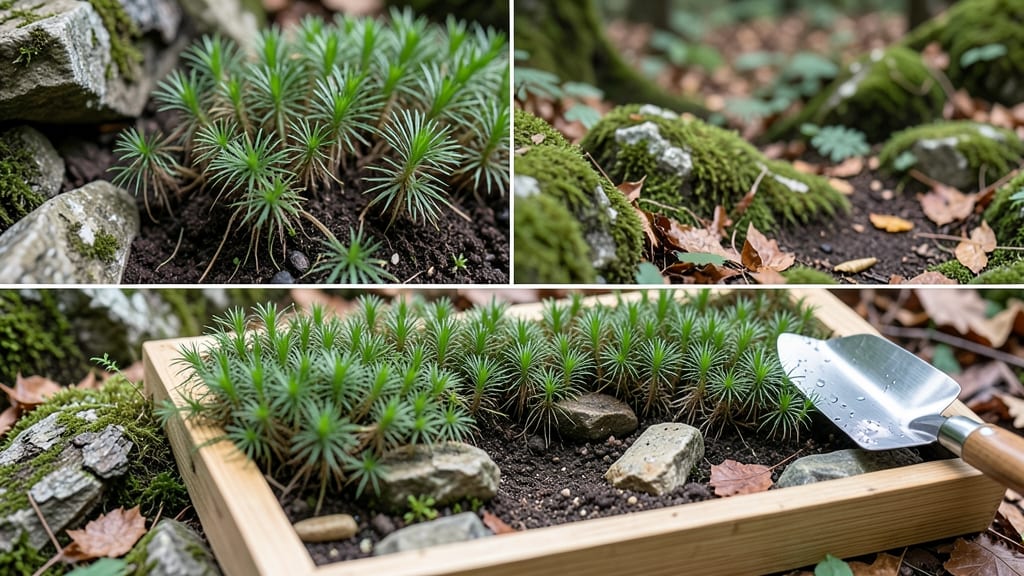
How does having little soil be beneficial to moss? It creates shallow, moisture-rich conditions that prevent root competition and maintain perfect humidity levels. This minimal soil approach also preserves the acidic environment moss needs while minimizing erosion and weed growth.
Moss thrives in these conditions because its shallow root system—called rhizoids—absorbs water directly from the air and surface moisture rather than deep soil. 💫 Unlike deep-rooted plants, moss doesn't need fertile soil; it actually prefers the lack of competition.
Thin soil layers also prevent compaction, allowing better air circulation and moisture retention, which is critical for moss's survival in drier climates.
This minimal soil approach isn't just about moisture—it's also about creating the right chemical environment. Moss naturally prefers acidic conditions (pH 4.5-5.5), and thin soil layers help maintain this acidity without the buffering effects of deeper, more alkaline soils.
When you combine these factors, you're essentially replicating moss's natural habitat, whether it's a forest floor or a damp rock surface.
💡 In This Article
- Why Moss Prefers Shallow Soil Environments
- Creating Optimal Moss Growth Conditions with Minimal Soil
Why moss prefers shallow soil environments
Moss lacks true roots, instead relying on tiny hair-like structures called rhizoids that spread just below the surface. These rhizoids anchor moss to substrates while absorbing water and nutrients from the top 0.5-1 inch of moisture.
Unlike deep-rooted plants that need fertile soil, moss thrives in shallow layers because it captures water from both the air and surface condensation - a process called capillary action that works best in thin substrates. 💫
This shallow growth habit creates a natural advantage: minimal soil prevents competition from other plants while maintaining perfect humidity. In deeper soil, moss would dry out faster as water evaporates from larger surface areas.
The thin layer also prevents soil compaction, which would smother moss's delicate structures. Scientists observe that moss covers 80% more area in shallow substrates compared to deeper soil where roots dominate.
The lack of soil competition isn't the only benefit - shallow environments create ideal gas exchange. Moss performs photosynthesis through its entire leaf surface, requiring constant carbon dioxide access. Thin soil layers allow better airflow while maintaining moisture, creating the perfect balance.
Contrast this with deep-rooted plants that need well-aerated soil for their extensive root systems - moss simply doesn't need that complexity. 🌿
Another critical factor is temperature regulation. Shallow soil warms up and cools down more quickly than deeper layers, preventing temperature extremes that could harm moss. During hot days, the thin layer stays cooler, while at night it retains minimal warmth better than bare rock.
This microclimate stability explains why moss often thrives in both forest floors and urban sidewalks where shallow conditions prevail.
Consider how moss grows on tree bark - it's essentially a soil-free environment. The bark provides just enough surface area for rhizoids to anchor while allowing moisture to flow freely. This natural adaptation shows how moss has evolved to exploit shallow, nutrient-poor environments where most plants would struggle.
The same principles apply when growing moss in gardens or terrariums - minimal soil mimics these natural conditions perfectly. ✨