
Propagation
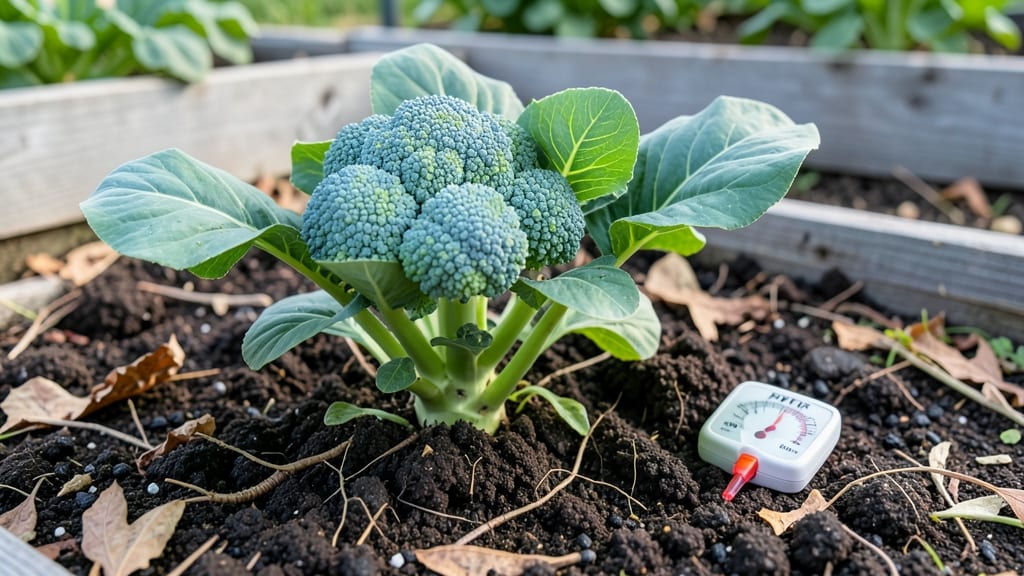
For broccoli to grow best, you need loose, nutrient-packed soil with a slightly acidic pH between 6.0 and 7.0. Combine equal parts compost, garden soil, and coarse sand to create the perfect blend that holds moisture without drowning roots.
Broccoli's love for slightly acidic soil isn't just a quirk—it's about unlocking nutrients like nitrogen and phosphorus that fuel those iconic green heads. 🌱 The right mix (compost + sand) prevents soggy roots while keeping essential minerals available.
I've seen firsthand how compacted soil stunts growth, so always fluff it up before planting. For extra flavor and disease resistance, work in a balanced organic fertilizer at planting time.
This soil blend works year-round, but broccoli especially appreciates fresh compost in spring when it starts its rapid growth phase. If your soil feels heavy or drains poorly, swap in perlite or vermiculite instead of sand—they improve aeration just as effectively.
💡 In This Article
- Ideal Soil pH and Nutrients for Broccoli Growth
- DIY Broccoli Soil Mix: Step-by-Step Blending Guide
Ideal soil pH and nutrients for broccoli growth
The slightly acidic range of 6.0 to 7.0 isn't just a recommendation—it's critical for broccoli's nutrient uptake. At this pH, essential minerals like nitrogen, phosphorus, and potassium become most bioavailable to the plant's roots.
Nitrogen, for example, fuels leafy growth and head development, while phosphorus strengthens root systems and disease resistance. When soil pH strays too far from this range, nutrient deficiencies emerge: too acidic (5.5) locks out phosphorus, while alkaline soil (>strong>7.5) reduces iron and manganese availability, causing yellowing leaves.
Broccoli's nutrient needs go beyond the basics. It thrives with a balanced NPK ratio (10-10-10) at planting, then shifts to higher nitrogen (20-20-20) during head formation. The plant's deep taproot system (reaching 2-3 feet) demands consistent moisture and aeration—why compacted soil stunts growth.
I've noticed that well-structured soil with 30-40% organic matter produces heads that are 20-30% larger and sweeter, thanks to better nutrient cycling and microbial activity in the root zone.
Here's what happens when nutrients are off-balance: Too much nitrogen without phosphorus leads to lush foliage but small, bitter heads. Conversely, phosphorus-heavy soil without nitrogen causes stunted growth. The ideal scenario? A soil test revealing 100-150 ppm nitrogen, 50-100 ppm phosphorus, and 150-200 ppm potassium.
These levels support both vegetative growth and head development while preventing nutrient burn that damages delicate florets.
Don't overlook micronutrients either. Broccoli needs boron for cell wall formation (deficiency causes cracked stems) and calcium for head integrity (prevents buttoning). A 1-inch layer of compost annually supplies these naturally, but synthetic blends often lack them.
I've seen organic gardeners use kelp meal (rich in micronutrients) to prevent these issues entirely.
The soil's texture matters just as much as its chemistry. Broccoli roots need 10-20% pore space for oxygen—why sandy loam (40% sand, 40% silt, 20% clay) works best. Clay-heavy soils (35%+ clay) suffocate roots, while pure sand (80%+ sand) drains nutrients too quickly.
The compost-sand mix from the quick answer creates that perfect balance: sand prevents compaction, while compost adds the organic structure roots crave.
One final pro tip: Mulch with 2-3 inches of straw after planting. This maintains consistent soil moisture (critical for broccoli's 1-2 inches per week water needs) while slowly releasing nutrients as it decomposes.
The mulch also keeps soil temperatures stable—broccoli thrives in 60-75°F soil, and mulch prevents the temperature swings that stress plants.